Day Ten: Atlanta, Georgia

Since we got in late last night, we had to save the Dr. Martin Luther King, Jr. Memorial Center for this morning. We got there shortly after it opened at 9:00 AM, and by 10:00 AM, it was 90 degrees and we were sweating.

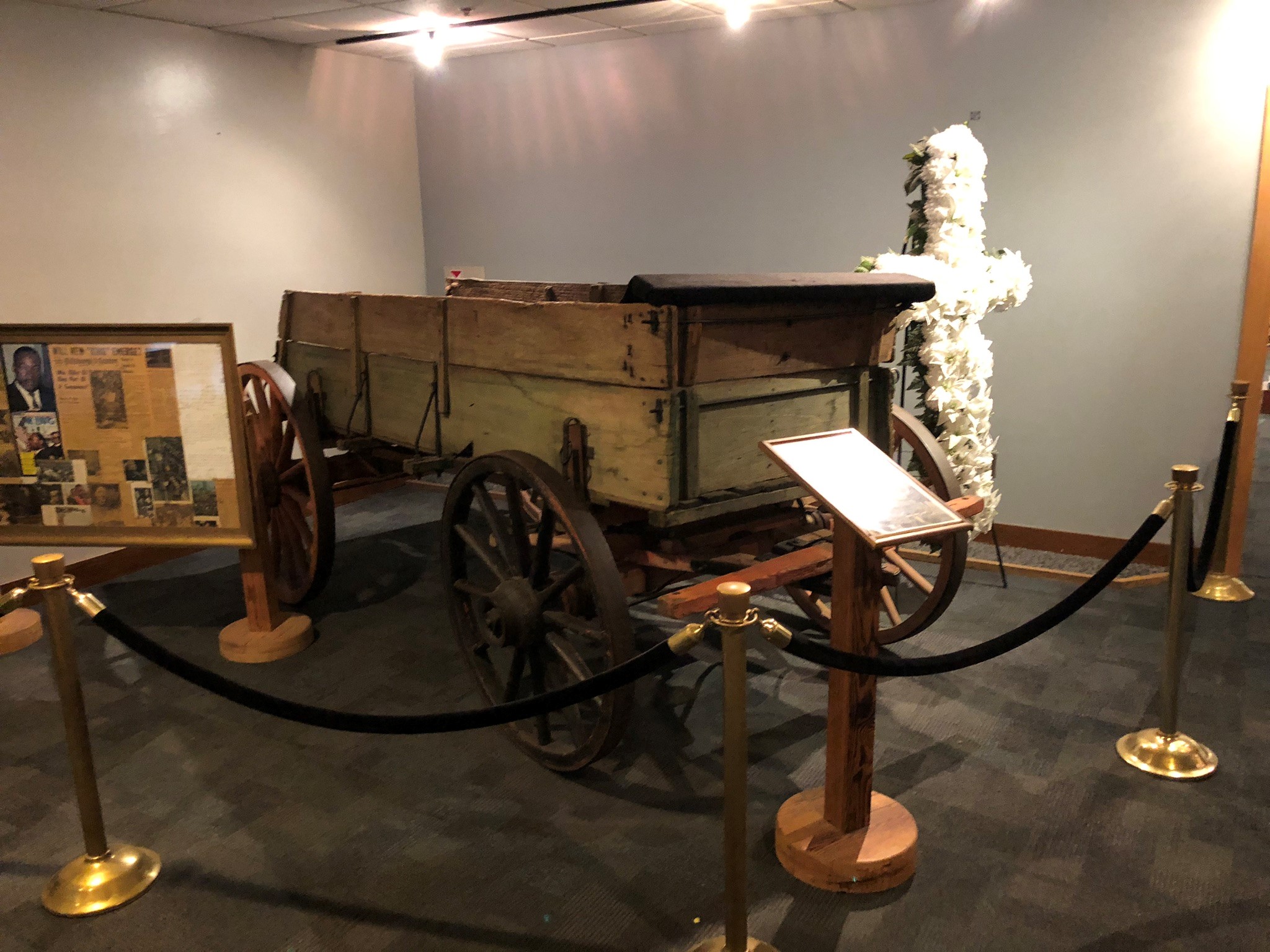
We started at the Visitor Center. There were some very nice displays and some very good videos to watch. To be honest, after several days of Civil Rights museums, we were kind of spent. It was really good though, and the most significant item here to see was the wagon (which was pulled by two mules) which carried Dr. King’s body down the streets of Atlanta to the Ebenezer Baptist Church, one block away. It was to signify his work with the poor, and it is a touching sight to see.
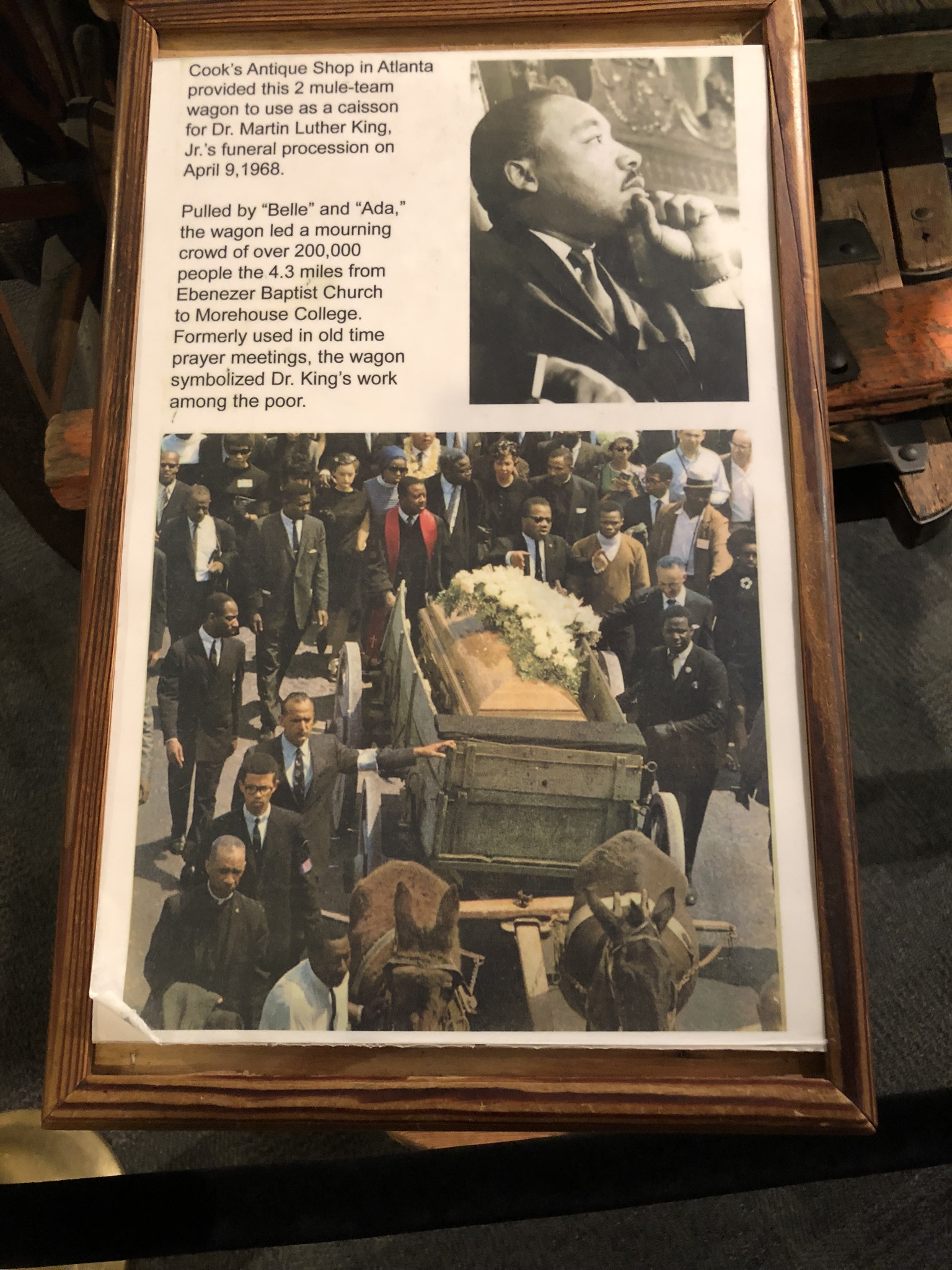
The funeral procession. A wooden carriage drawn by two mules
The actual wagon

We emerged from the center, and walked to our next exhibit: His birthplace. The Memorial Center is really a complex of several buildings important to King’s life. They are all within a three block radius, and kept like they were in the 1950’s when King lived there. The home he was born in is larger than I thought. They do offer tours inside, but the first tour started about the time we had to leave, so we just looked from outside.
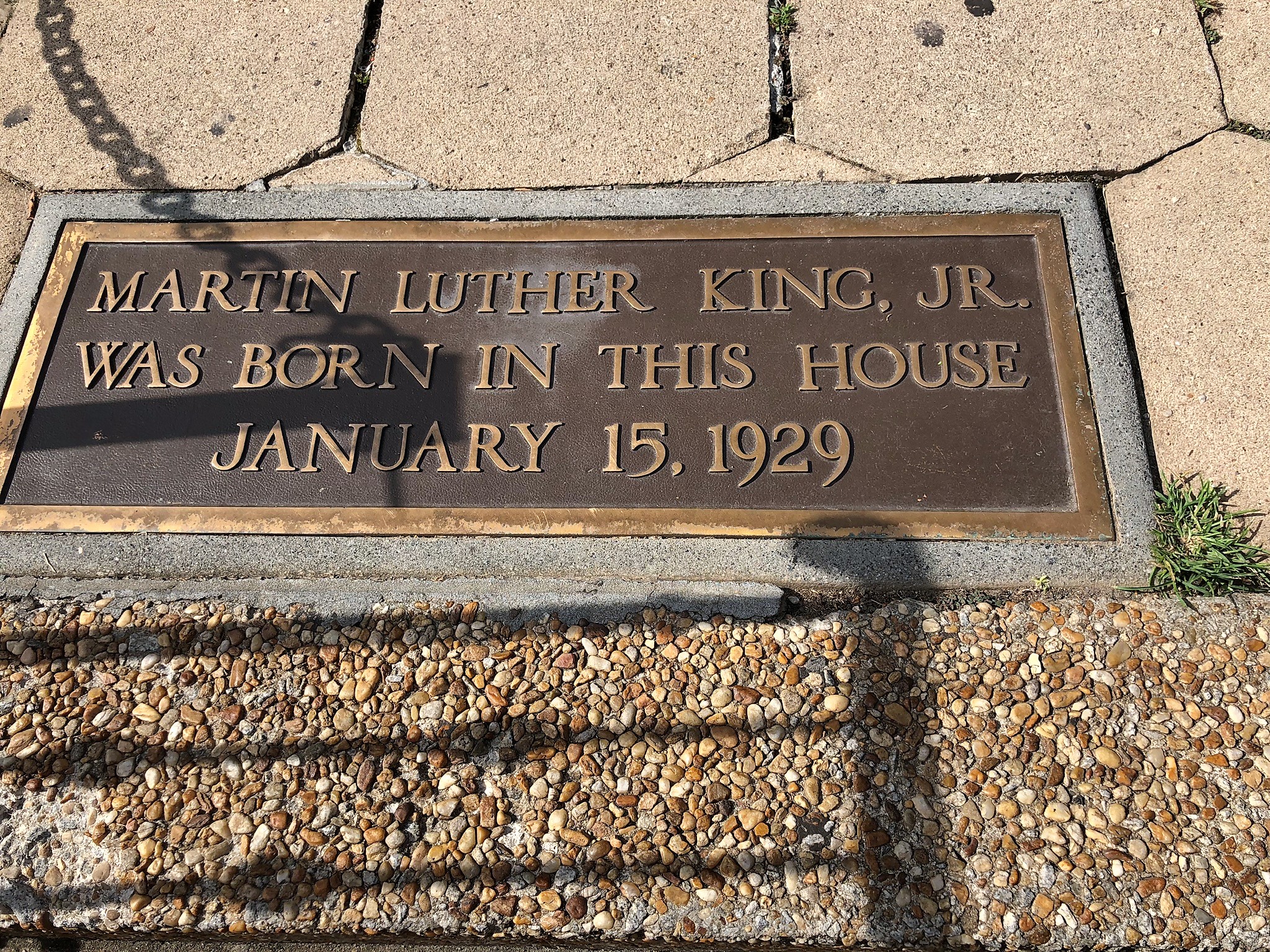
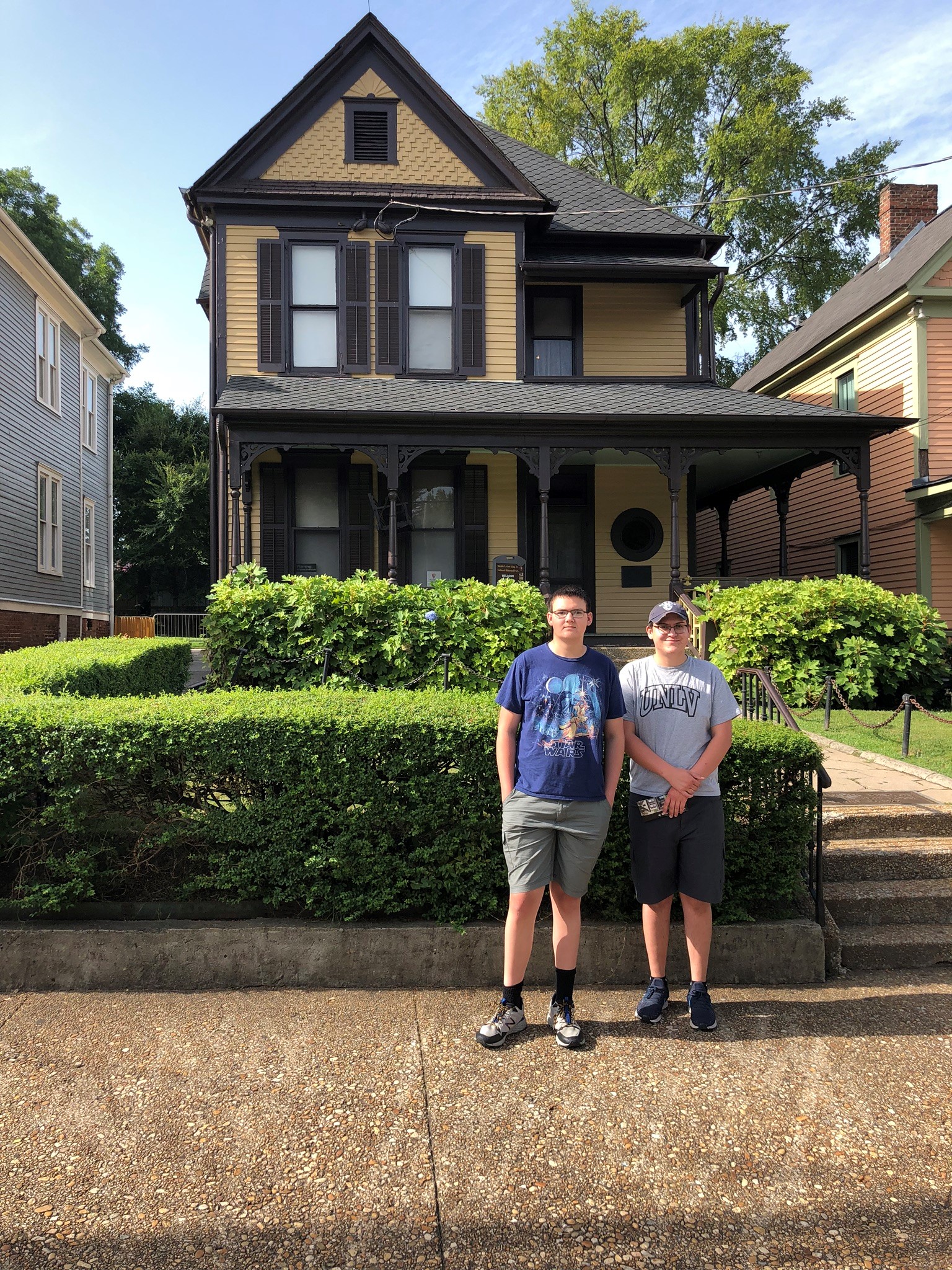
The walkway to the front of the house
The birthplace (and home he grew up in) of Dr. Martin Luther King, Jr.

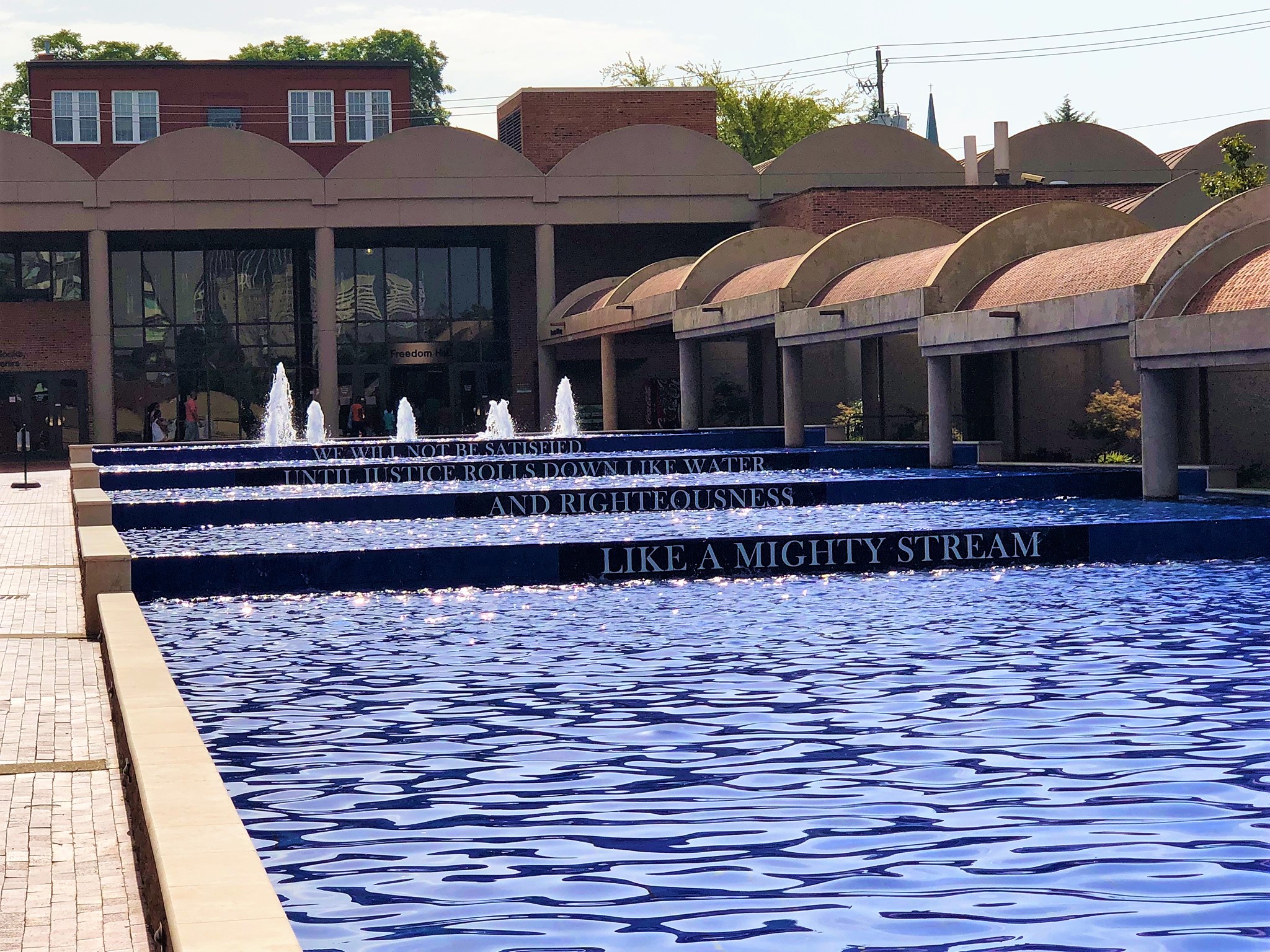
Next, we walked over to the family tomb. It has a water feature, and the quote from his “I Have a Dream” speech about justice and water. Dr. King’s and his wife’s tomb is located in the middle of a blue pool of running water, on an island of marble. They are buried together, and it is a very pretty picture. Nearby there is an eternal flame. We stood there for awhile and pondered all that we had seen in the last few days. So much history and significance for all Americans. It is a hard history, but so important for Americans to see and feel. It reminds me of my belief that if people traveled more, met more people, we would have less trouble in the world.
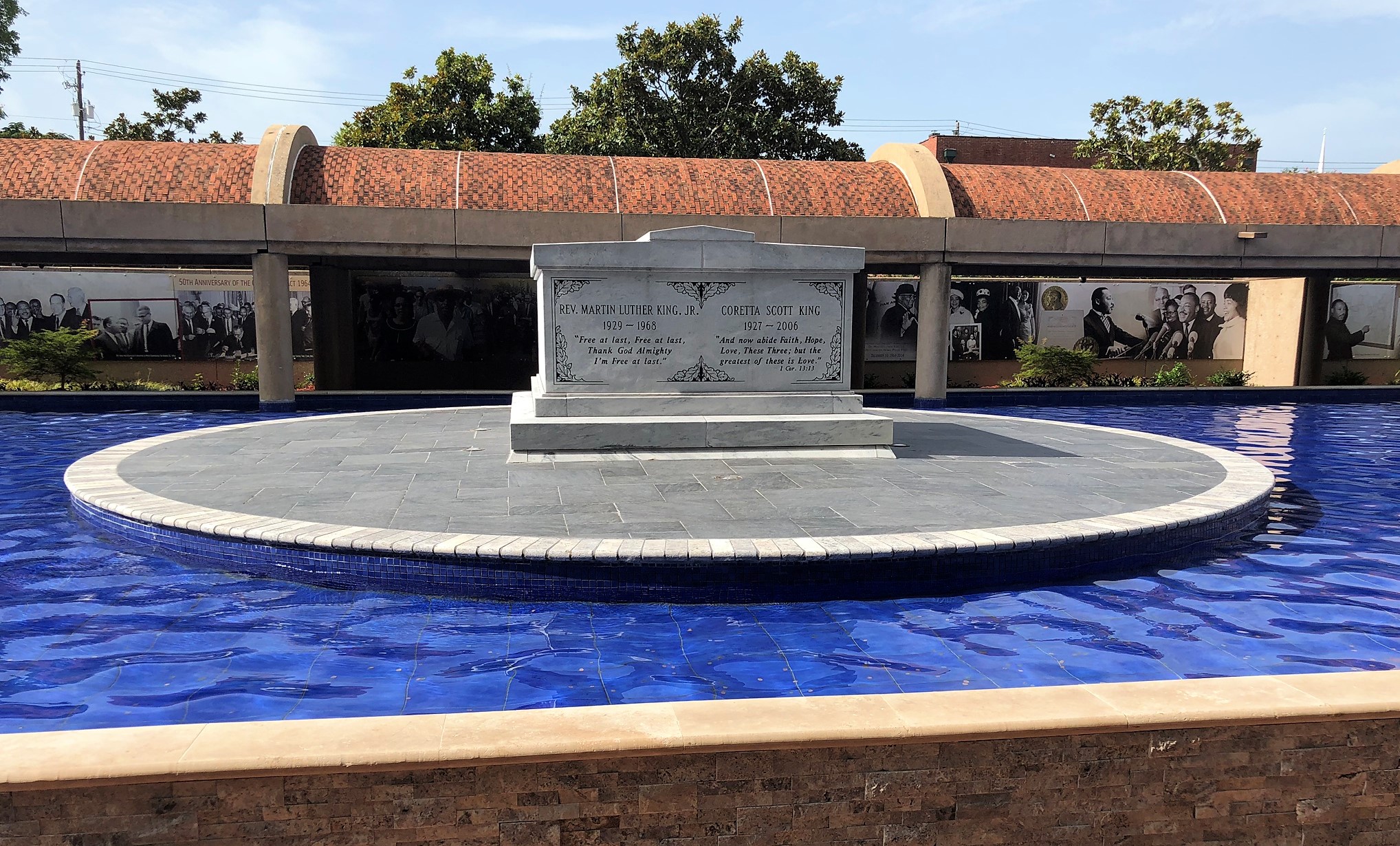
A very peaceful place to rest
The water feature, and this quote, has been prominent on several memorials we’ve visited
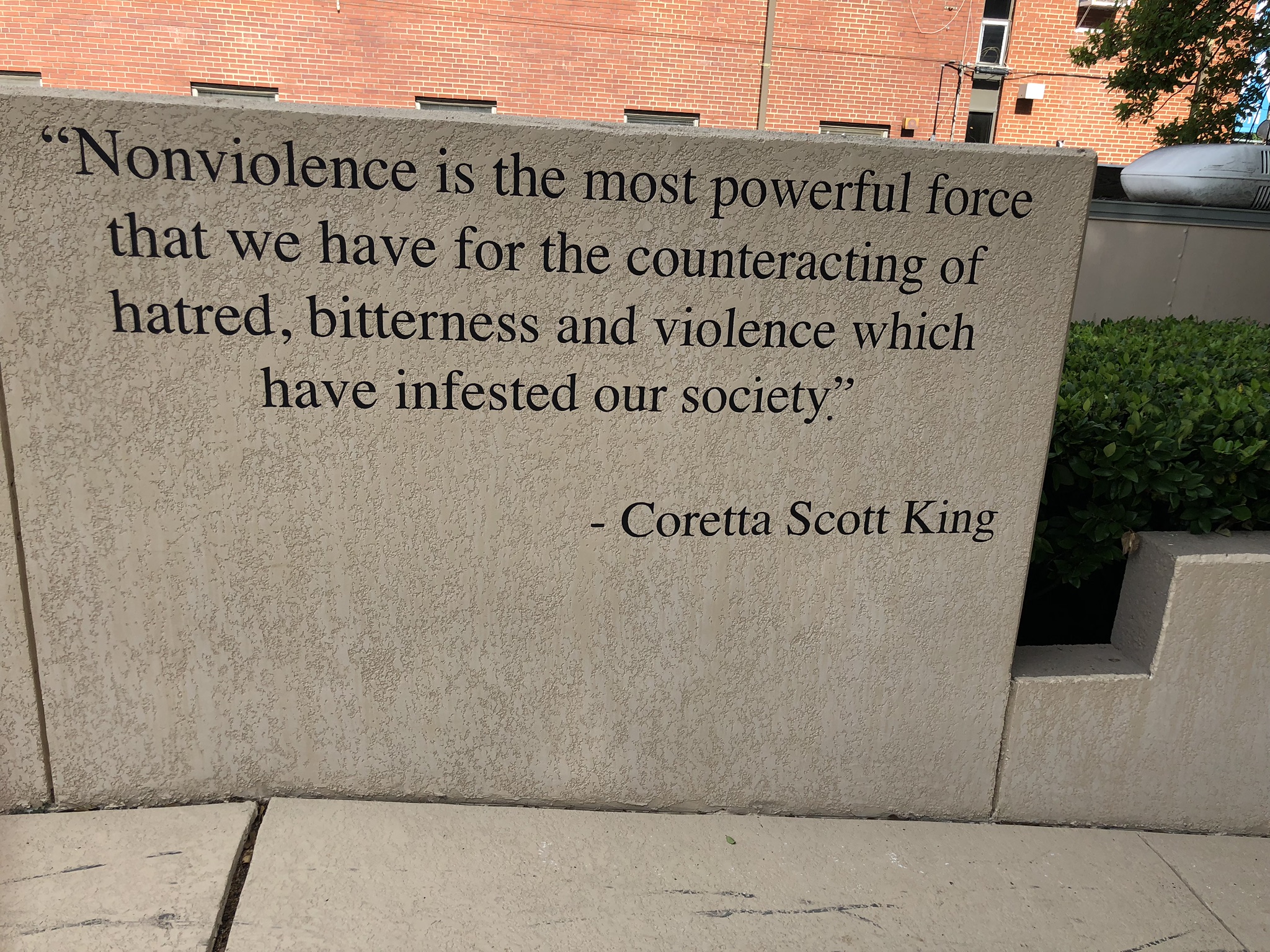
Mrs. King’s words ring true today as well

Finally, we headed over to the last building: the Ebenezer Baptist Church. This place is important because this is where Dr. King first became a minister. In truth, he had grown up here, surrounded by ministers. His grandfather was the minister here, then his father, and finally King himself. Here is where he learned his speaking style. Here is where he developed his faith. This was the King’s house as much as it belonged to their congregations. It is also the place where his funeral was held. It is also the place where his mother died (see below). We finished our Civil Rights tour through the south with this church, and it felt…right.
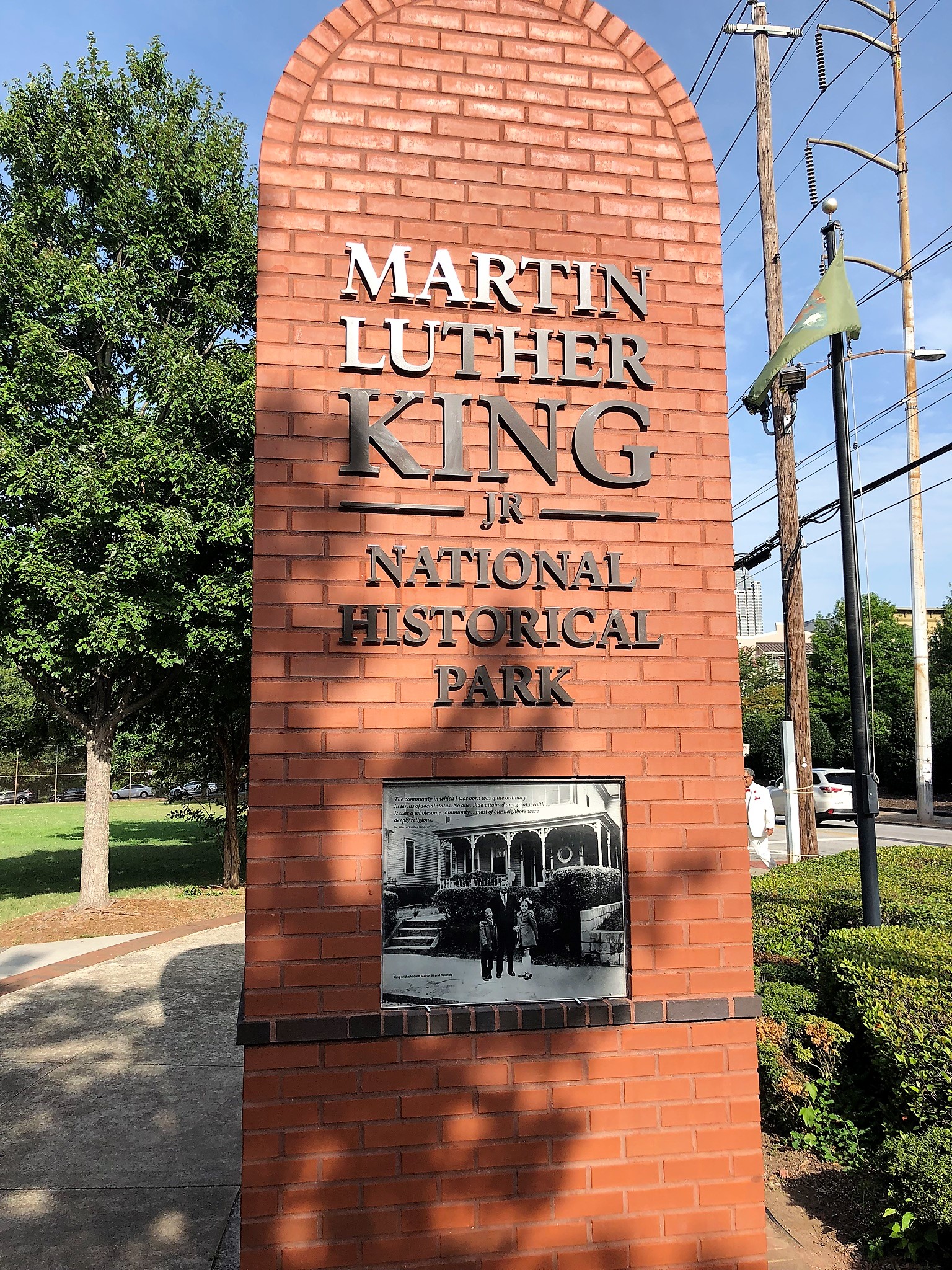
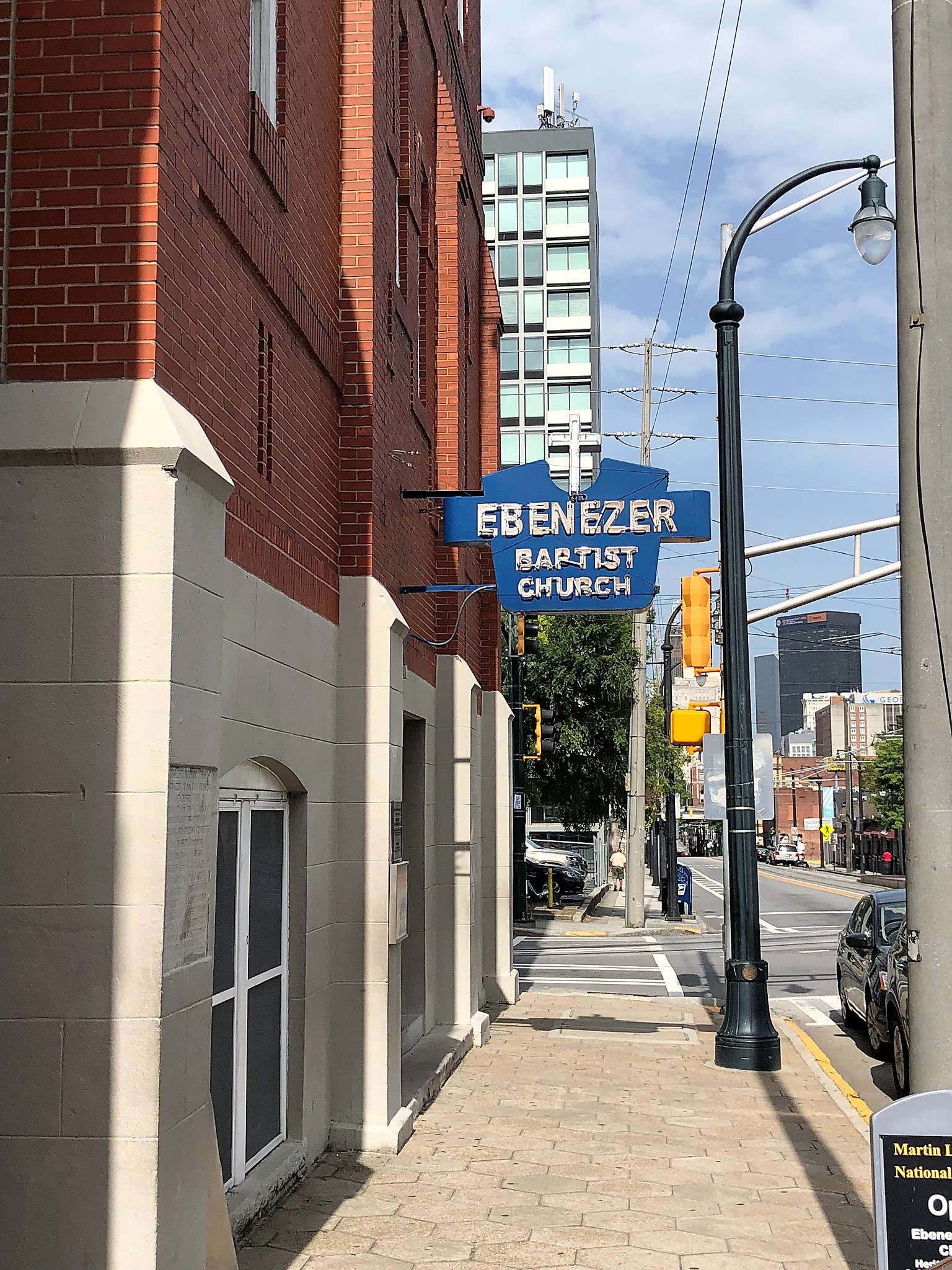
The National Historic Park encompasses several buildings and sites
The entrance to the Ebenezer Baptist Church
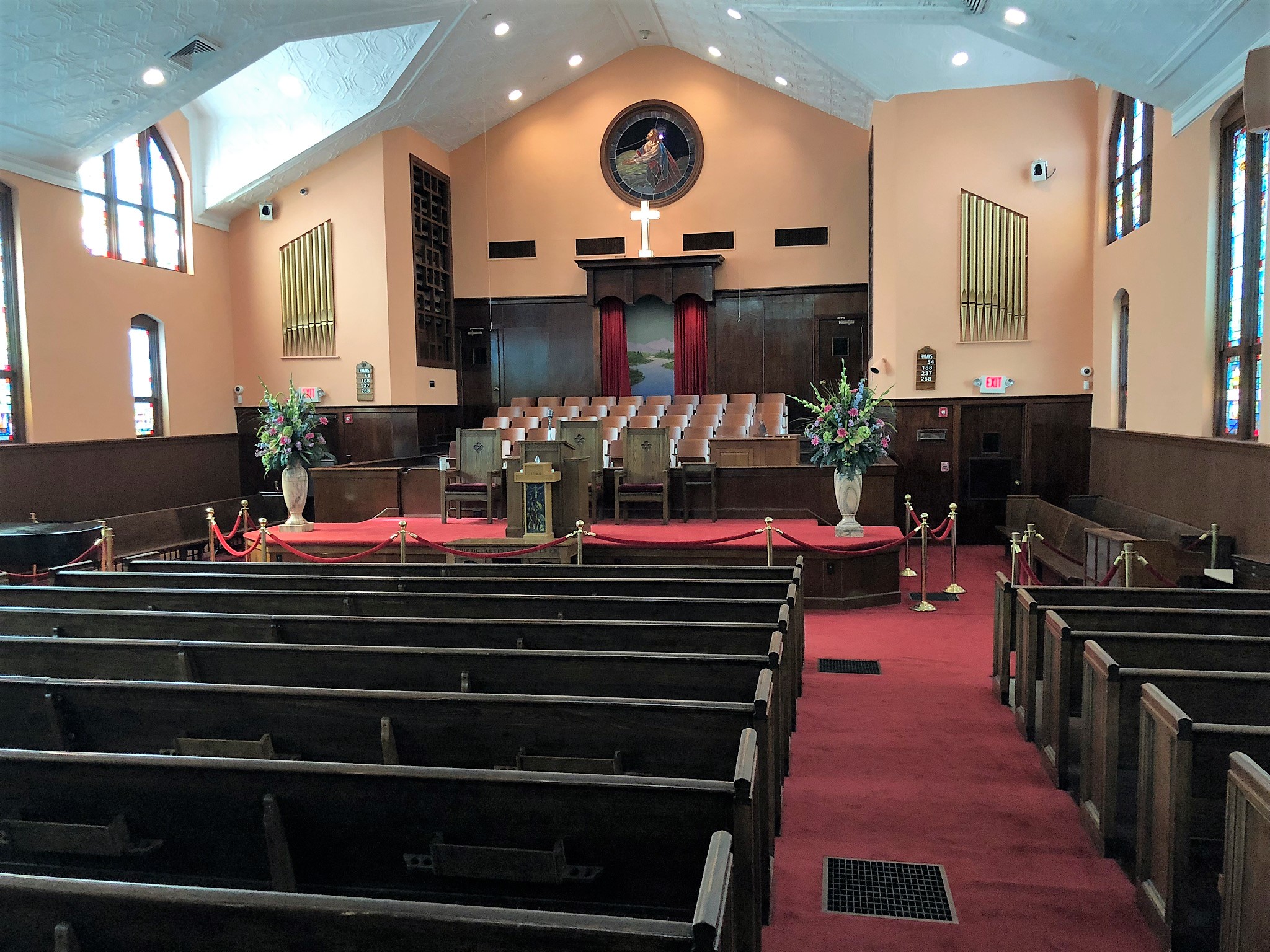
The Sanctuary where three generations of Kings preached the gospel

A few final thoughts about today:

  • As I said earlier, the Ebenezer Baptist Church is not just where the King men preached, but Dr. King’s mother, Alberta King, played the organ (on the right hand side of the picture above). It is also at that spot where the organ stands where Mrs. King died. I had no idea until I visited this church, just how much tragedy this family has endured. Dr. King’s brother drowned in 1969, and in 1974, just six years after her son’s death at the hands of an assassin, Alberta King was shot by a deranged man – and killed. Listening to the story, it was heartbreaking. Another man was also shot to death before the gunman could be apprehended. The gunman, Marcus Wayne Chenault , was convicted of murder, and died in prison in 1995. He claimed he hated Christians, especially the black pastors. He was going to shoot Dr. Martin Luther King Sr., but shot Mrs. King instead. So tragic.
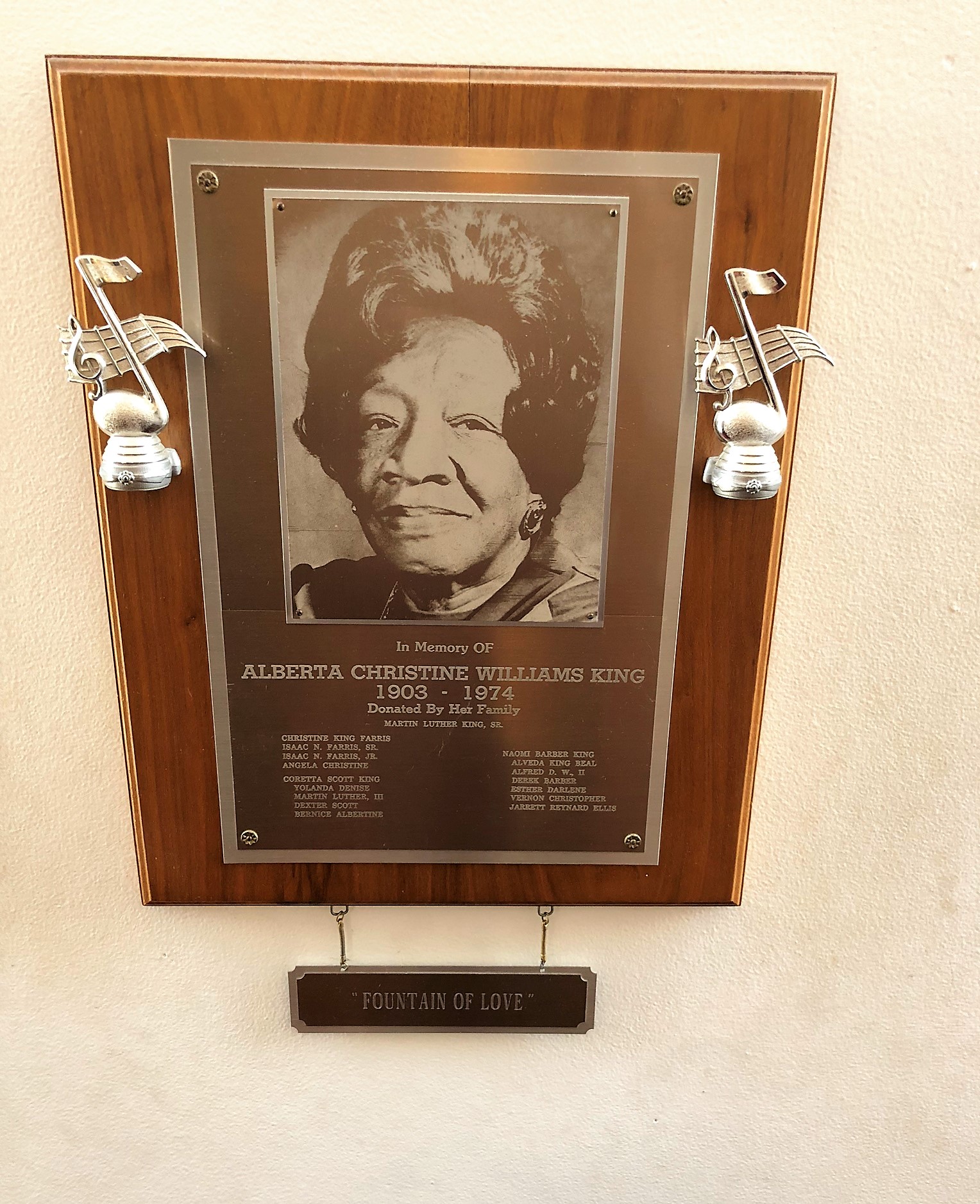
Dr. King’s mother
  • One of the major influences on King’s life was of course, Mahatma Gandhi. Gandhi’s practice of non-violent protest appealed to King, and he felt that that was the best way to affect change. If people saw the indignity that was heaped on the black man, perhaps they could change minds. Because of this, there is a statue of Gandhi at the front of the Center:
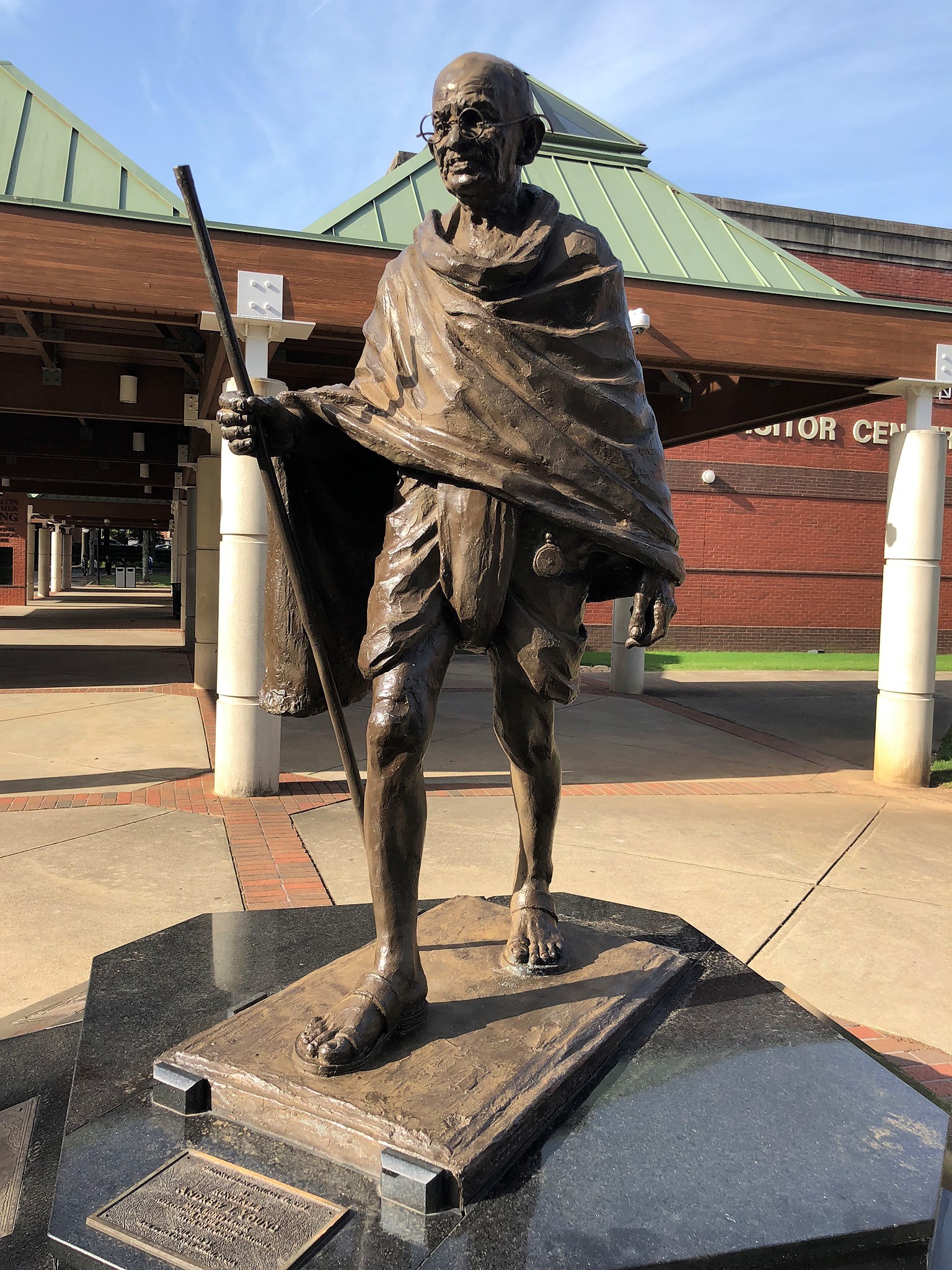
Gandhi influenced King greatly – as he did the American Civil Rights Movement
  • Did you know (or do you care), that Martin Luther King, Jr. wasn’t the name he was born with? King was born Michael King in 1929, the same name as his father. But, when King was 5 years old, his father changed both of their names. Why? It was a gradual process for King Sr., but he had always admired the protestant reformist, Martin Luther. So, in 1934, when Dr. King was just 5 years old, his father changed his name to reflect King Sr.’s progression of faith.
  • Driver’s Rant Part 3: I have a new leader for the nation’s worst drivers: Florida. Take Alabama’s drivers, multiply them by two, and you have a nightmare. Add to that that we were directed to a highway which turned out to be a toll highway. Why there are toll roads, I’ll never know. Why not just tax the citizens like other states? It’s the same thing, just less annoying than stopping every 5-10 miles to throw some coins into a plastic net-catcher-thing. Seriously, we had to slow down at least four times to pay tolls, all within about a 30 mile stretch of highway. It slowed me down, and ultimately cost me close to $10 – just to drive down a dang road. Come on, man!
  • Today was a much better day. I believe I have gathered my second wind. Although I still had a long drive today, I was less overwrought with fatigue. A good night’s sleep helped. Tomorrow shouldn’t be too bad either. We are currently spending the night in Titusville, Florida, and tomorrow we visit the Kennedy Space Center! Definitely one of the stops we have all been looking forward to. We should also be able to view the Atlantic Ocean – a significant event, I’m sure. We have reached the East Coast!

Thanks for reading. I hope you’re not getting sick of us. We’re not sick of you…;)
Day Nine: Birmingham, Alabama

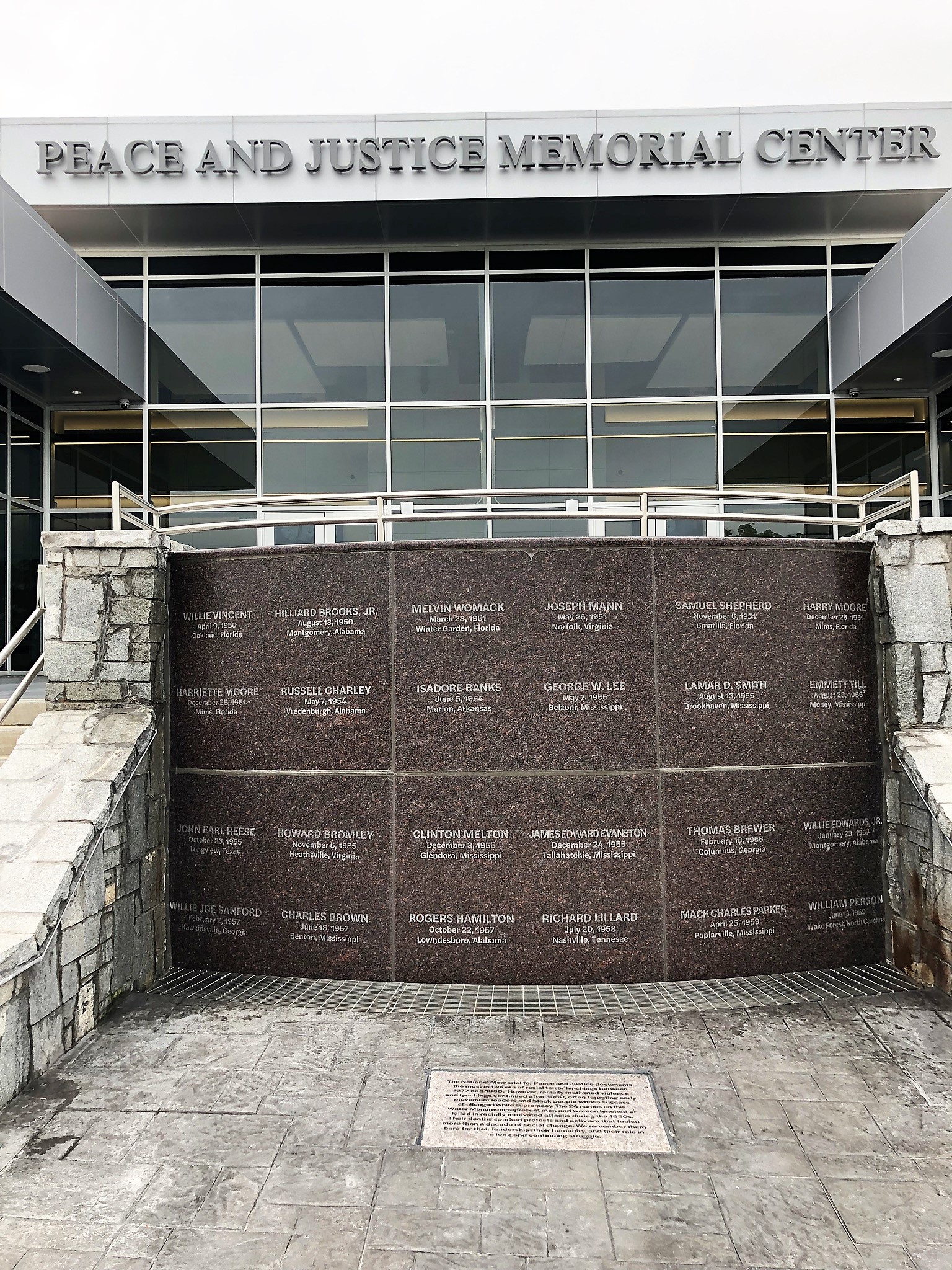
This morning we started with a visit to the Peace and Justice Memorial Center in Montgomery. It is one of the newest memorials commemorating the Civil Rights movement. This particular memorial is dedicated to those who were killed by lynching.

This subject is so hard because it is so unbelievable and inconceivable that something like this could happen – in the country. It was an early version of domestic terrorism which struck fear in the hearts of those who were most likely to become victims: the African-American.

The reasons, if there were any, didn’t seem to matter. “Crimes” included following too close to someone on the street or sidewalk, or “looking” at someone’s wife, or asking your neighbor a question, or just walking down the street.

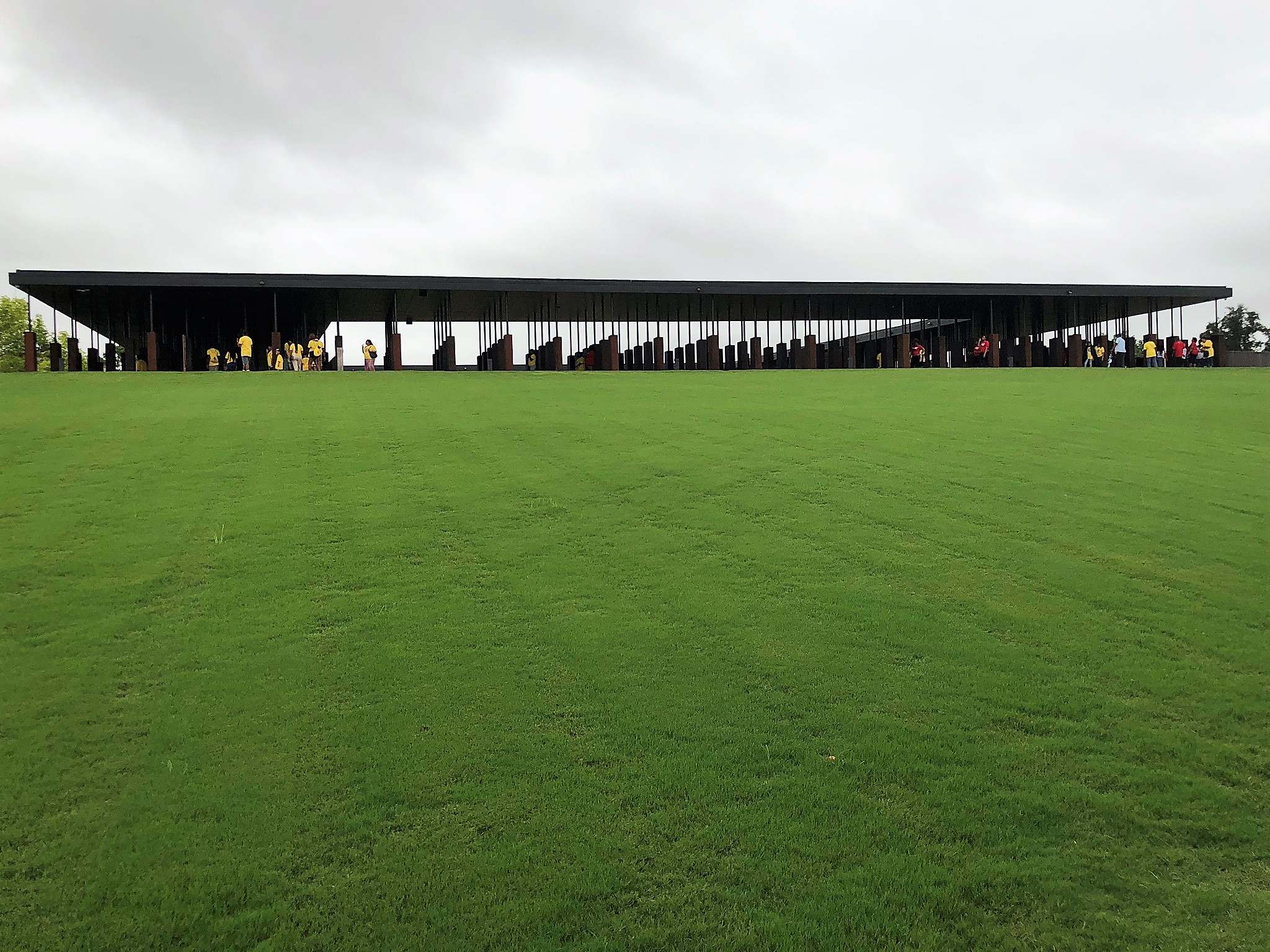
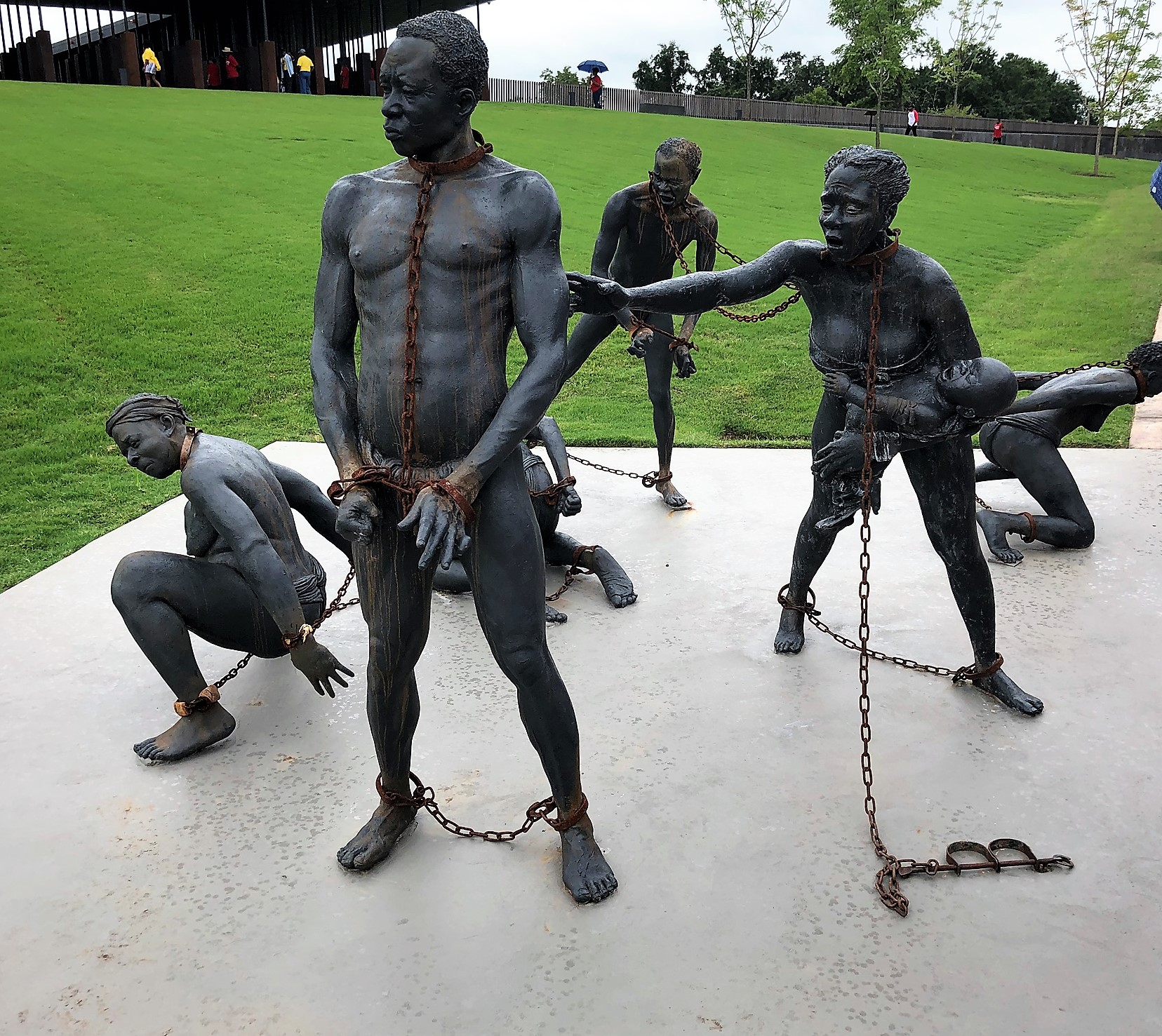
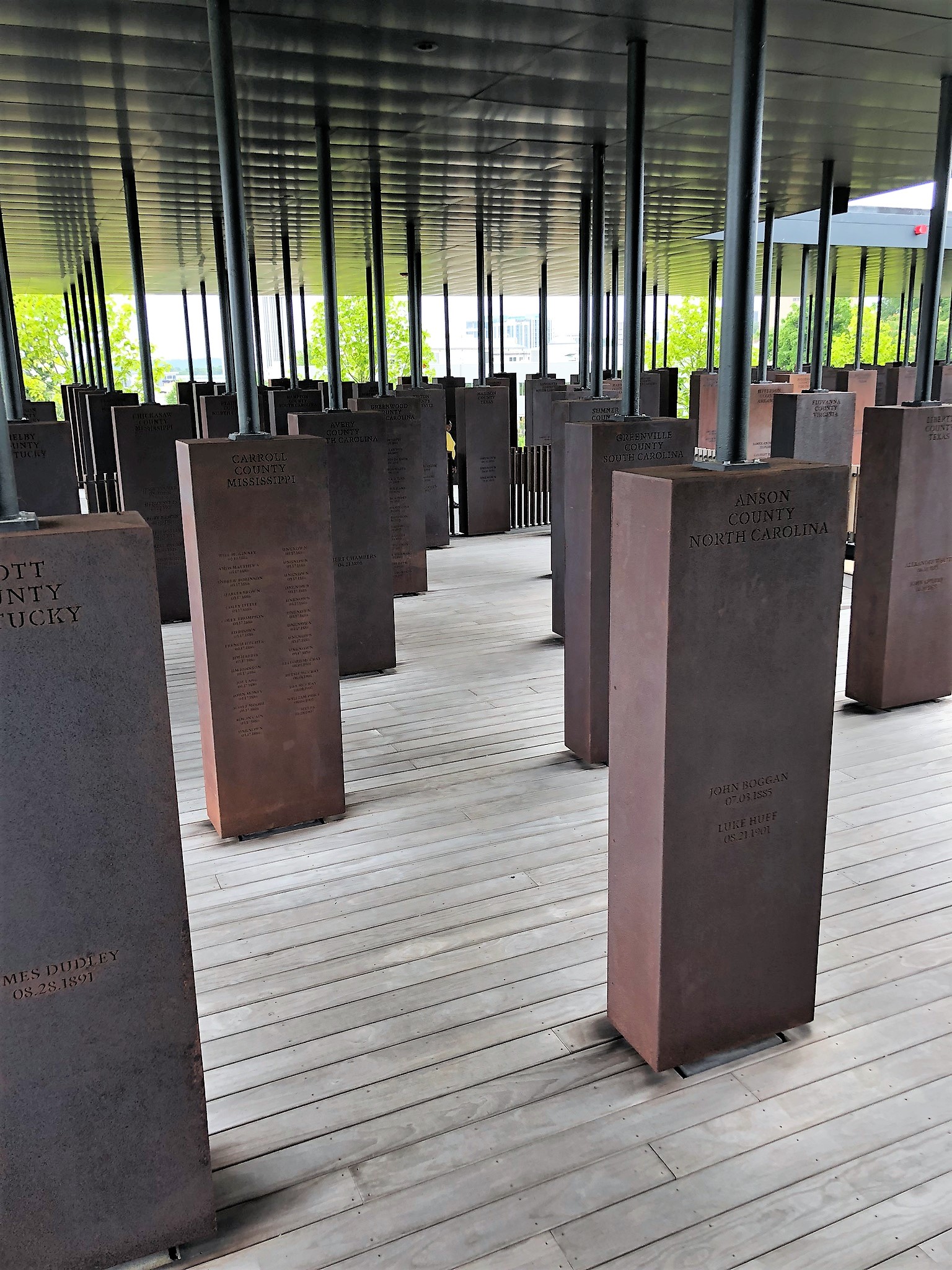
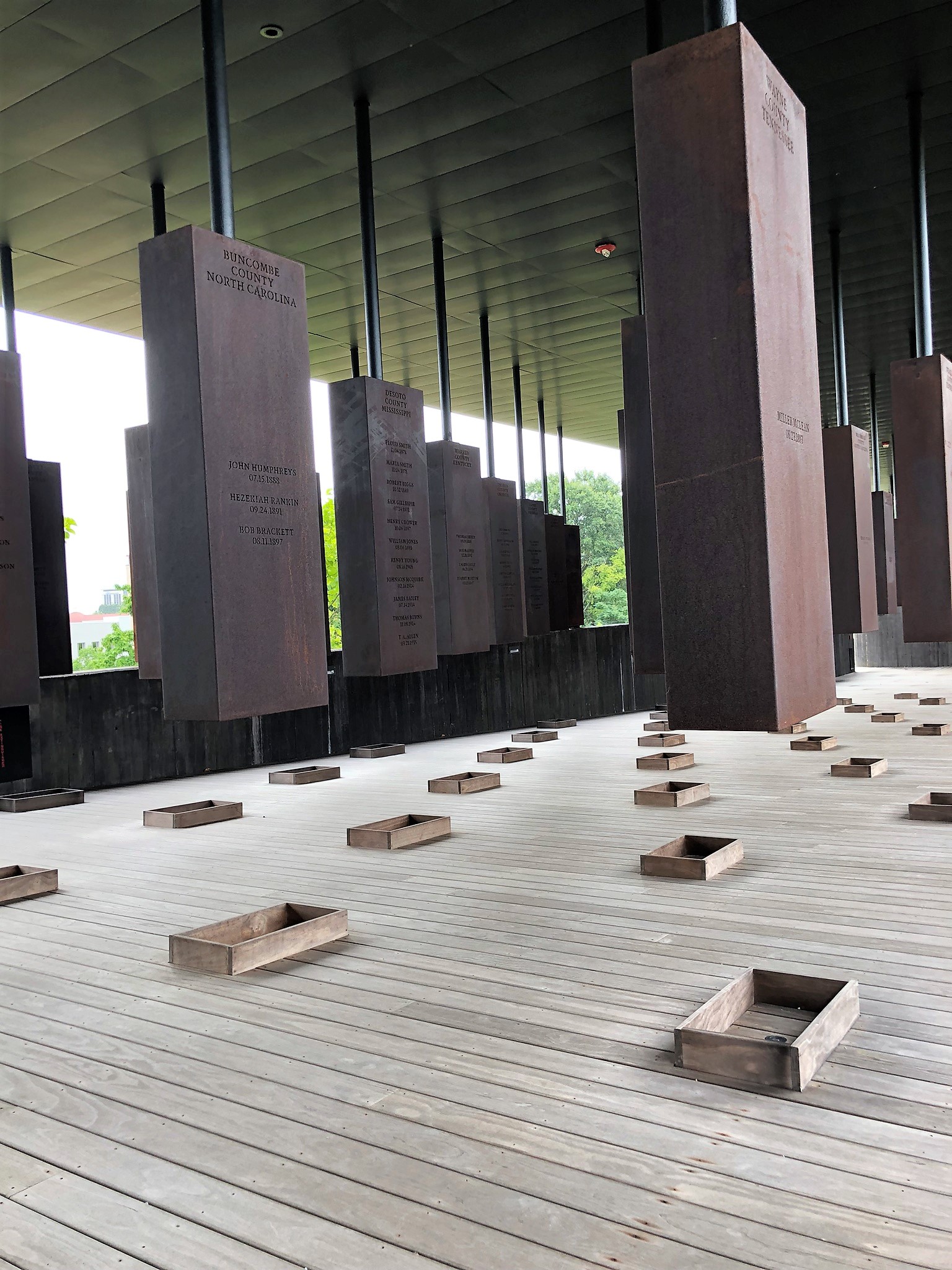
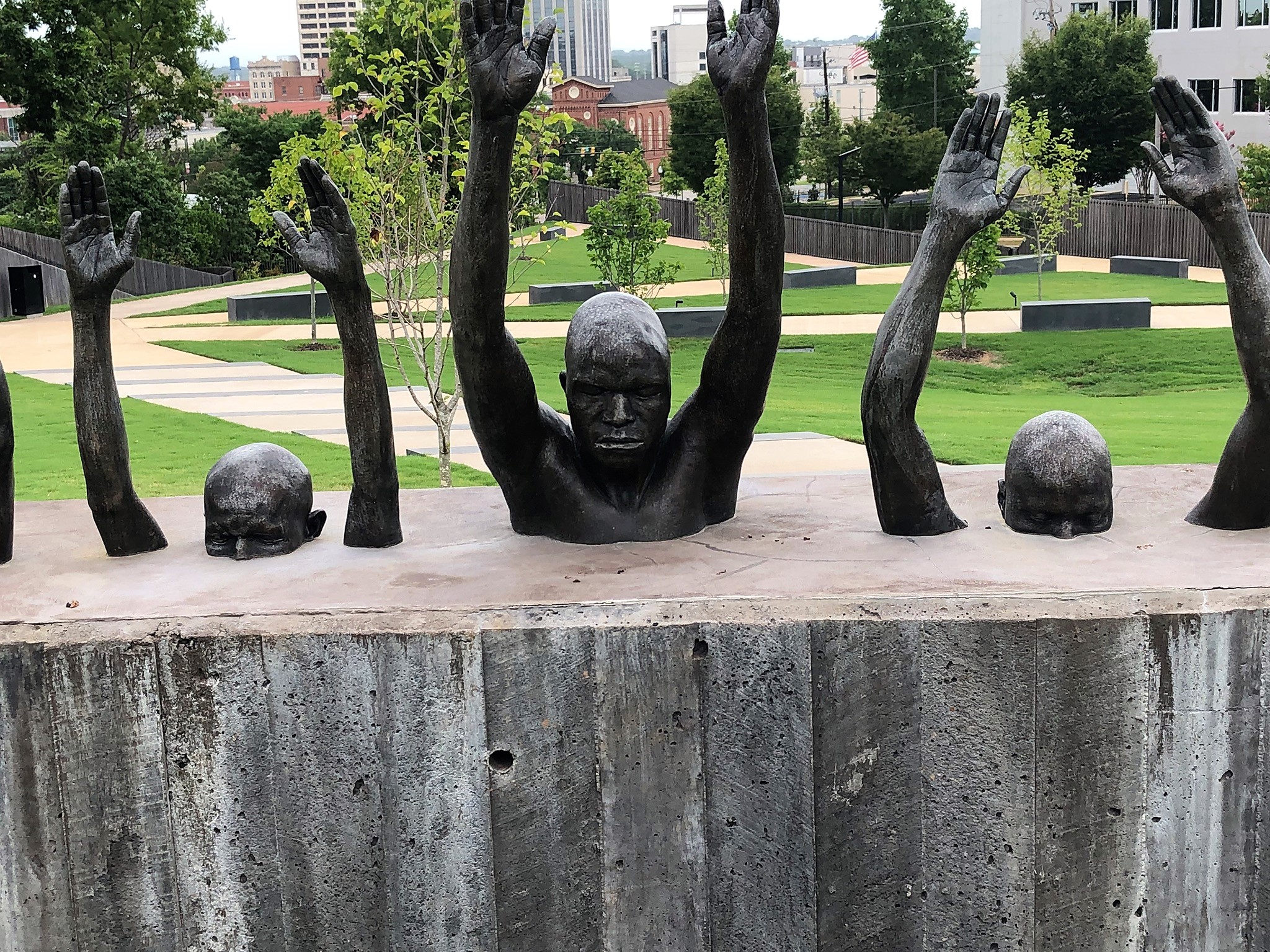
The memorial has several features, starting with the sculpture of several slaves – in chains – standing defiant, pleading for mercy, or crying out in anguish. It is a very moving scene which gives you an idea of the horror of slavery. Of being bound by chains – and oppression. The sculpture stands at the edge of a very green lawn, upon which stands a strange structure. As you get closer, your eyes are drawn to the number of monolithic slabs of rusted iron, inscribed with names and dates. The iron slabs are connected to the ceiling by steel bars which run from the top of the slab, all the way up.

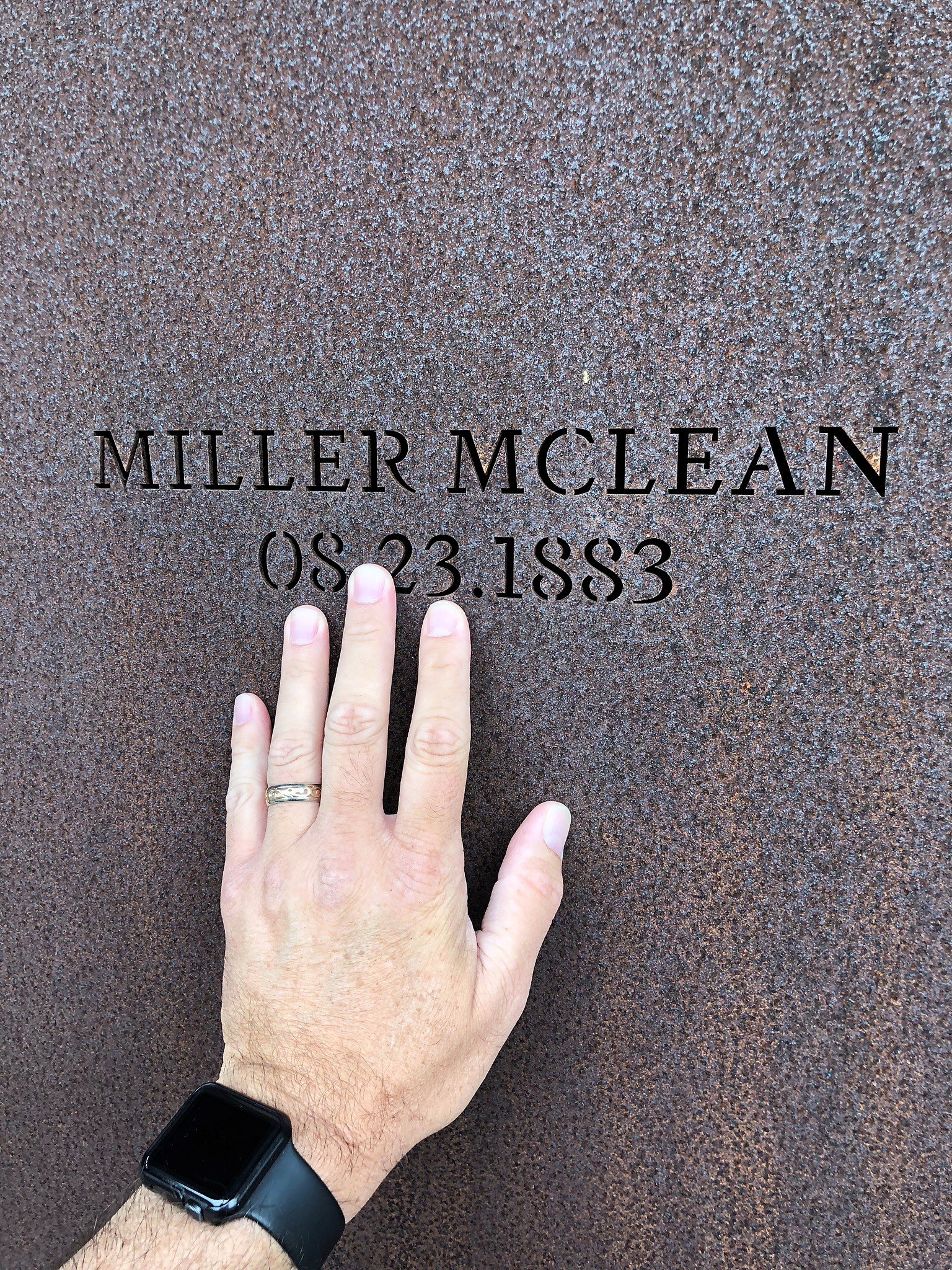
I walk up to these slabs and I put my hand on the rough surface of rusted iron, and I don’t like the feel of it.

Rusted iron, like the chains which bound the slaves

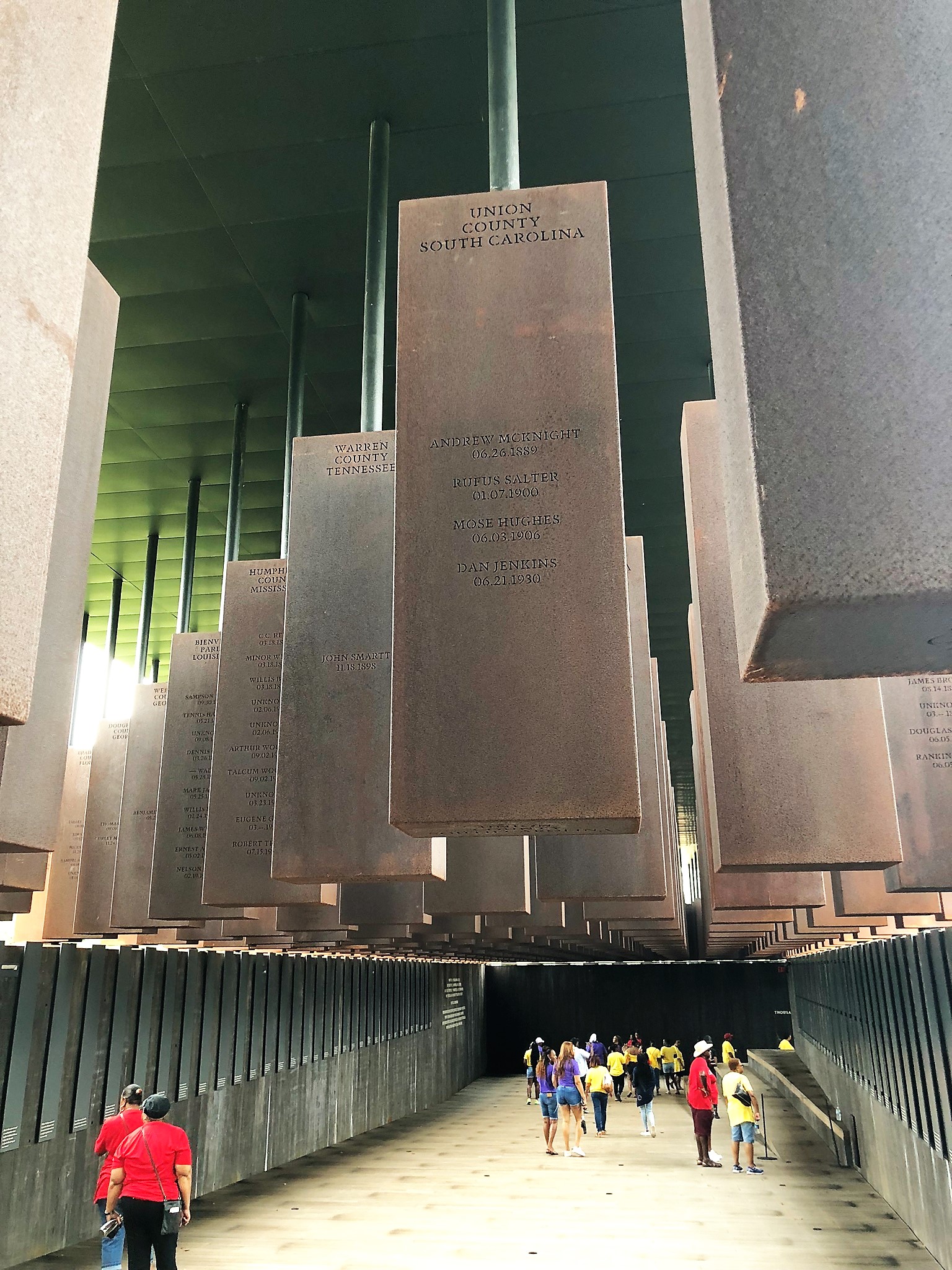
The names and dates refer to victims, some from the 1800’s, some from 1940. They are victims of lynchings. Many of these people were ritualistically beaten, tortured, hung, and in some cases, burned. As I walk amongst these slabs, I notice that the floor slowly goes down into an incline, and the slabs rise to the top. Now, the names and dates are hanging in the air. The effect is chilling. There are hundreds of these rusted slabs – all hanging. It gives off an off-putting feeling, for me it felt like people watching me. I am reminded of the famous song by Billie Holliday. “Strange Fruit” hanging from the trees, and swaying in the breeze…There are other statues and memorials throughout this sad park, but those slabs, combined with the oppressive humid heat of the morning, is almost too much. I am glad when I get back to my truck.

Across the street from the memorial
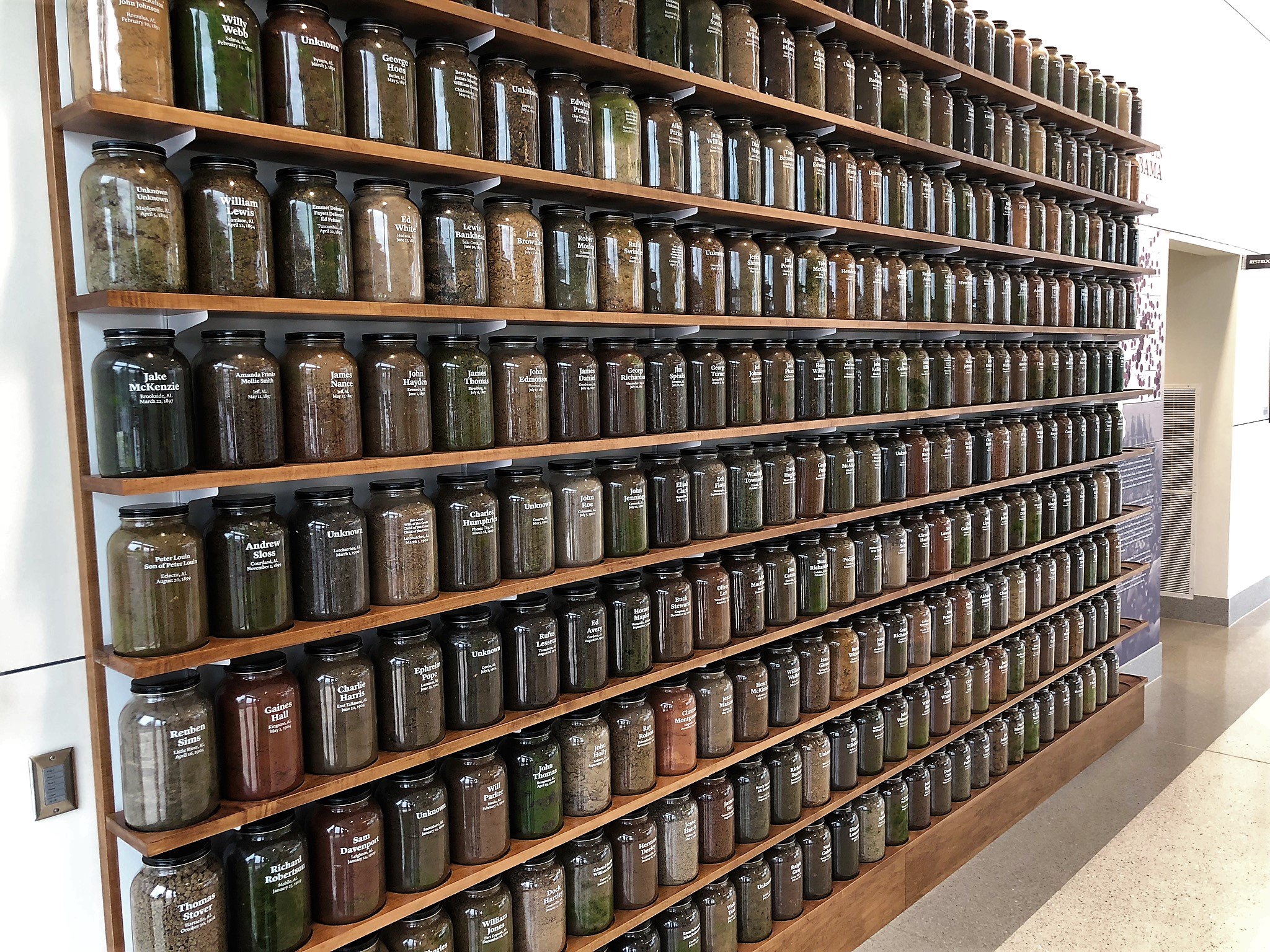
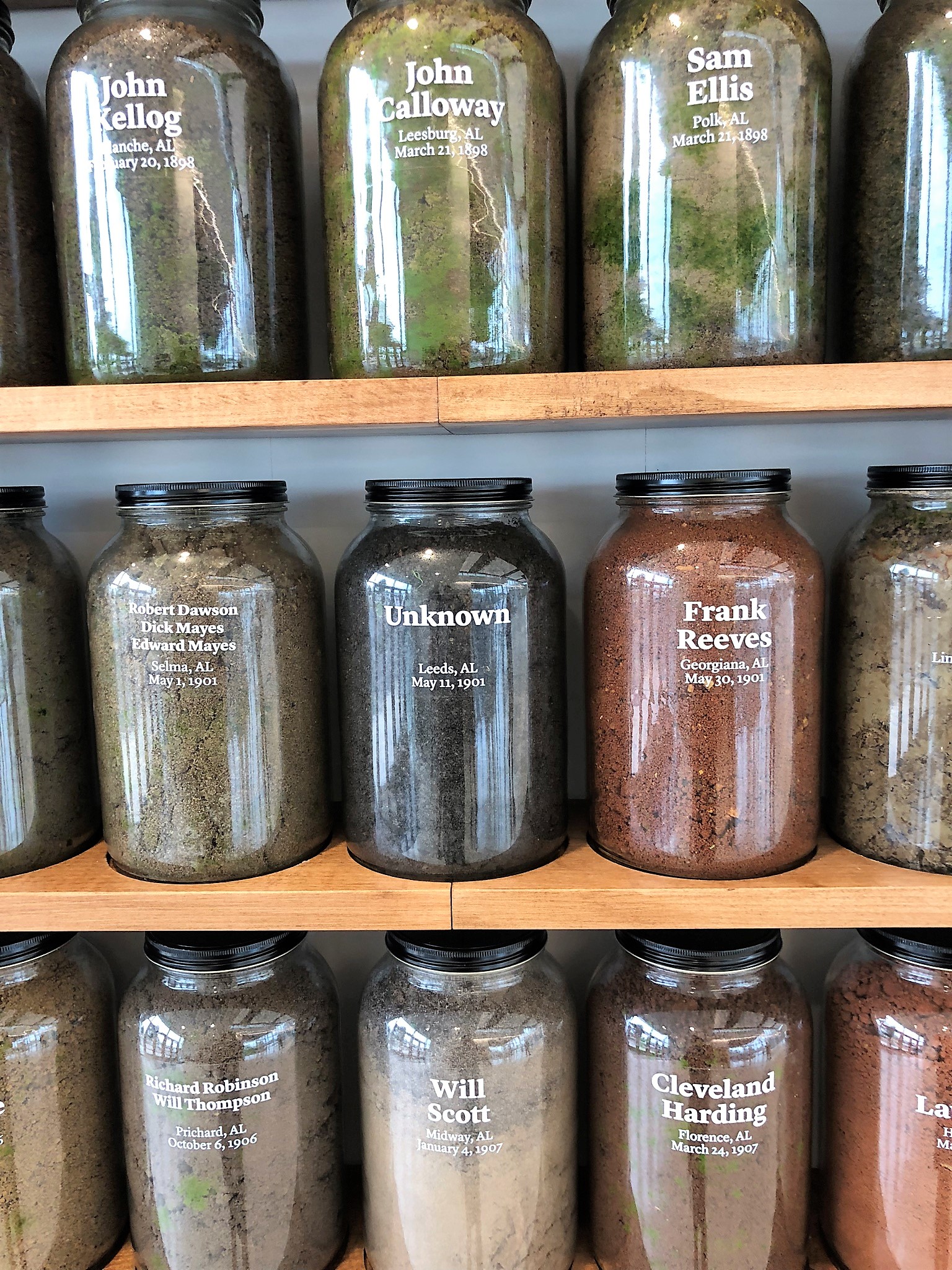
Jars of dirt…
The dirt is from the region where these people died.
The Memorial
Bound by rusted chains
They start, just above the floor.
And they slowly rise as you continue to walk.
Until they hover above you, like strange fruit.
A sculpture outside.
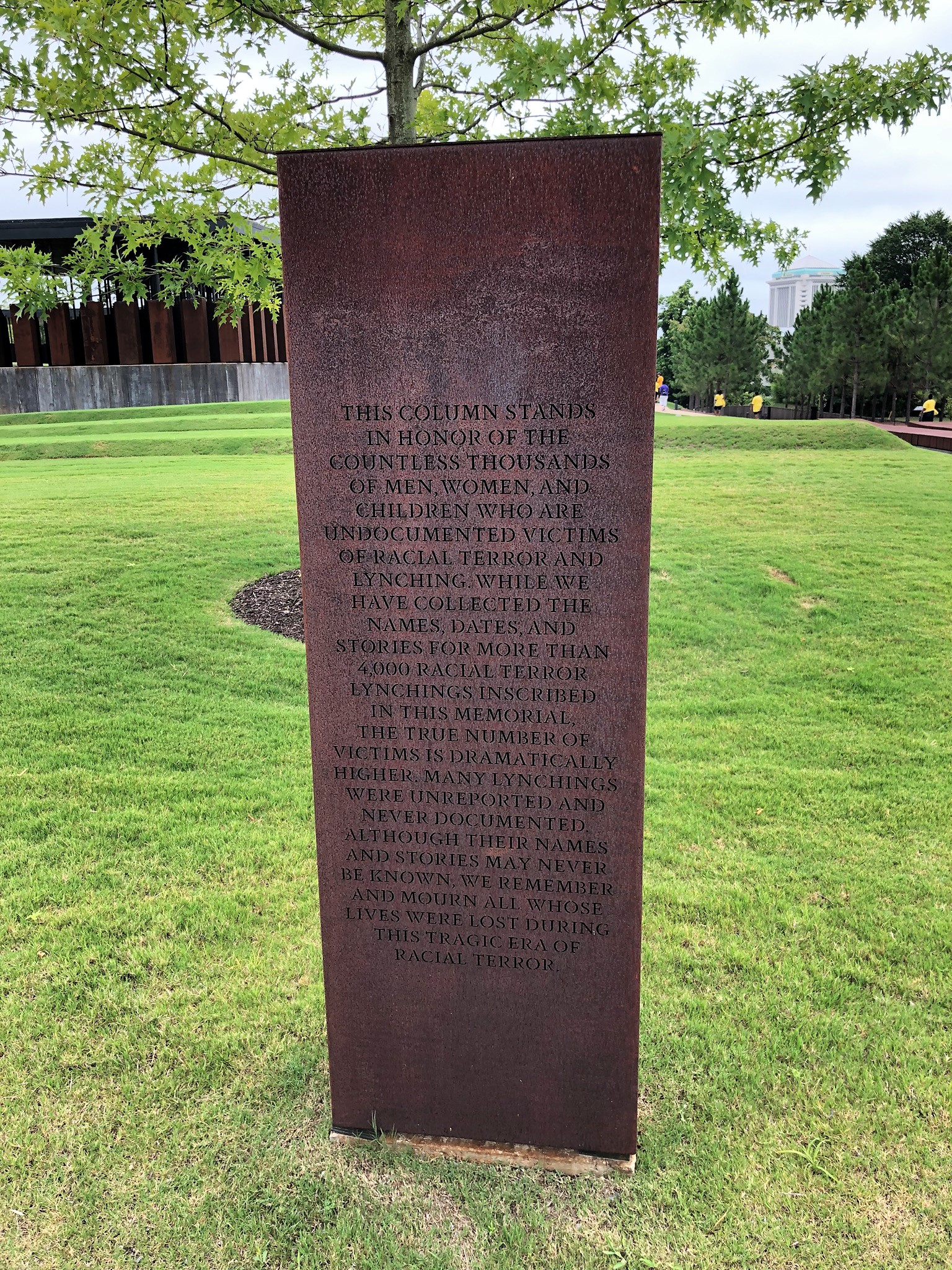
Over 4,000 documented. Who knows how many more.

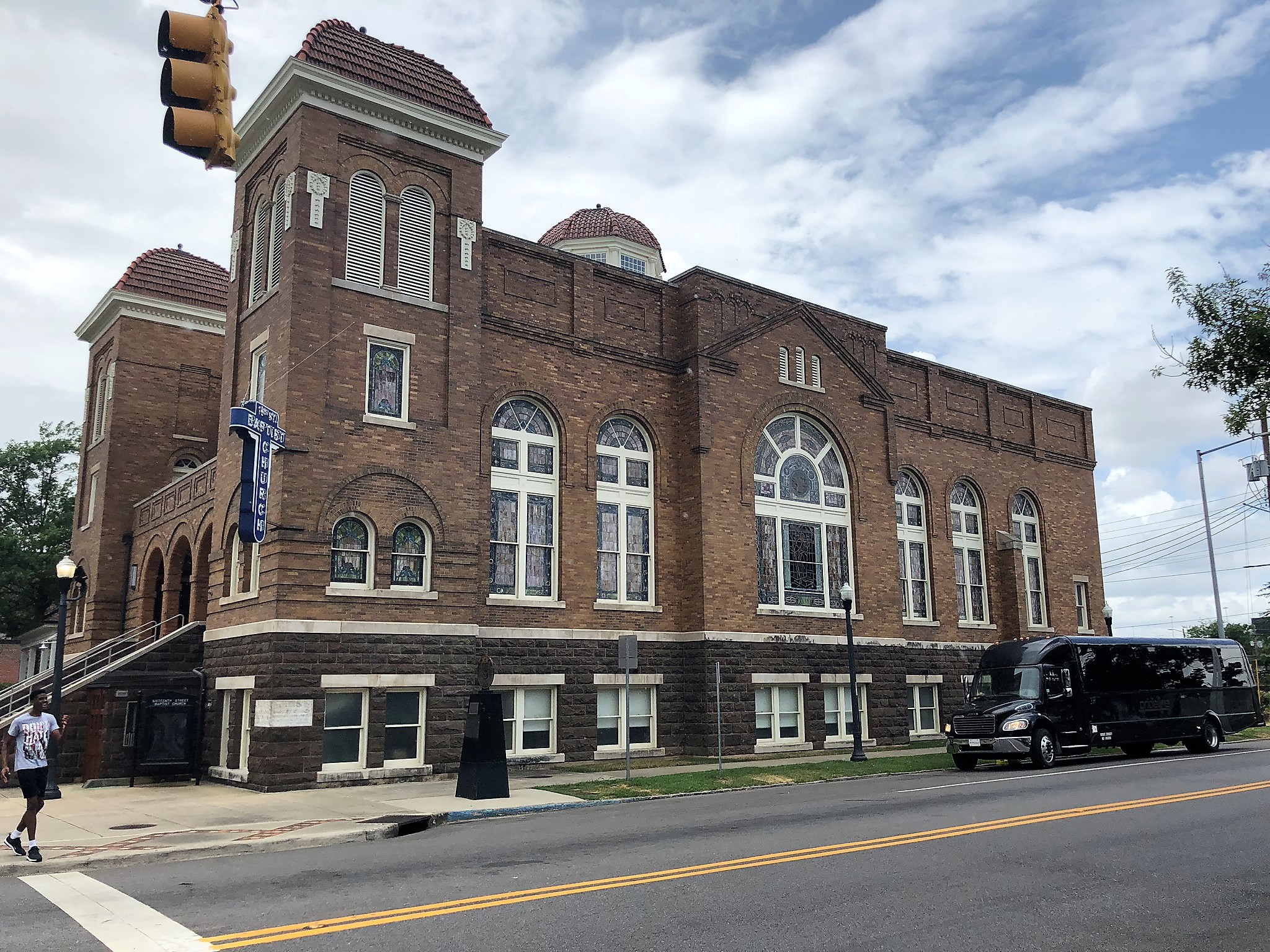
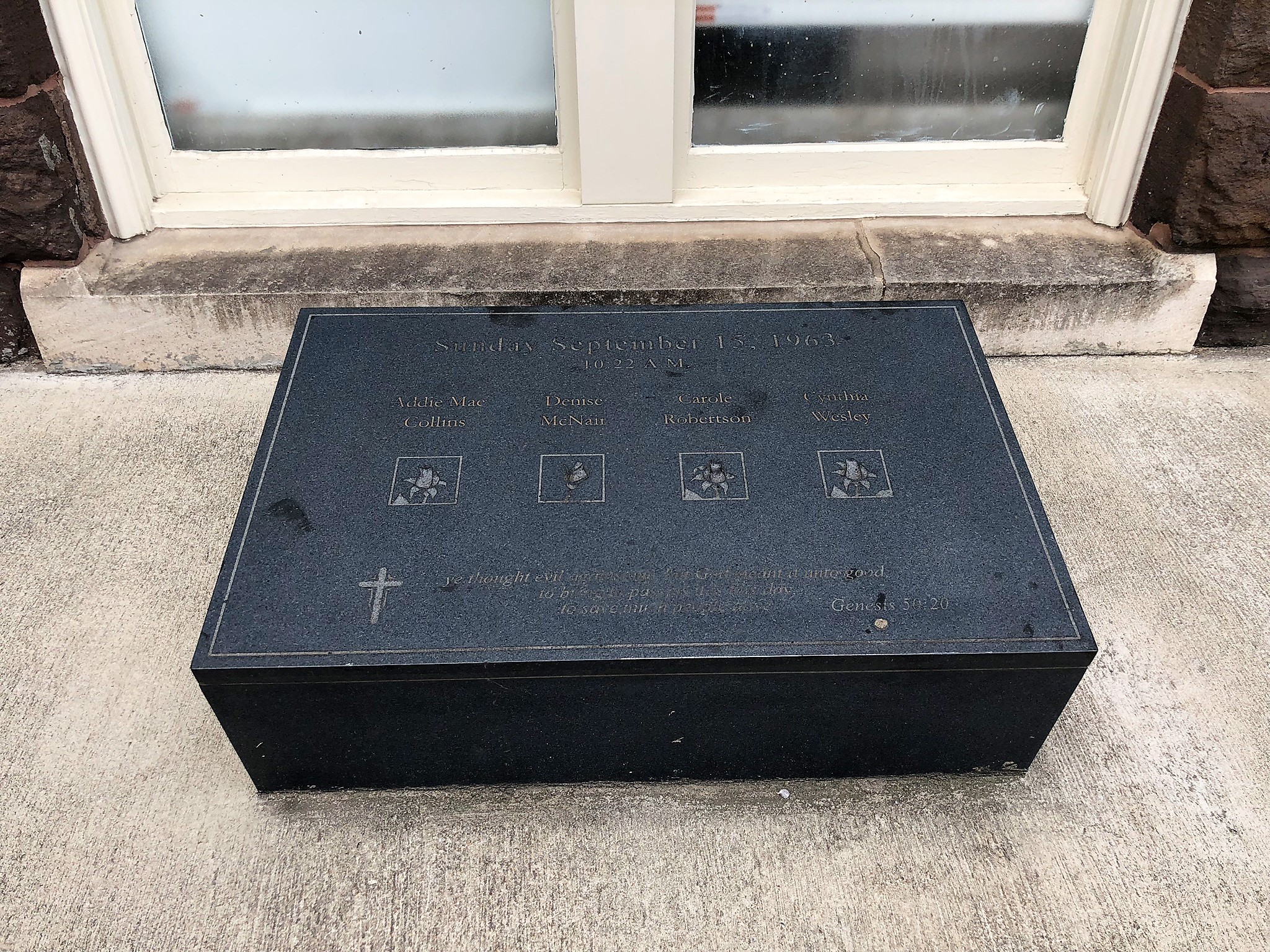
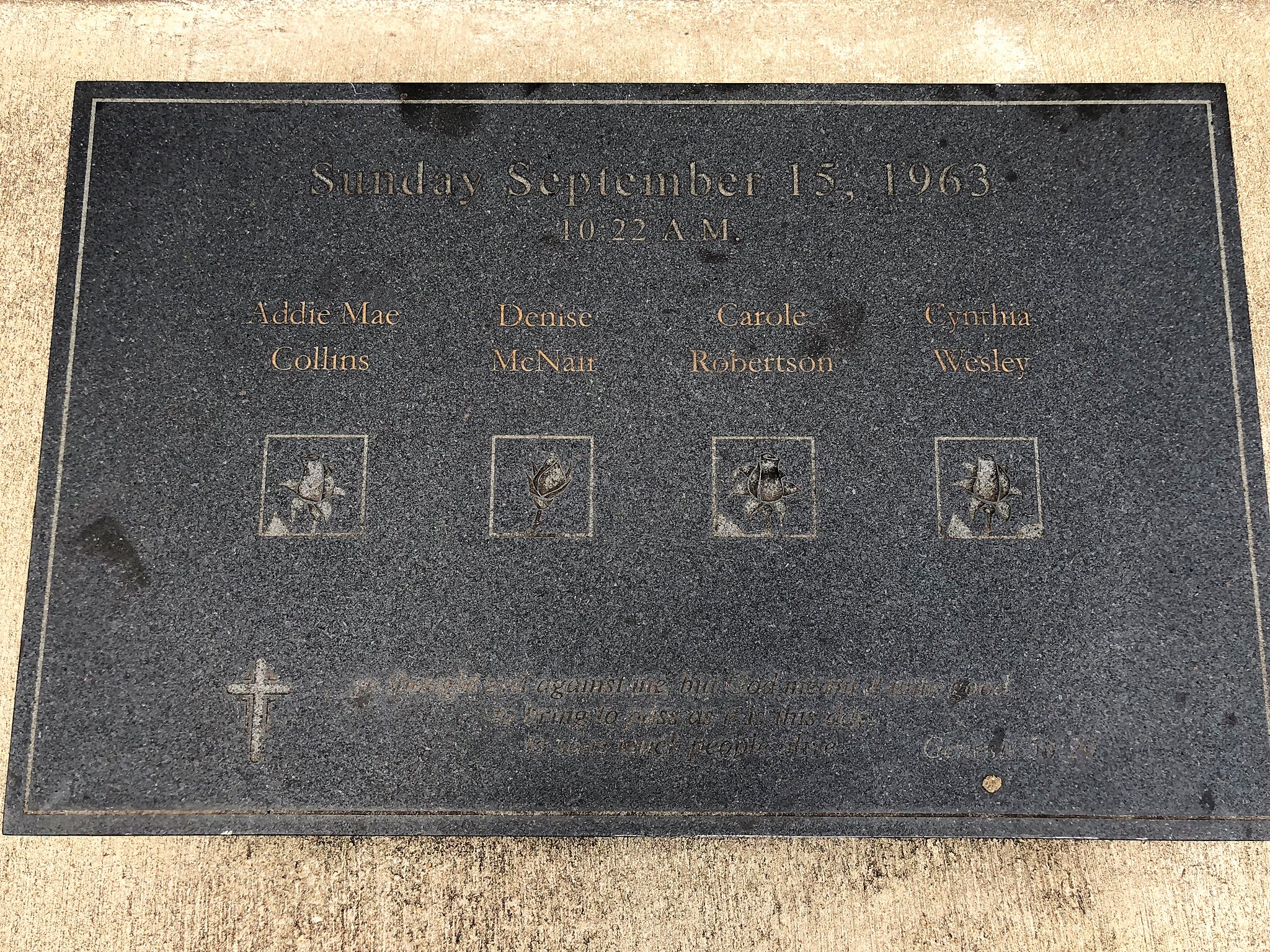
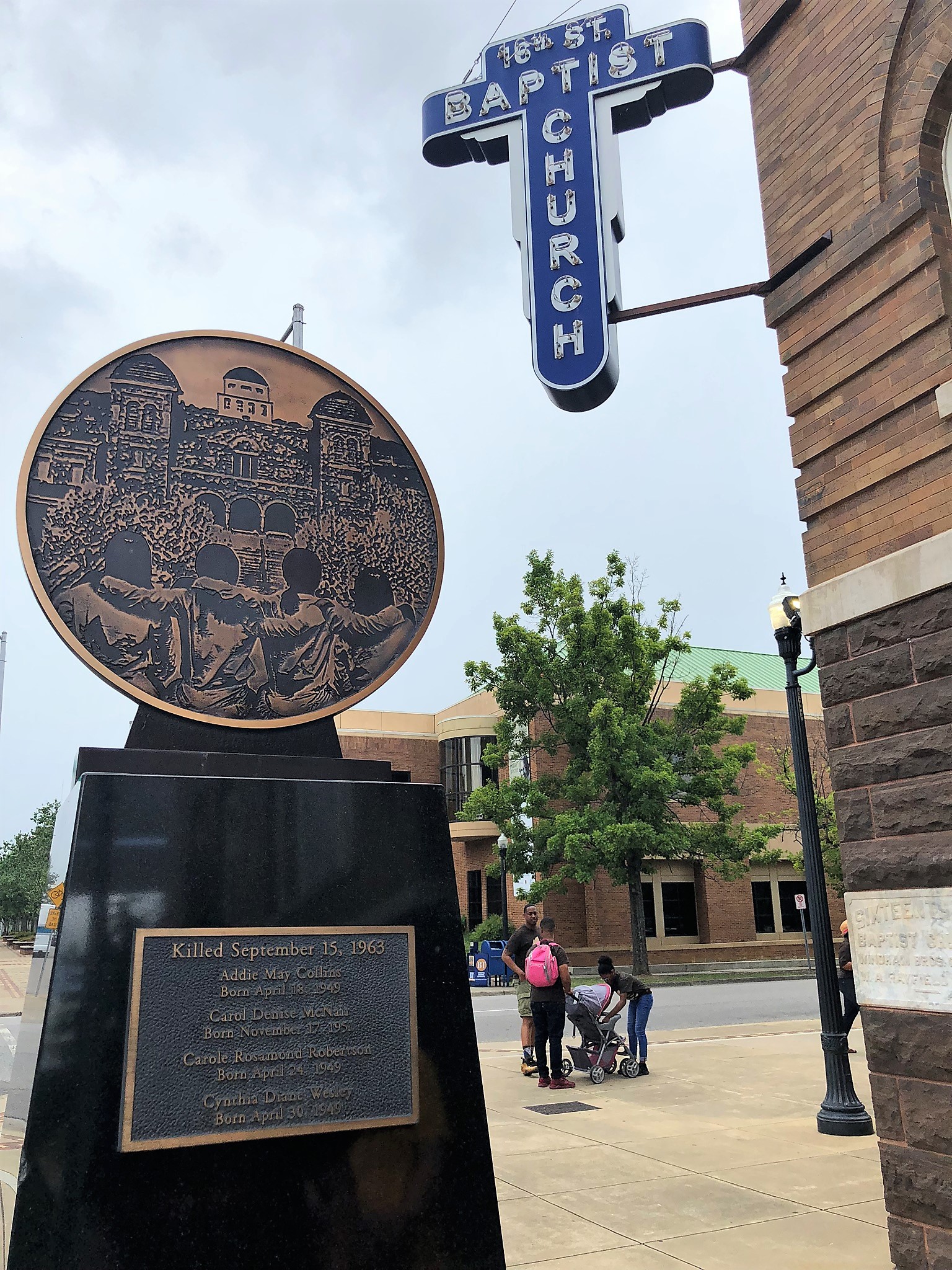
We left Montgomery behind, and headed to Birmingham, Alabama. There was really only one thing we wanted to see. I teach a poem called “Ballad of Birmingham” by Dudley Randall. My boys have read the poem in their school. It is about the 1963 bombing of the 16th street Baptist Church. A bomb had been placed beside the church (a known place for the black community to meet and plan), under some stairs. In the blast, there were four victims. Four little girls who were getting ready for church in their Sunday School classroom, down in the basement. It was one of those moments in history in which out of the ashes of despair and anguish, a movement catches its spark. We came to Birmingham to bear witness to the four little girls who died that day.

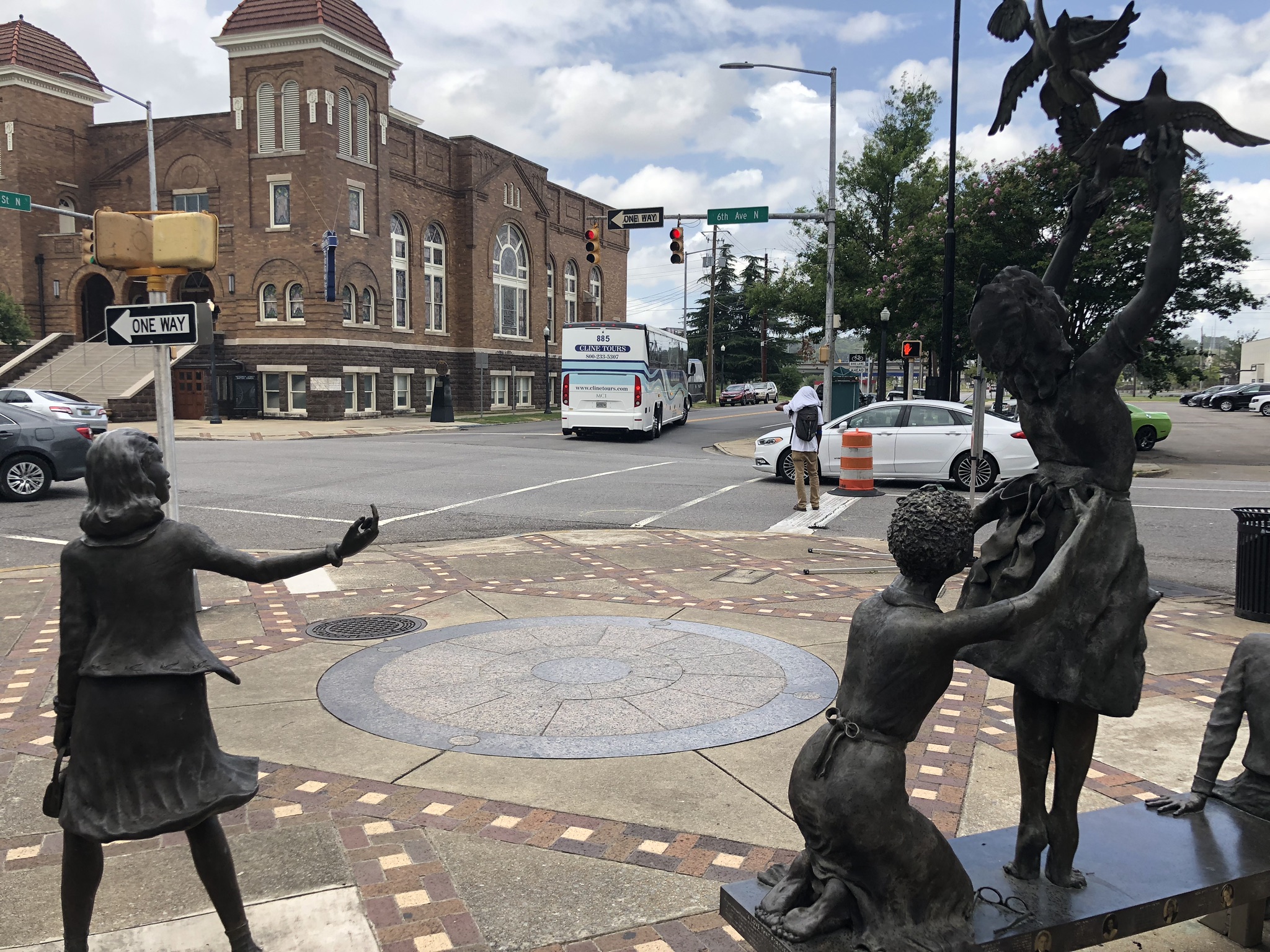
The 16th St. Baptist Church, Birmingham, Alabama
The marker is where the bomb went off
The four girls who died
A plaque dedicated to the little girls
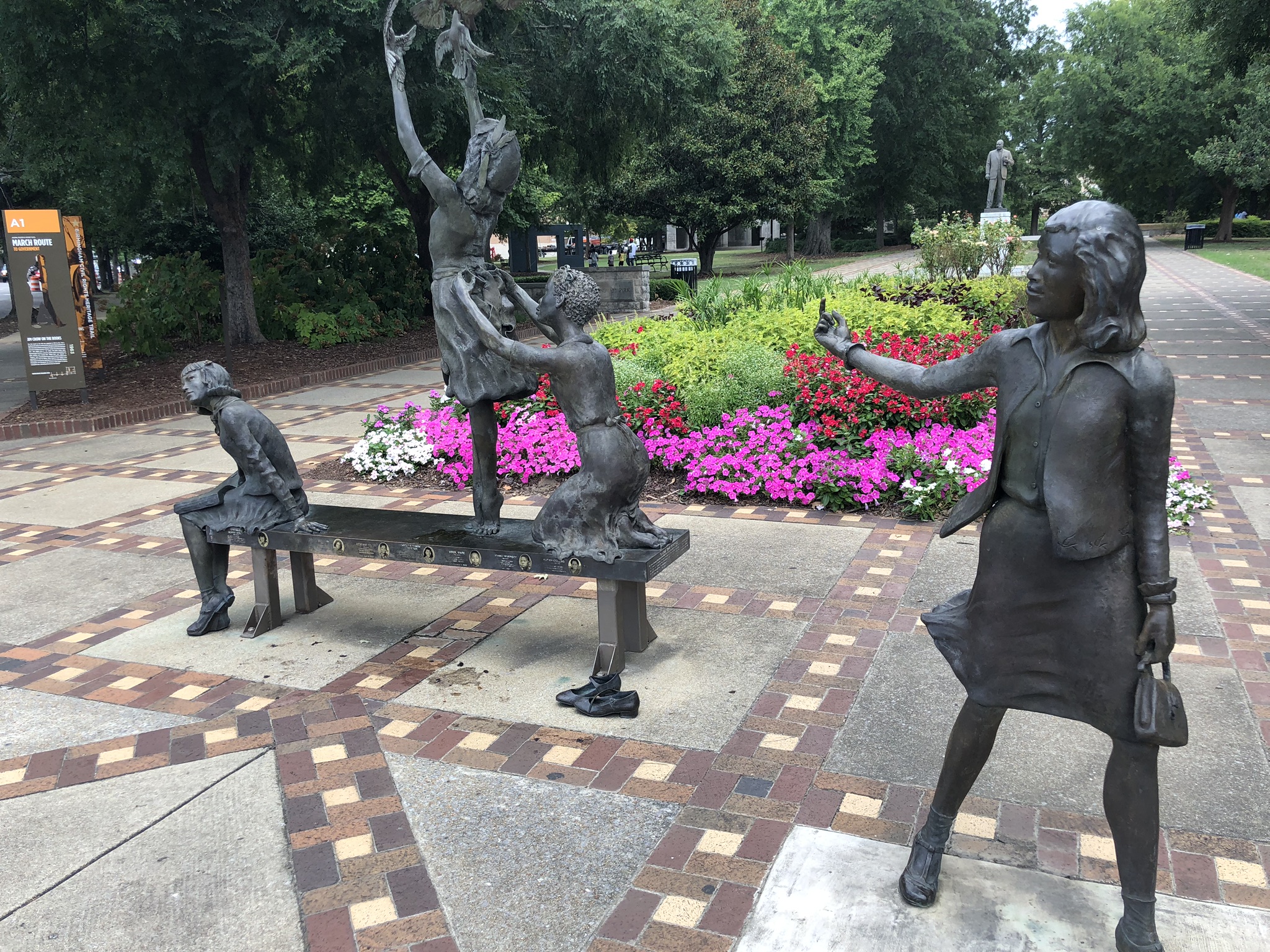
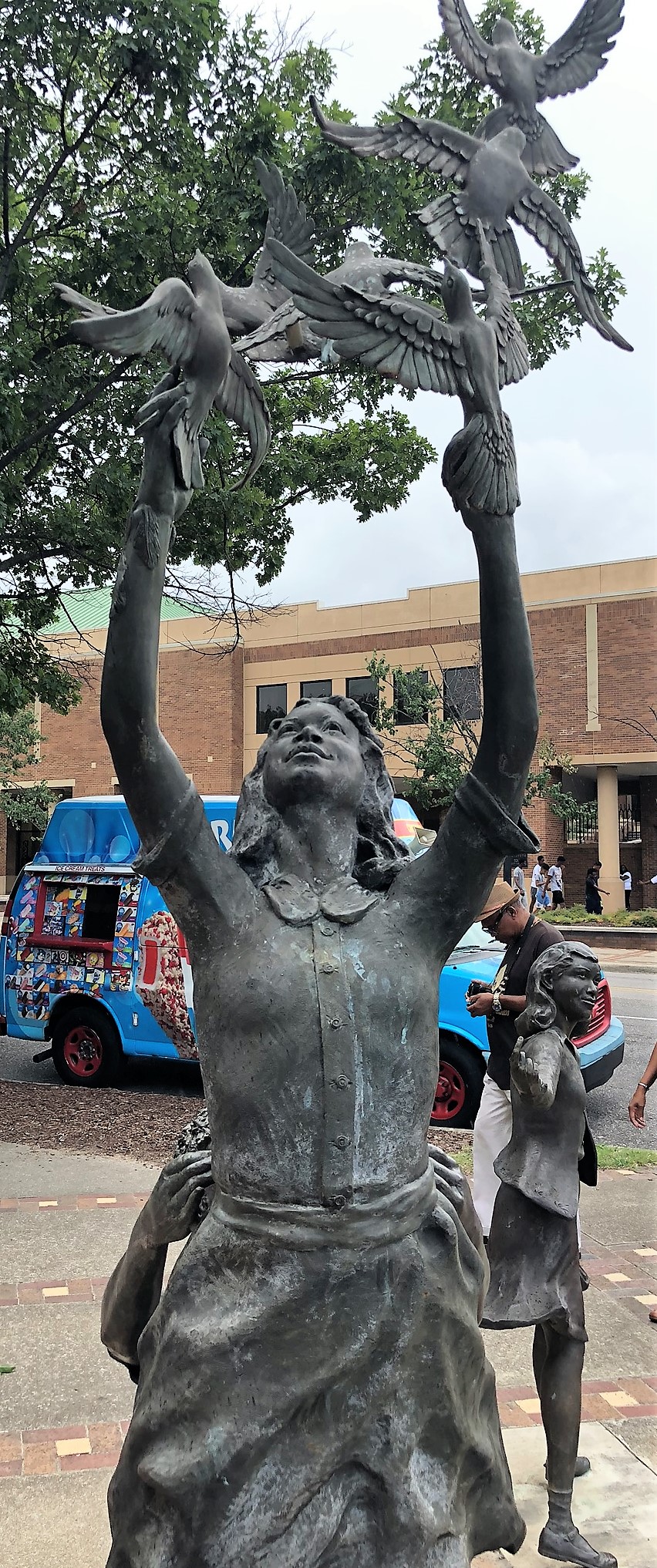
Across the street, a memorial park with these statues of the four girls
It is across from the church

Tomorrow, we end our Civil Rights tour in Atlanta. There we will visit Dr. Martin Luther King, Jr. and his wife, Coretta Scott King. We will see the home Dr. King was born in, and we will see where his final resting place is.

Some thoughts:

  • We have seen the fringe effects of Barry (the storm, not Obama). Driving rain comes suddenly, and then disappears as fast. And yet, the humidity remains. It rains, and still, you sweat.
  • Following yesterday’s rant about drivers in the south – Mississippi’s bad driving has taken a back seat to those here in Alabama. It’s not bad driving so much as it is reckless, weaving in and out at high rates of speed, driving. I have to keep on my toes. Things happen fast!
  • I had a thought about some of the problems this country is facing these days. I look at the Civil Rights movement, and I’m struck by the fact that most times than not, the people who want the status quo and are resistant to change, are often the ones who eventually end up on the wrong side of history.
  • I finished my audio book by Trevor Noah, and decided that I can do this (at least on this trip). I downloaded another comedy-tinged memoir: “I Talk Pretty One Day” by David Sedaris. I’ve never read his stuff, but he comes highly recommended. So far, it’s been funny.
  • Here is a link to Dudley Randall’s poem about the bombing in Birmingham: https://www.poetryfoundation.org/poems/46562/ballad-of-birmingham
  • Some of you might not remember Holliday’s “Strange Fruit”, but you might remember “Birmingham Sunday” by Joan Baez. I’m not a huge fan of her version. Take a listen to this one by a fabulous singer, Rhiannon Giddens: https://www.youtube.com/watch?v=4_T5KlTpvoM

That’s it for tonight. The strain of the trip is beginning to wear me down. I’m looking at where I could put an extra day (one of no driving) into our itinerary. There are several options. Boston is the leading contender. I hope all of you are well this evening. Hold your loved ones tight, and love.
Day Eight: Selma and Montgomery, Alabama

Today started much like yesterday did. Late start due to me trying to get refunds from New Orleans, and re-routing our trip. The biggest disappointment is that because of work constraints, Deborah will not be joining us at all on this trip. This is the biggest suck in two days of suckiness. It just didn’t make sense for her to try and find other flights – which by now are super expensive. We looked at other cities down the line for her to join us at, but her vacation time had been carved out in a very busy time at work. It was this weekend, or not at all. So, it is as it has been: just the boys and I, trekking across the United States. It is what it is.

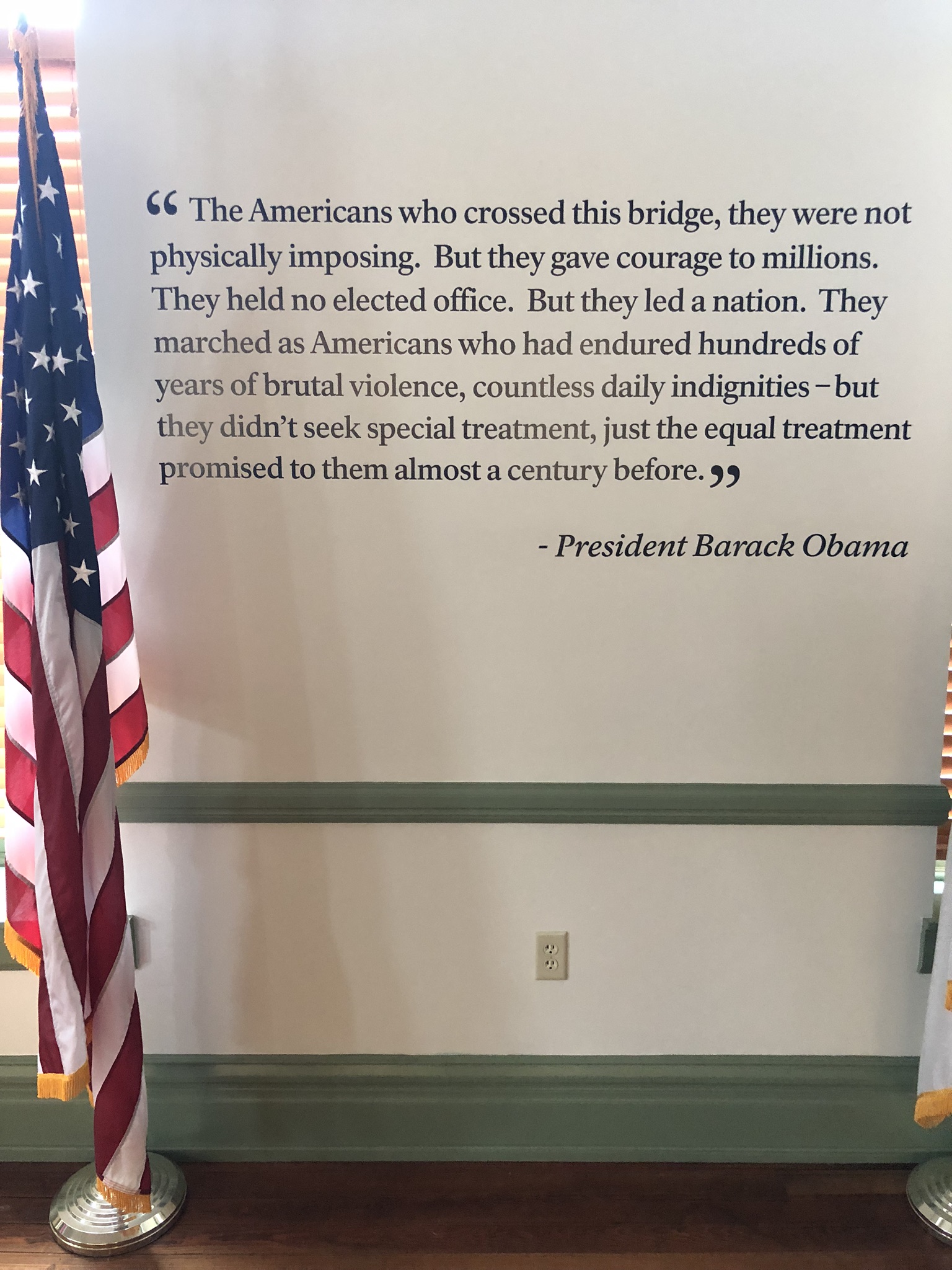
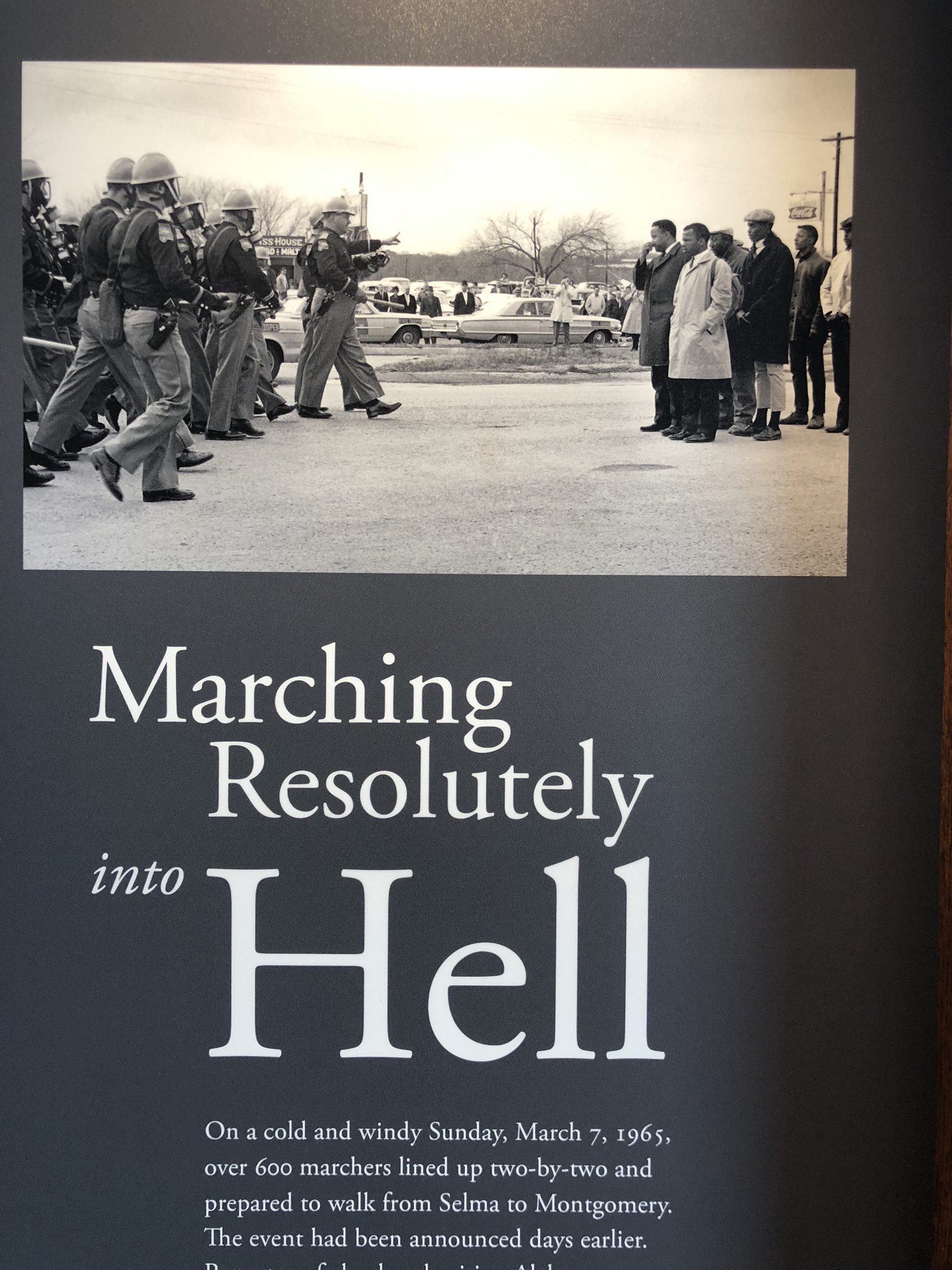
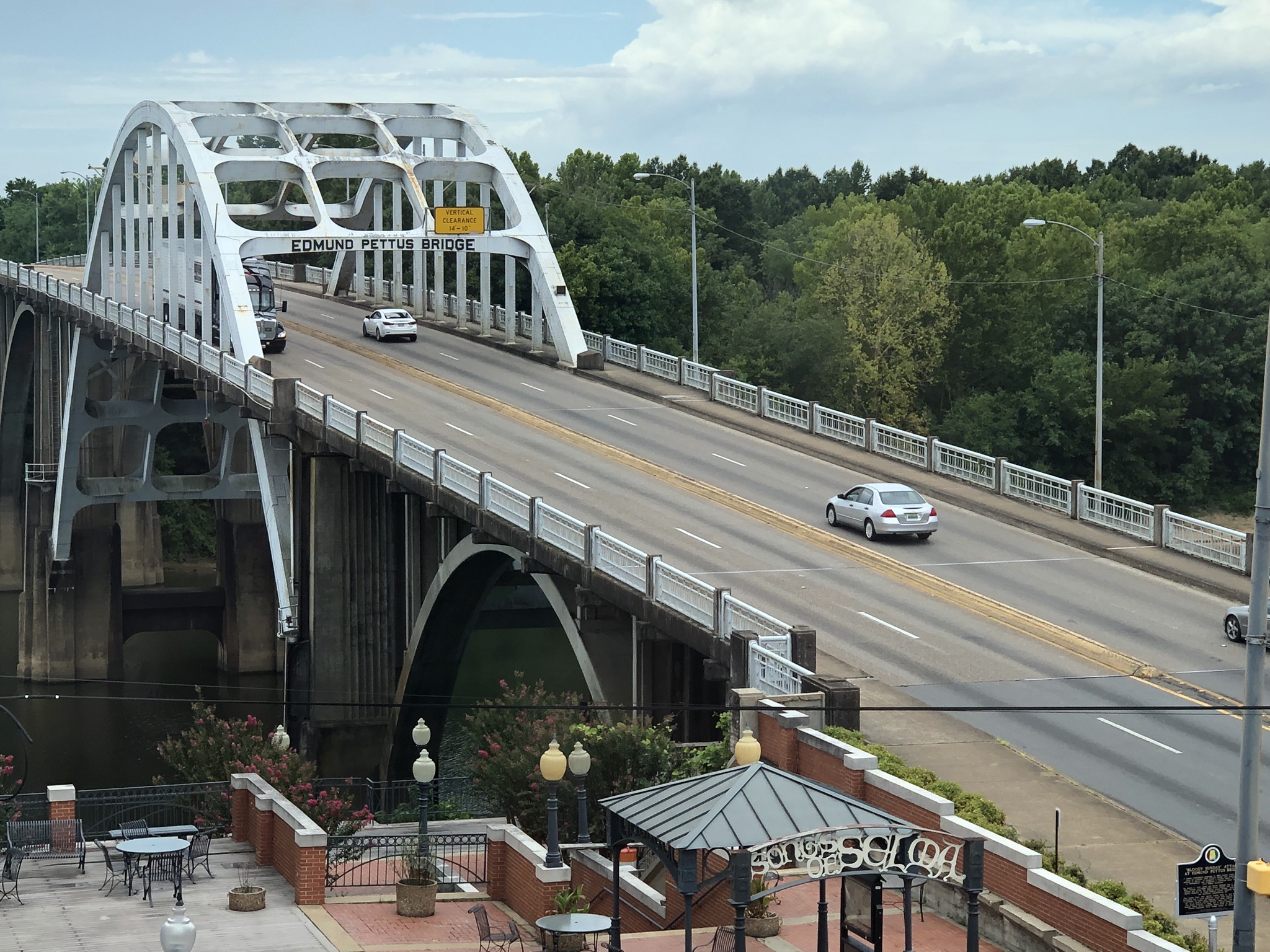
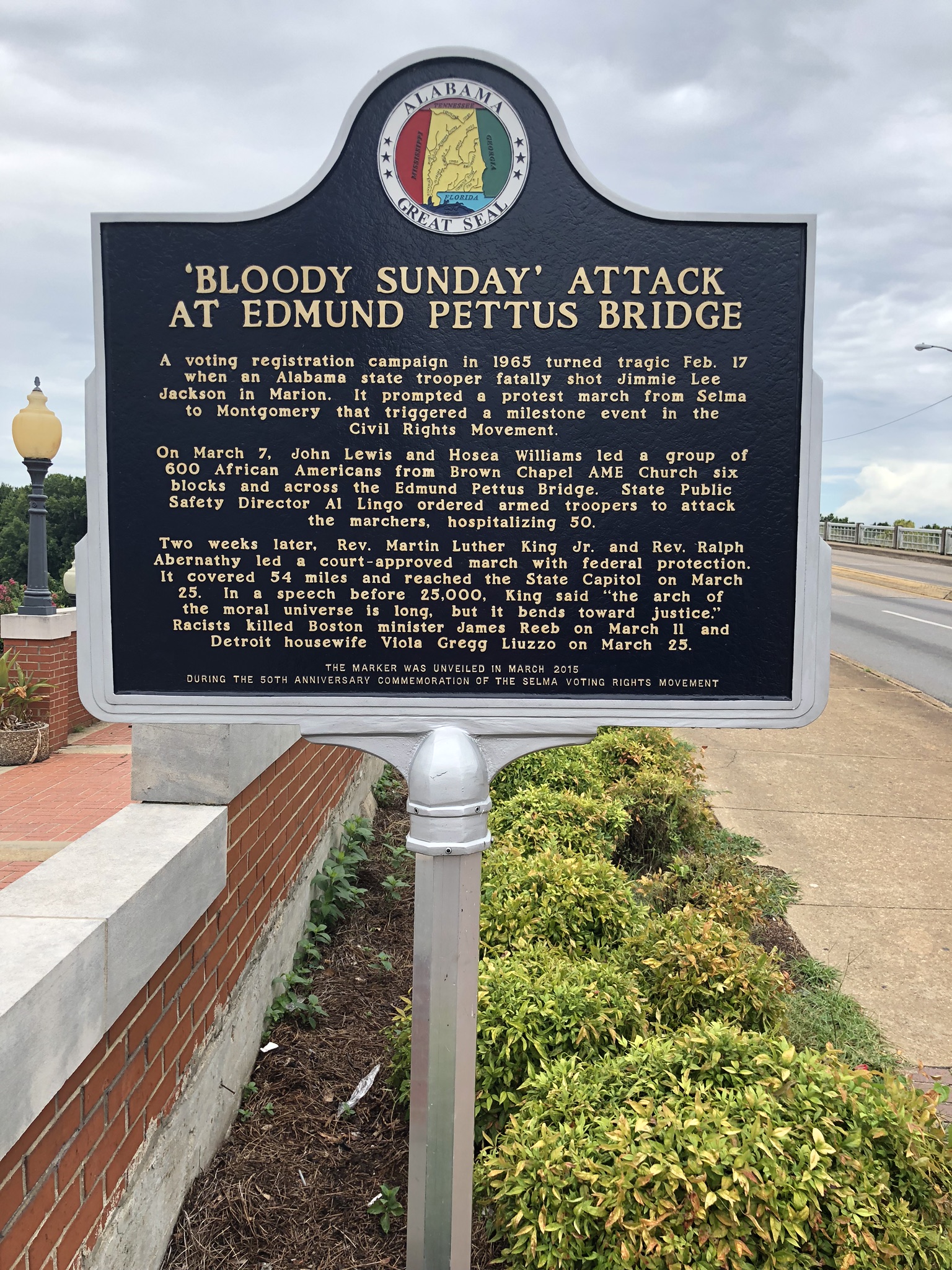
No time to be down. We have a LOT of trip left to make. We drove from Jackson, Mississippi, to Selma, Alabama. Our Civil Rights tour was now getting serious. Freedom Marches, Freedom Riders, and some very turbulent times down in the deep south. I very easily gathered that people in this area did not take too kindly to the movement that was threatening their “way of life”. First, you had a lady who refused to give up her seat to a white person in Montgomery, and then you have a bunch of black people begin marching and protesting in order to get equal rights and the vote. Things came to a head in Selma in 1965. Organizers, including future Georgia Congressman John Lewis, attempted to march from Selma to Montgomery – about 50 miles. They didn’t make it very far. Once they crossed the Edmund Pettus Bridge, state and local lawmen attacked with clubs and tear gas. Lewis, then 25 years old, had his skull fractured as he stood, resolute, at the front of the marchers. It would be the televised images of the beat down, later called “Bloody Sunday”, that would eventually bring Martin Luther King and others down to Selma to do a second march. The brutality, of course, would continue throughout the years, but the movement was getting citizens, white and black, riled up into action.

At the Interpretive Center across the street from the Edmund Pettus Bridge
John Lewis, 25 years old in the light-colored coat, is about to be beat down. If this picture isn’t in the dictionary under “badass”, I don’t know what would.
The view from up high. It would be on the other side of this bridge where the state troopers were.
What happened here on March 7th, 1965, was just one of many acts of violence perpetrated against those in the movement, white and black, in that March of ’65
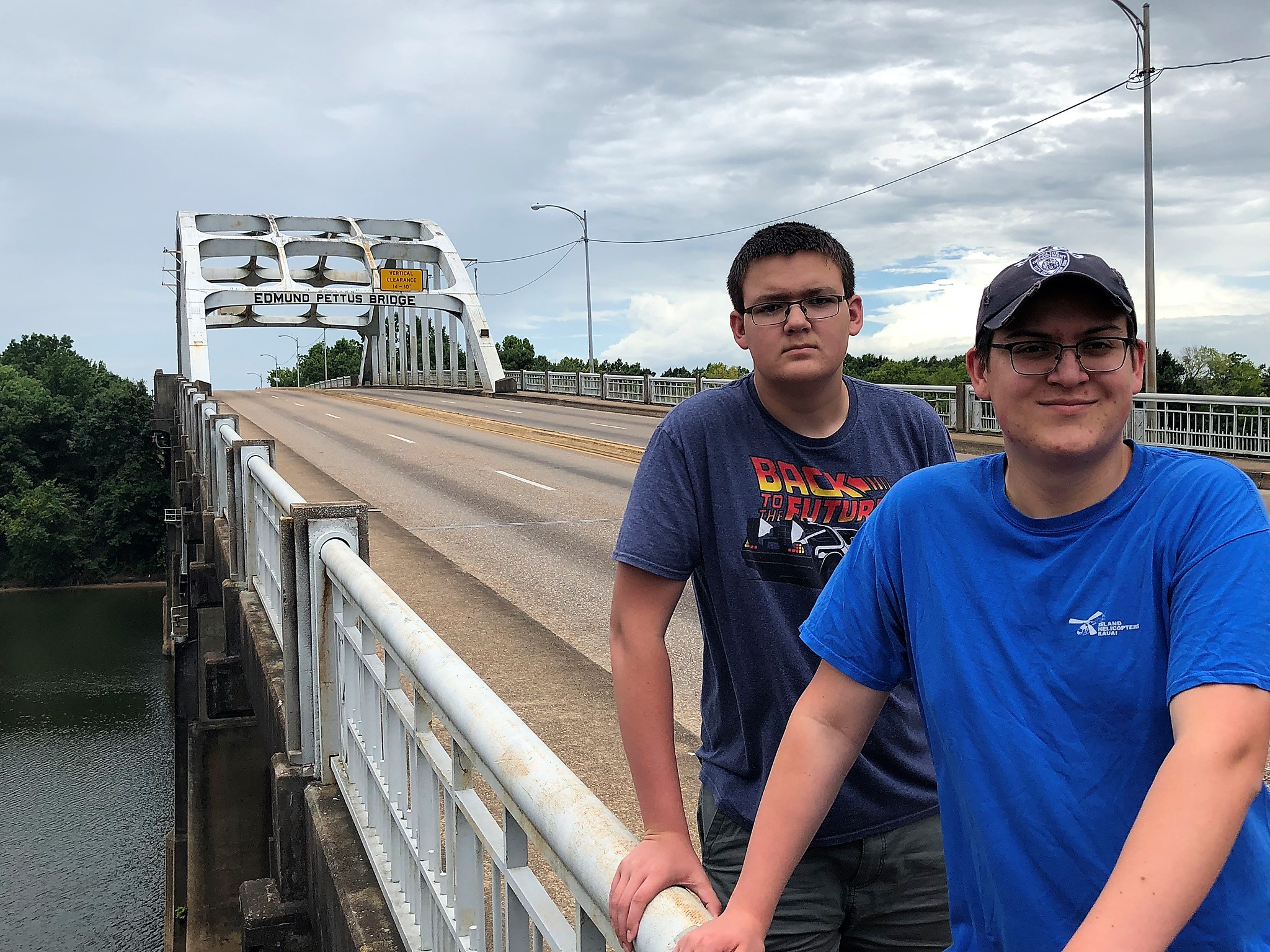
The boys were impressed with this visit to history

We left Selma, and followed the path of the Freedom Marchers down Highway 80 to Montgomery. The scenery in this region is green and lovely. Hard to imagine the violence which occurred here, on this stretch of road. Freedom Riders being stopped and beaten, their buses set on fire. Viola Liuzzo, a white housewife and mother of five, gunned down while driving fellow protesters home. Hard to believe, as history often is, that this occurred just in the last 60 years.

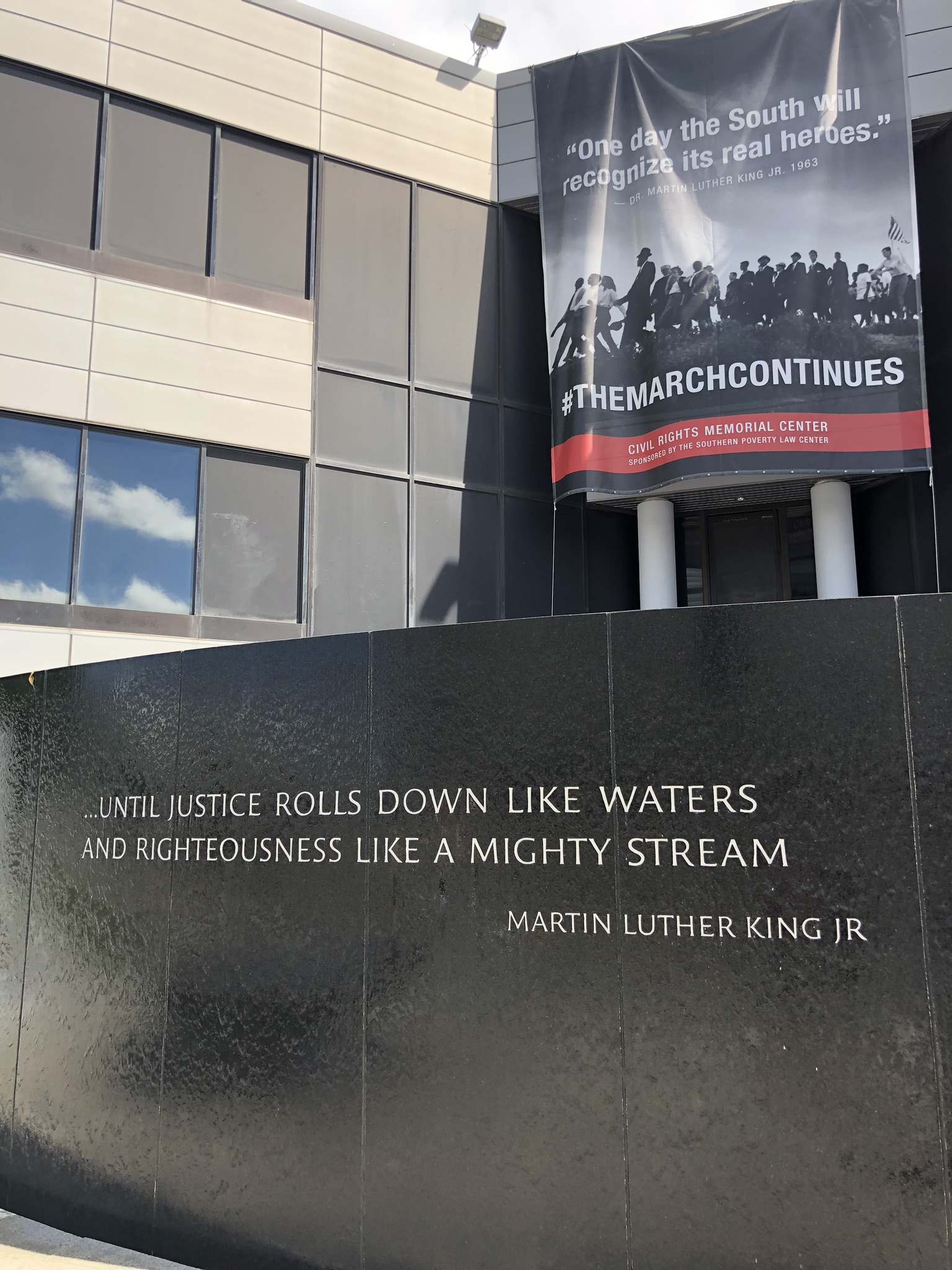
Montgomery is the home of such civil rights legends as Martin Luther King, Jr., and Rosa Parks, among others. There is so much history here. Our first stop was at the Civil Rights Memorial, just a few blocks from the state capitol. The memorial is run by the Southern Poverty Law Center. It’s main attraction is a black granite wall, with water cascading down over some famous words by MLK Jr. In front of that, a circular sculpture with 40 civil rights heroes and martyrs, also flowing with water. The memorial was designed by Maya Lin, the same woman who designed the Vietnam Wall in D.C. I’m sorry I didn’t take a picture which showed the round water feature, but I did take a picture of the wall of water with King’s words (I believe from his “I Have a Dream” speech) etched into the stone.
Can’t really see it in this photo, but there is water cascading down over King’s words.

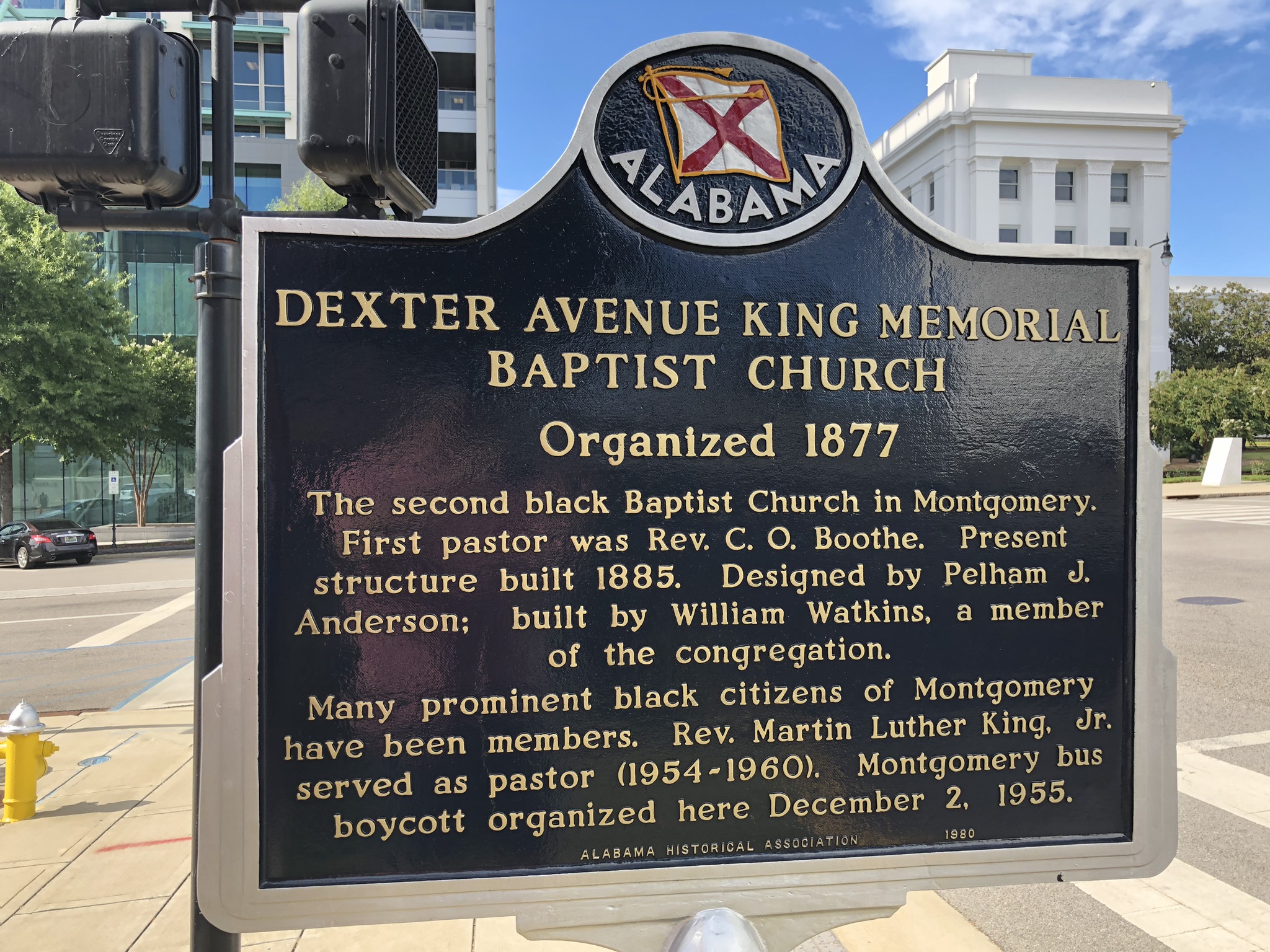
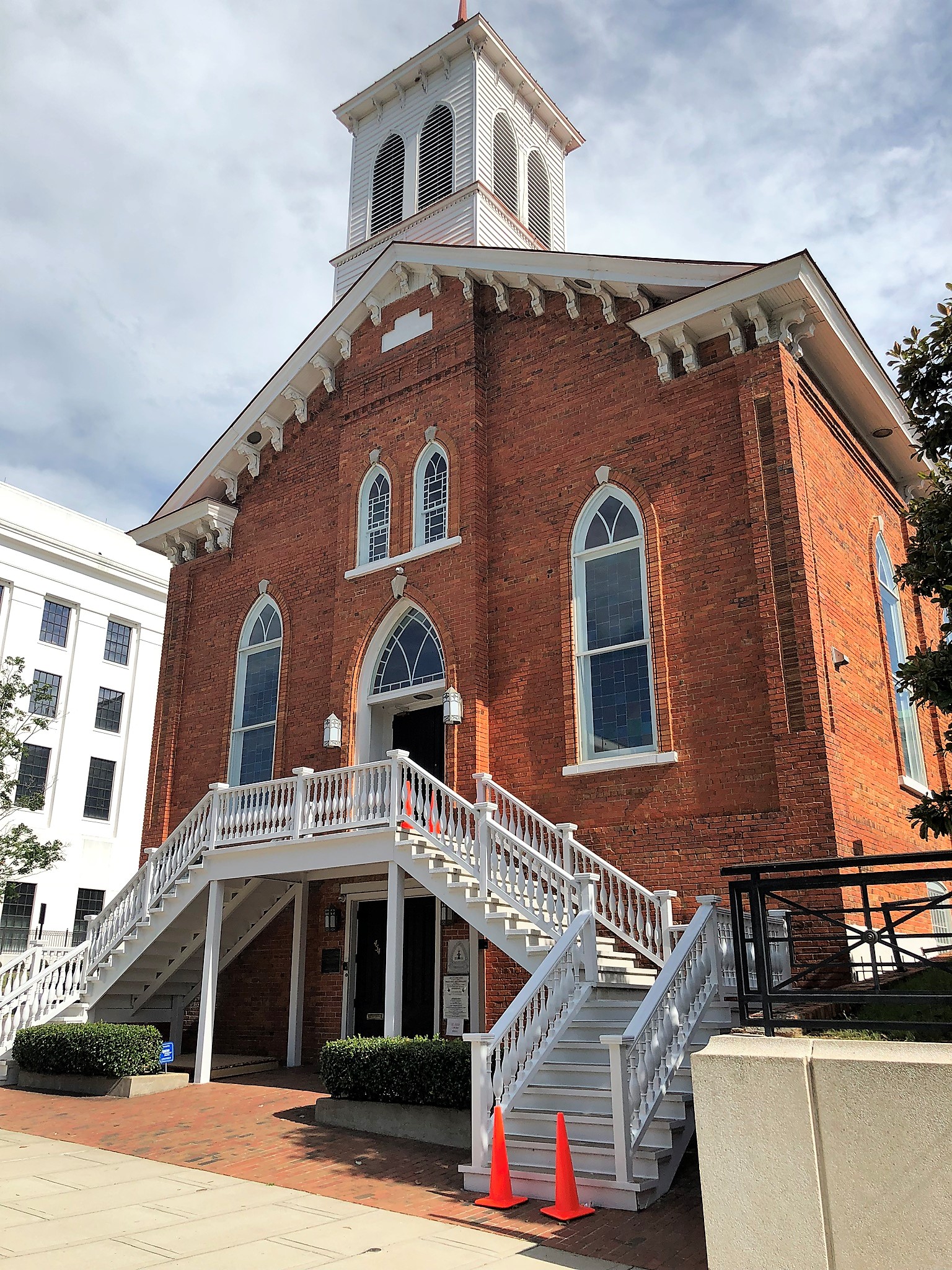
Just a block away is the Dexter Street Baptist Church. Dr. King was the pastor here from 1954 to 1960. Like many black churches during this time period, it served as not only church, but as a natural meeting place for those who were planning the civil rights protests and marches. Churches were the one place that black people could congregate at where they wouldn’t arouse suspicion. After Rosa Parks’ arrest, the Montgomery Bus Boycott was planned here.

King was just another leader in the movement prior to the boycotts, but after the 385 day protest, he, the leader of this boycott, was catapulted into the limelight. His natural speaking abilities (no doubt helped by his years as a pastor) made him a natural spokesperson. With this notoriety came instances of violence, such as when his house was firebombed during the days of the boycott. It seemed fitting that, after seeing where he was killed yesterday, today we came to where it all started.

Sign outside of the Dexter Avenue church – within view of the state capitol
The Dexter Avenue Baptist Church where MLK Jr. was pastor (1954 – 1960)

A few random things:

  • I’m just going to come out and say it. The worst drivers I have encountered on this trip thus far have come from the south. It started in Arkansas, continued in Mississippi, and still evident in Alabama. I can’t seem to figure them out. Some drive slow, some drive fast, and all of them will do both within a span of one mile. Not only that, but apparently truck drivers can drive at any speed they want. In a lot of states, trucks are required to drive at a slower (and safer) speed. Not so in the south. Speed limit is 70, and I’m doing…over 70, and here comes this semi pulling a full load of who-knows-what, passing me by. They also are ok with just cutting into your lane – no turn signal necessary! Of the three states mentioned above, the worst was in Mississippi. I based that upon science – that state received the highest number of curse words in one day’s time than any other state on this trip.
  • To bear this theory out, we have seen two accidents (after they happened) which required ambulances. One in Mississippi (car burned by fire – don’t know if anyone was hurt or killed), and today in Alabama (car flipped upside down – don’t know if anyone was hurt or killed). I also spotted a police vehicle and a tow-truck parked on the side of the road. As I drove by, I saw them looking down in a large ditch – where there was an overturned, burned out car. My guess is that they were wondering how to get that thing out of the ditch
  • On this trip, I have often found myself driving alone, with the boys attached to head phones listening to music or watching movies on their electronic devices. Deborah had suggested that I try something like Audible (books on tape, sort of). Now, I am definitely a book snob. Books have always been my treasures in life. They have helped me survive some rough times. I treat my books with reverence (I freak out when someone bends the corner of their page instead of using a bookmark. Animals!). I have been resistant to trying other things. I have a Kindle app, and I have read several books this way, but I still find myself perusing the bookstores for the “real” thing. So, it might not surprise some of you to learn that I have NEVER “listened” to a book instead of reading it. Despite this, Deborah convinced me to give it a try on this trip. She suggested a book which is on my shelf at home by Trevor Noah (host of the Daily Show) called “Born a Crime”. Now she and I saw Trevor Noah do a stand-up routine in Eugene last year, and we are devoted Daily Show watchers from the John Stewart days. So I downloaded the Audible version of his book, and there it sat for the first five days of this trip. Finally, after finding myself becoming bored of just me singing along to my music while being ignored by my distinterested audience beside me, I started the book. It was not an overly horrible experience. It helps that Trevor Noah is a comedian, and his book has some extremely funny stories in it. And so, I am actually going to recommend that you give it a try – at least this once – and listen to Noah’s book. It is hilarious. Or, buy the paper version and read it. That still works, too.

Tomorrow we continue our Civil Rights tour with Birmingham and Atlanta, Georgia. Two days in a row now we have had some nasty thunderstorms. Still pissed about the New Orleans hurricane, but at least we are going to be far away from it…and safe.

Thanks for reading today’s post, and for your positive comments! See you tomorrow!

Day Seven: Memphis and Indianola, Mississippi

Day seven. Hmmm. So the first f*ck up of the trip has hit us. Tropical Storm – Maybe Hurricane – Barry is headed towards New Orleans. The place where we were supposed to spend the next four days. After following the storm’s track the last two days, we have determined to avoid disaster, and we canceled our trip to NOLA. THAT SUCKS! I had four great days planned with a plantation tour, tickets to a jazz concert at historic Preservation Hall, and an air boat swamp tour to look for gators. CRAP!

So, I spent this morning looking for a Plan B. As of right now, it is still up in the air. The hotel refunded us our money and cancelled our reservations. Cancelled the swamp tour and got a refund. Cancelled the Whitney Plantation tour and got my money back. Still trying to work out the Preservation Hall concert tickets. I might get hosed on that one. Oh well. It is what it is.

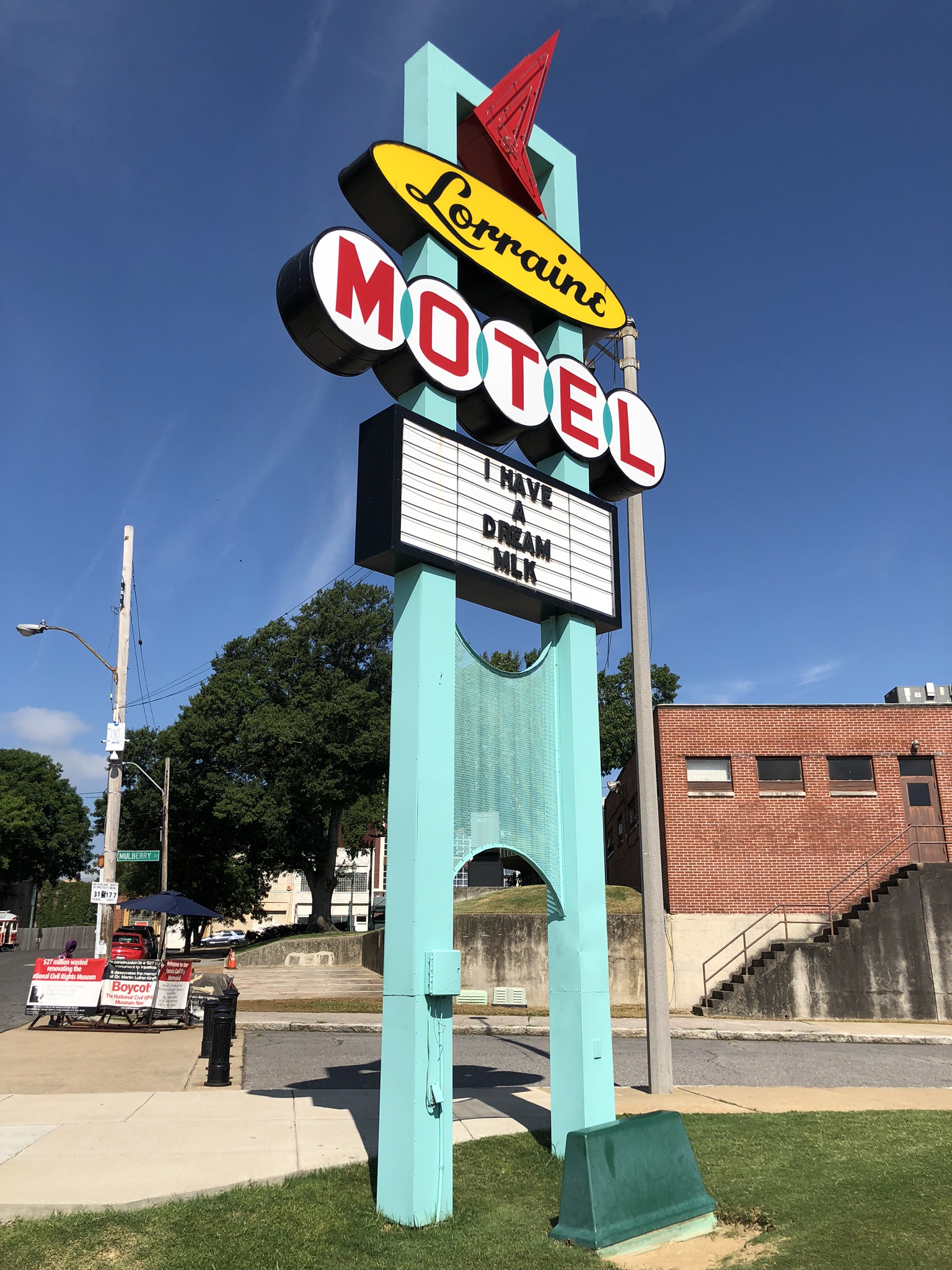
After getting a late start, we headed out to the National Civil Rights Museum here in town. It is located at the old Lorraine Motel. If that doesn’t sound familiar, it is where Dr. Martin Luther King, Jr. was shot and killed. The site has been preserved and turned into a first class museum.

The Motel sign remains the same – but with a different message on it

Pulling into the parking lot, I saw the sign above and was suddenly struck with a feeling of dread mixed with sadness. Was I ready for this? Since I teach several things surrounding Dr. King, this was a place I felt I had to go to. Yet, it is also a place of great tragedy. One of the things I have my students think about is to pretend April 4, 1968 didn’t happen. King lives. What would he think or say of today’s world? What causes would he be championing. Standing outside the motel, I was hit by that sadness like a brick. Although, ultimately, the thought is moot, you cannot help but feel the terrible loss this country suffered here on that terrible day.

At the end, Nathan mentioned how cool it was that this museum wasn’t just about that fateful day. It was a comprehensive reflection on the black experience, from the early days of the slave trade, and continuing on to the current struggles for equality and peace. It was fascinating to see the germination of rebellion, right from the beginning, which slowly snowballed into the Civil Rights Movement of the ’50’s and ’60’s. You could not help but be inspired by the struggle and the pain and suffering endured so that people could eat where they wanted, move about how they wanted, and to have representation – a vote. Guys like King, John Lewis, and others were featured, and the courage they had, knowing that they were going to be beaten, arrested, and possibly killed, and still marching on. How can one not be inspired, even in this day and age where intolerance and violence seems to be returning, and the cracks in Democracy are seemingly growing larger? By then end of the museum, when you finally get to April 4th, you understand that what happened to King was inevitable, yes sad, but just one more sacrifice in the name of freedom.

I teach King’s last speech, given here in Memphis just the day before he is killed. It is often referred to as the “Mountain Top” speech. King was in Memphis to support a sanitation worker strike which was occurring here. Black sanitation workers were not being paid the same as their white counterparts, and they were given the shittier work schedules. After the first march ended in violence, King promised he would return to march again. That was to happen on April 5th. By April of 1968, the Civil Rights Movement had sort of stagnated. The Civil Rights Act of 1964 had been passed. To King, this seemed like a cause that he could get behind. But he was tired. It had been a long, hard slog over the last 15 years. The night of April 3rd, he spoke to a large gathering of people at the Masonic Temple in Memphis. King’s speech talked about a near death experience in New York years before. He talked about how far they had all come. How, if he had died, he would have missed out on so many great moments in their struggle. He was glad he didn’t die then. He then talked about a few things which today seem prophetic. He tells the crowd that he is not afraid to die. He’s not afraid to die, because he has “been to the mountain top” and he has “seen the Promised Land”. He then says, “I may not get there with you,” but you will get there without me. He would be assassinated the very next day on the balcony of the Lorraine Motel. At the end, I couldn’t help but have moistened eyes as I once again listened to that speech, and then stepped out to see that balcony again.

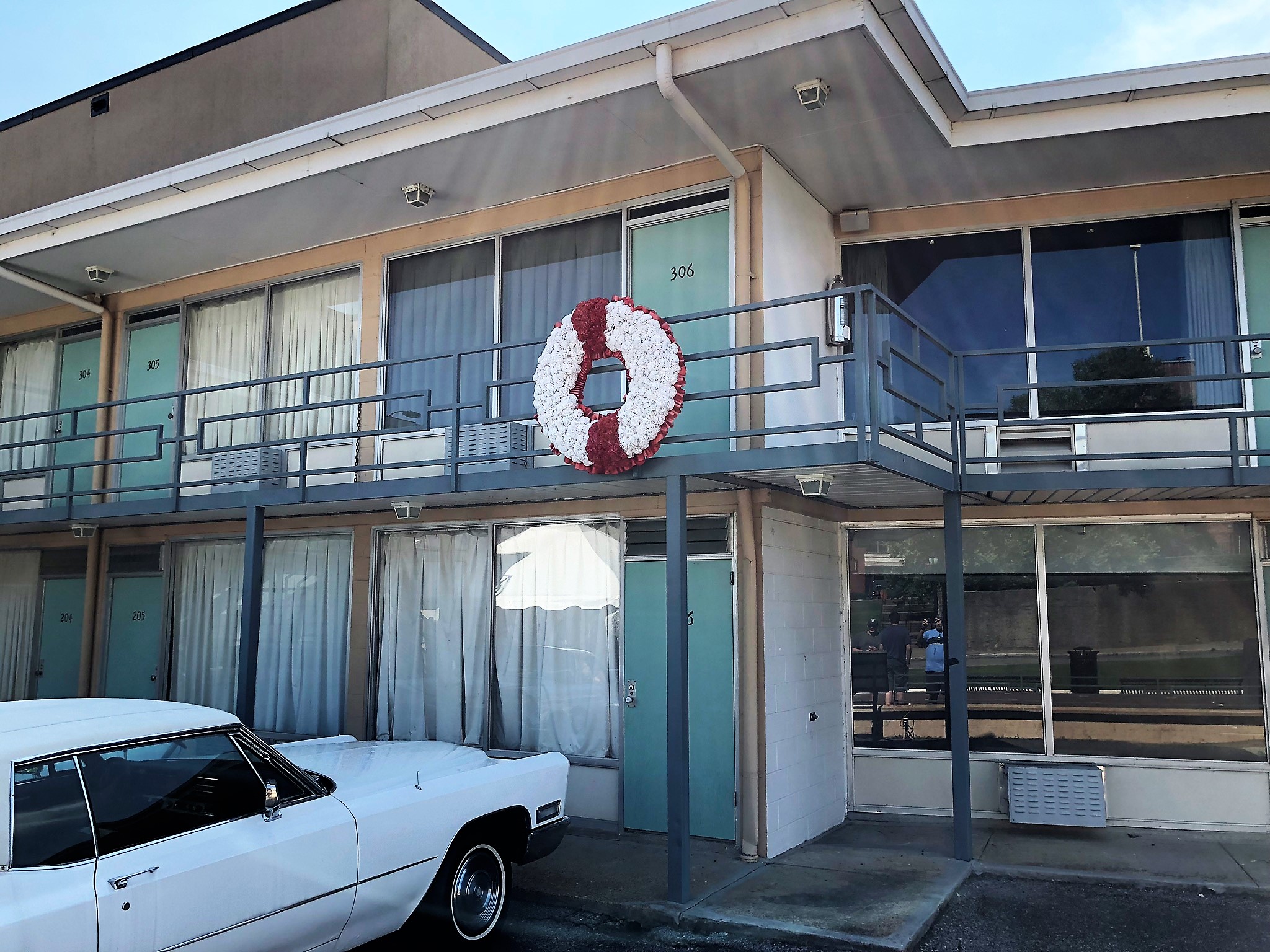
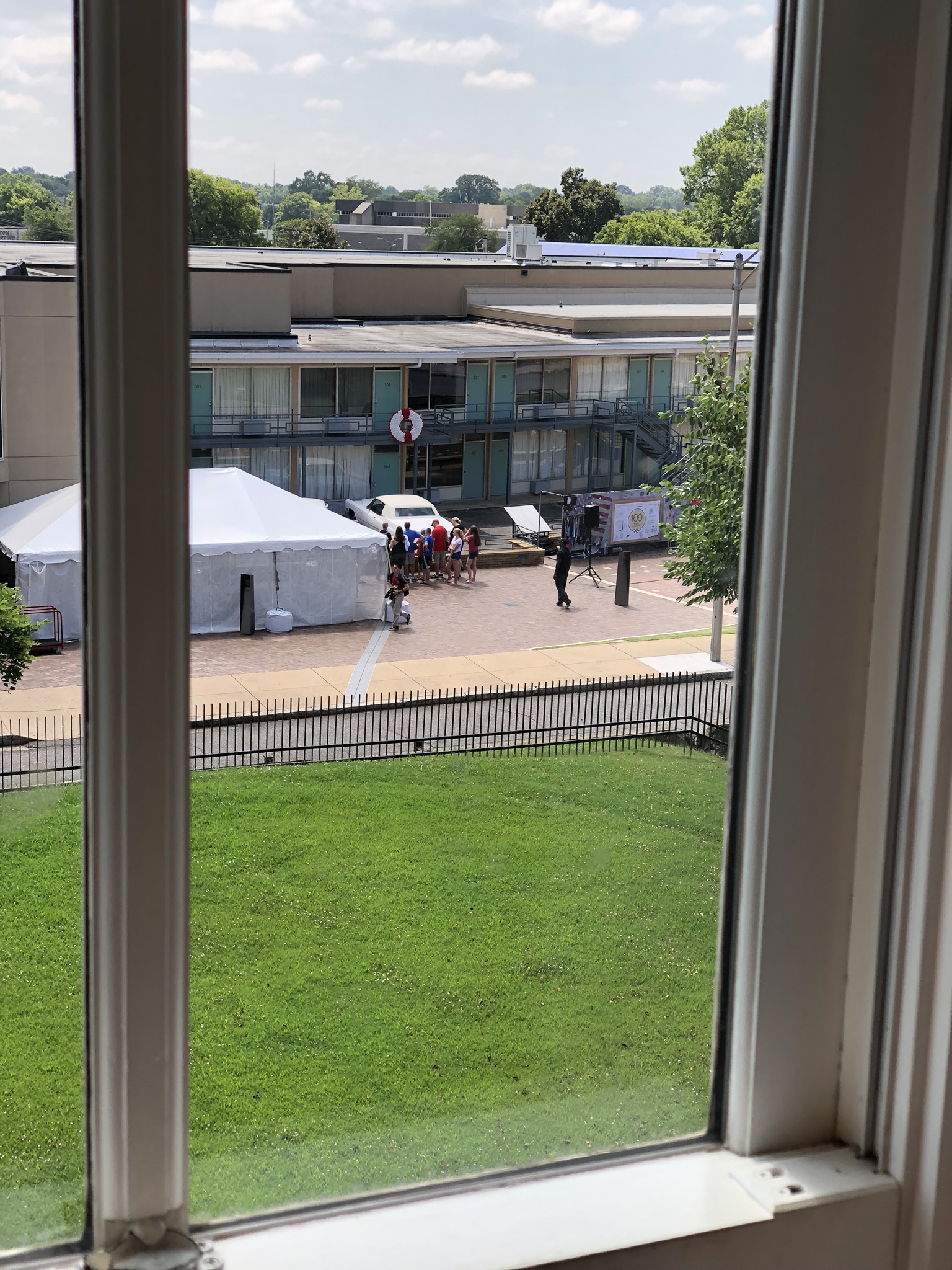
The wreath is where King stood when he was shot. Room 306 was his room.
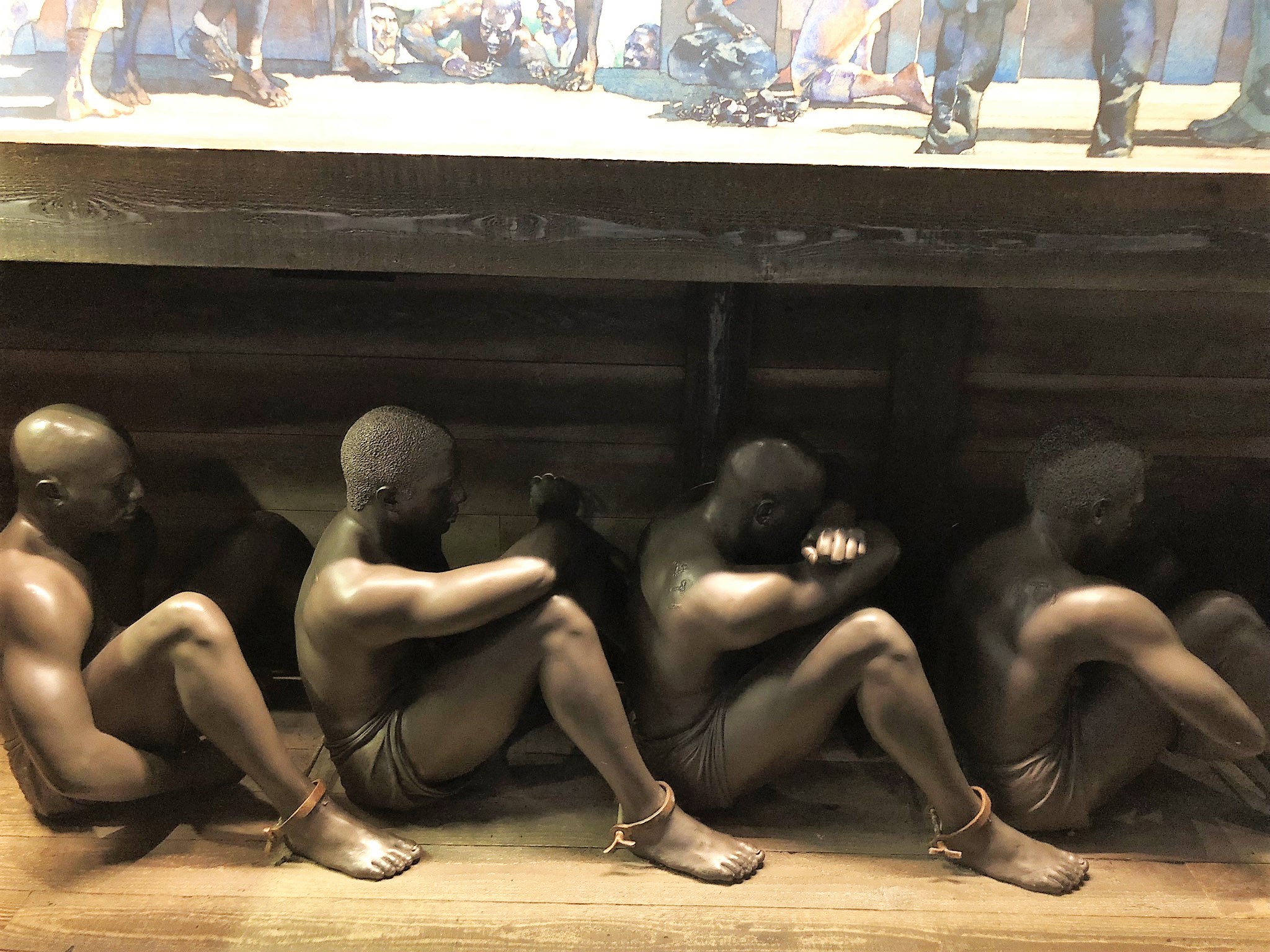
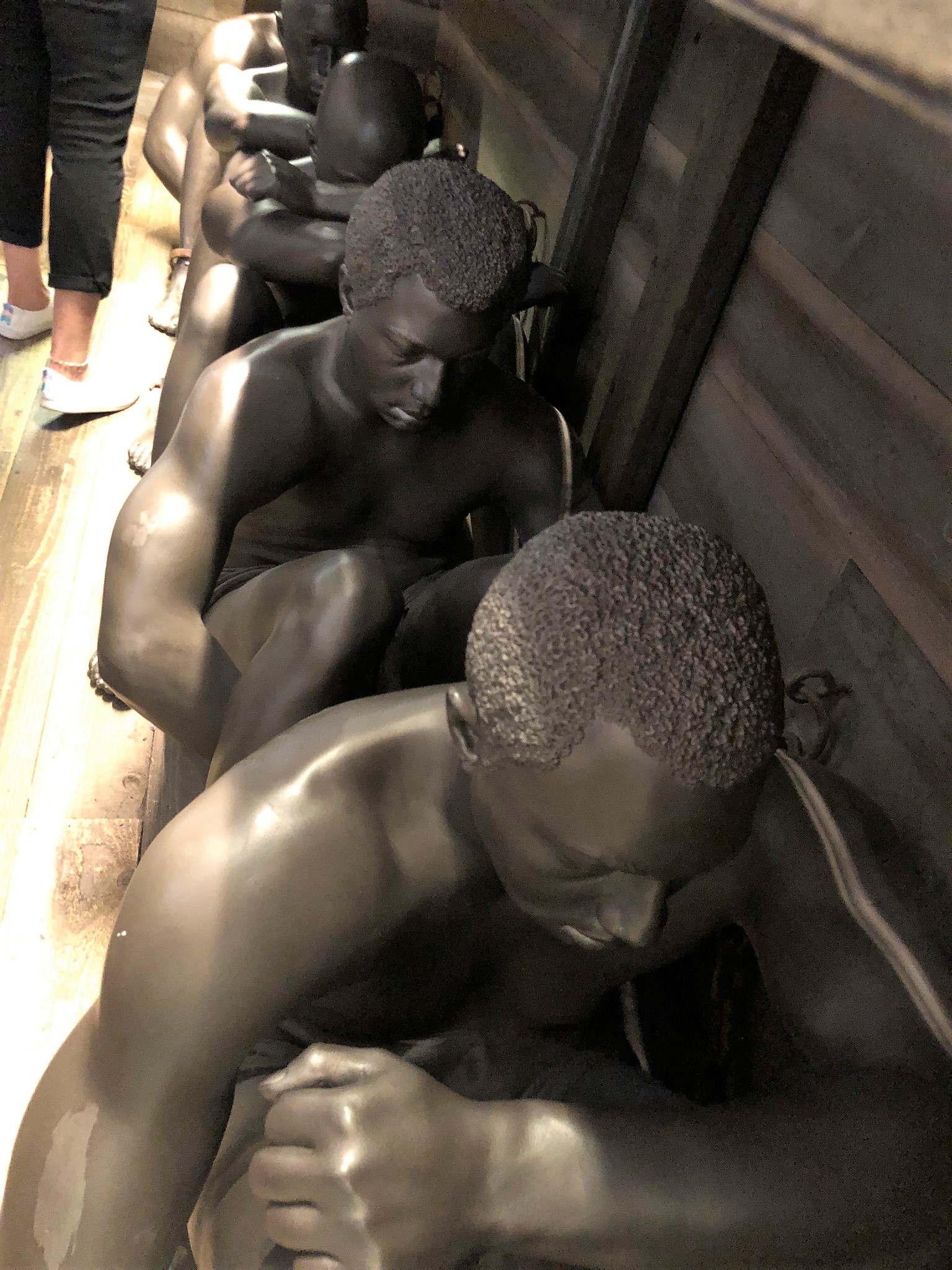
Early on in the exhibit was the slave trade. Kept below deck, the slaves sat chained in a space that was 3 feet, 3 inches tall.
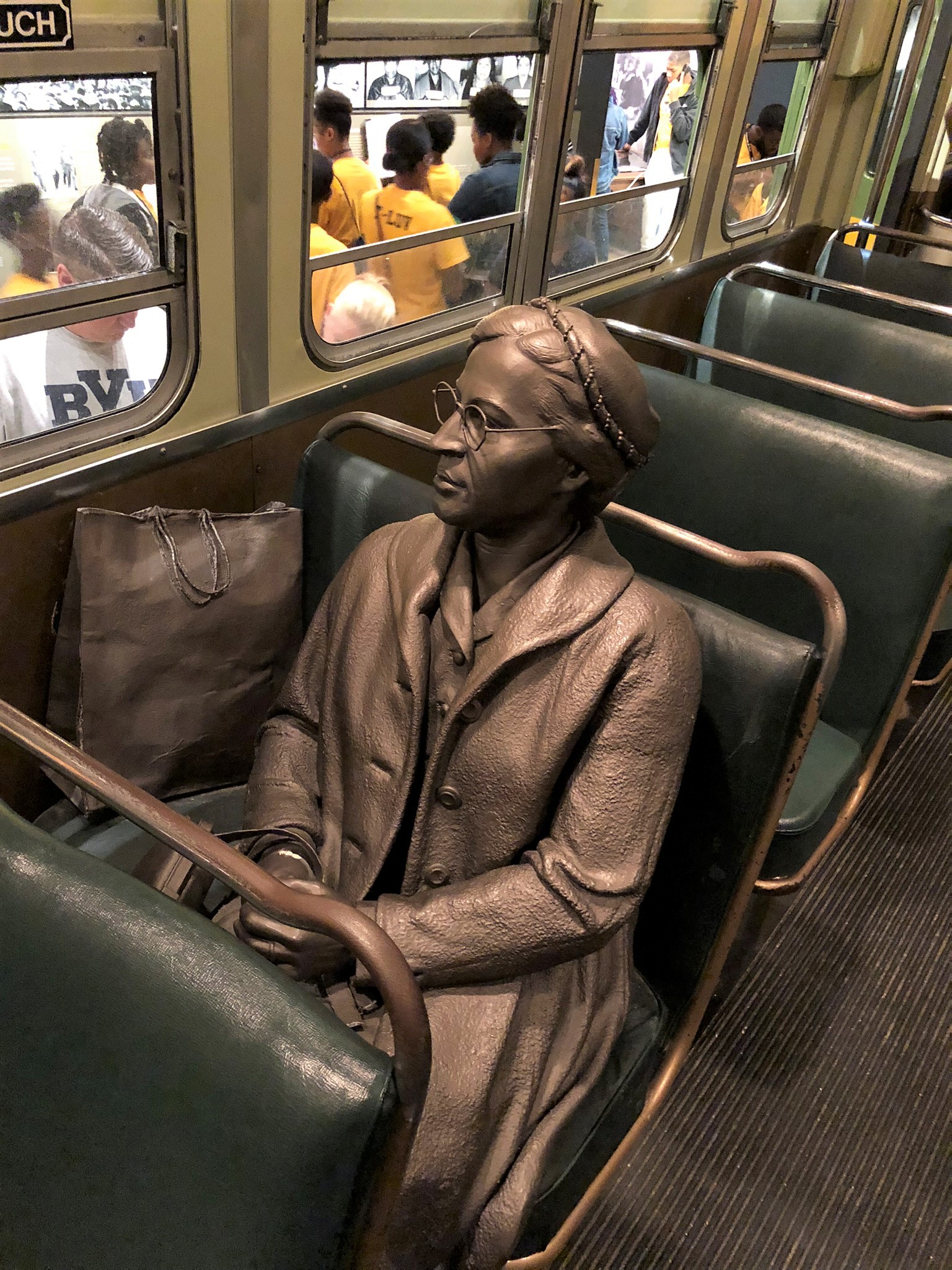
A statue of Rosa Parks, sitting in a vintage bus. I believe the actual bus is located at the Henry Ford Museum in Detroit, Michigan
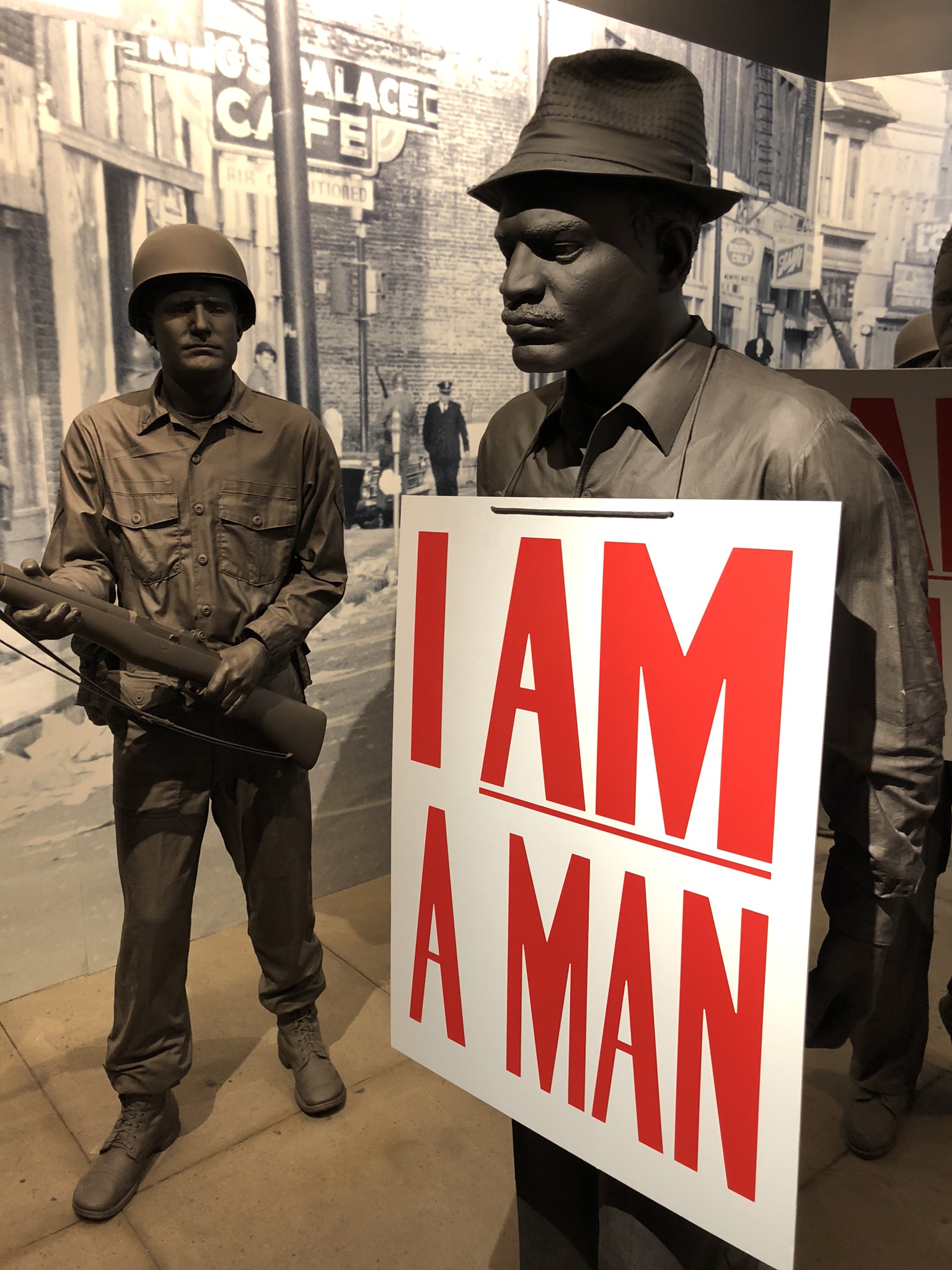
The sign was like the ones the sanitation workers wore when they went on strike in Memphis
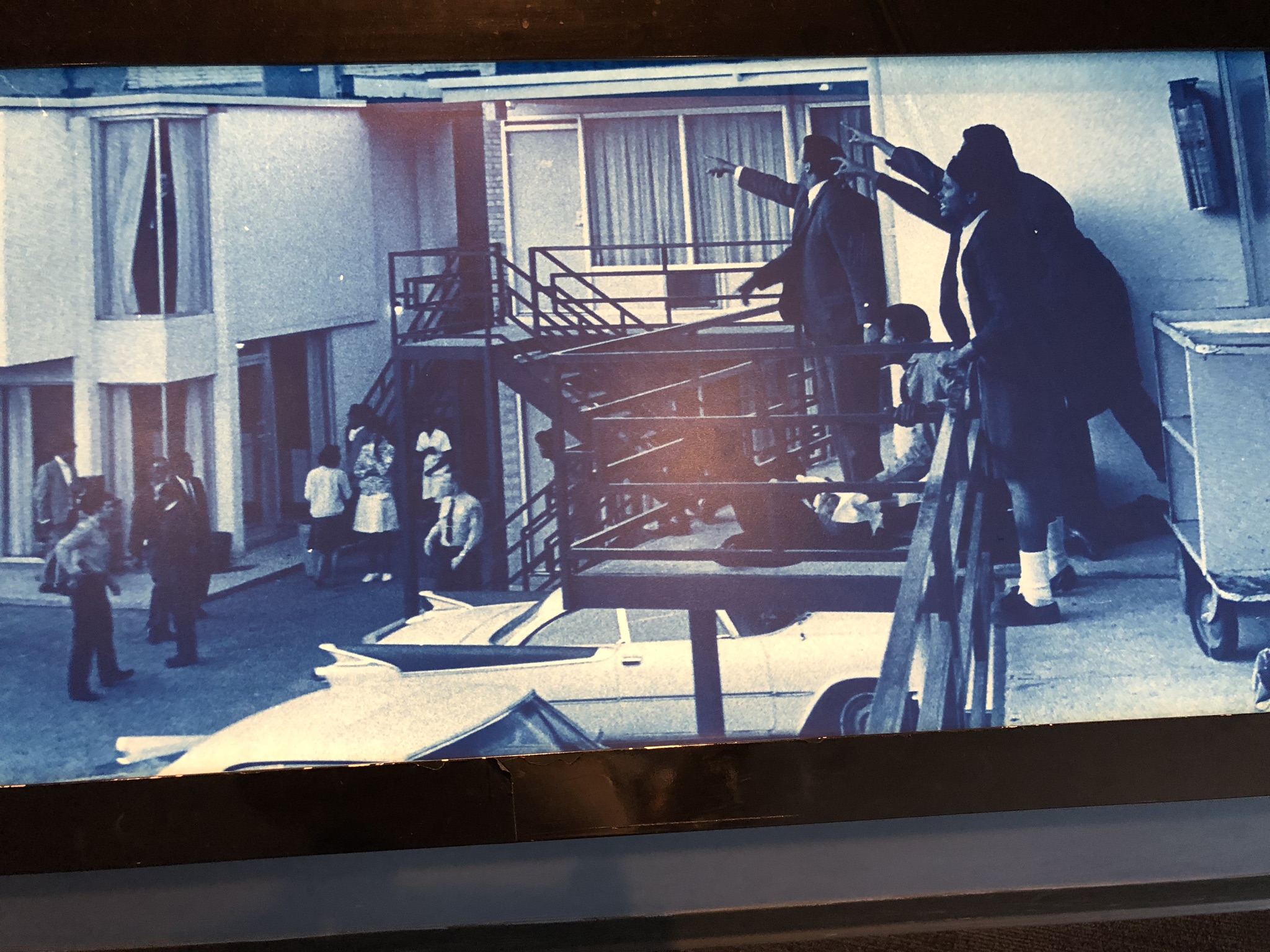
The famous photo, taken moments after King is shot. They are pointing at where they heard the gunshot
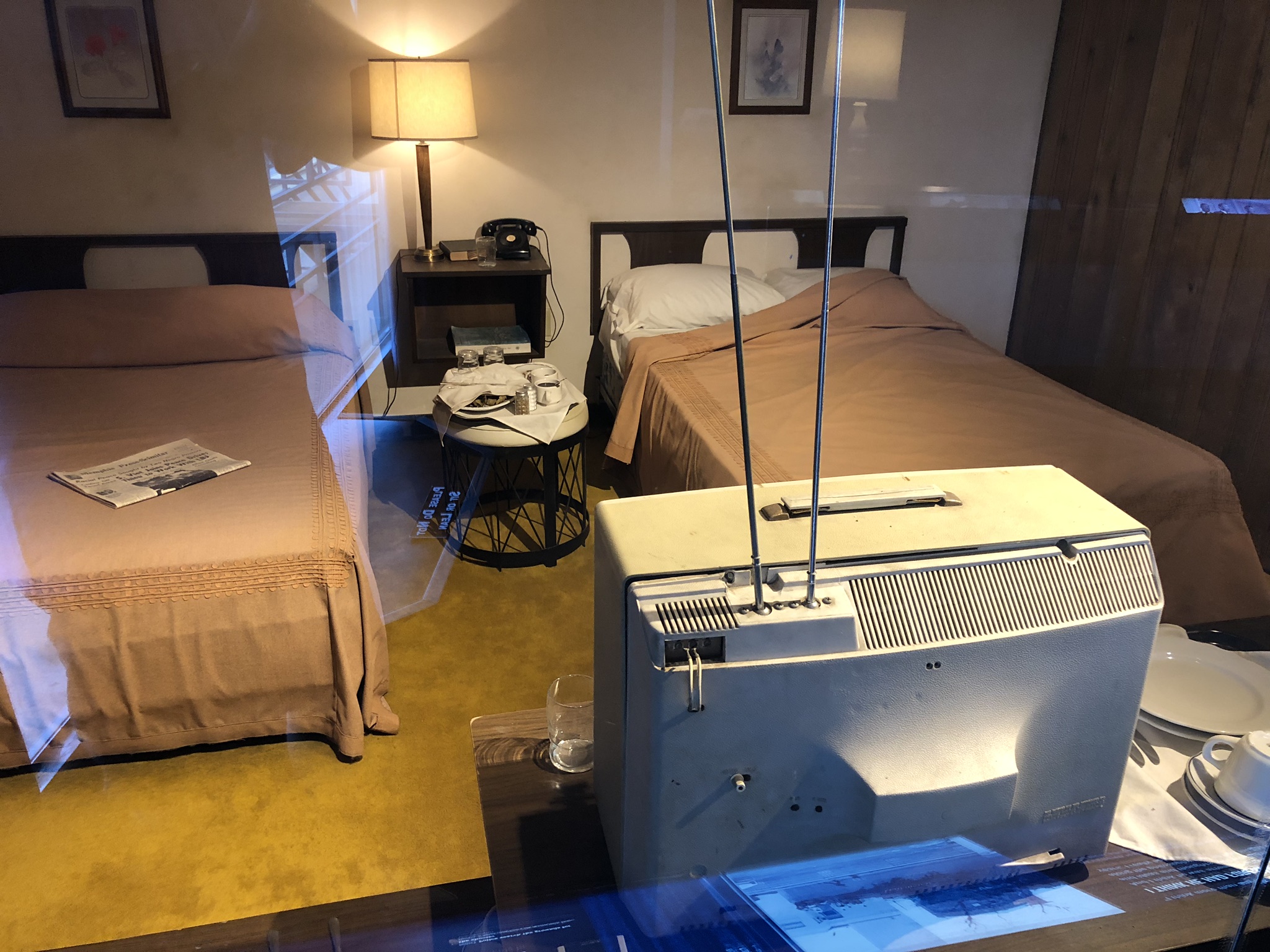
King’s motel room, as it was on that day, April 4th, 1968

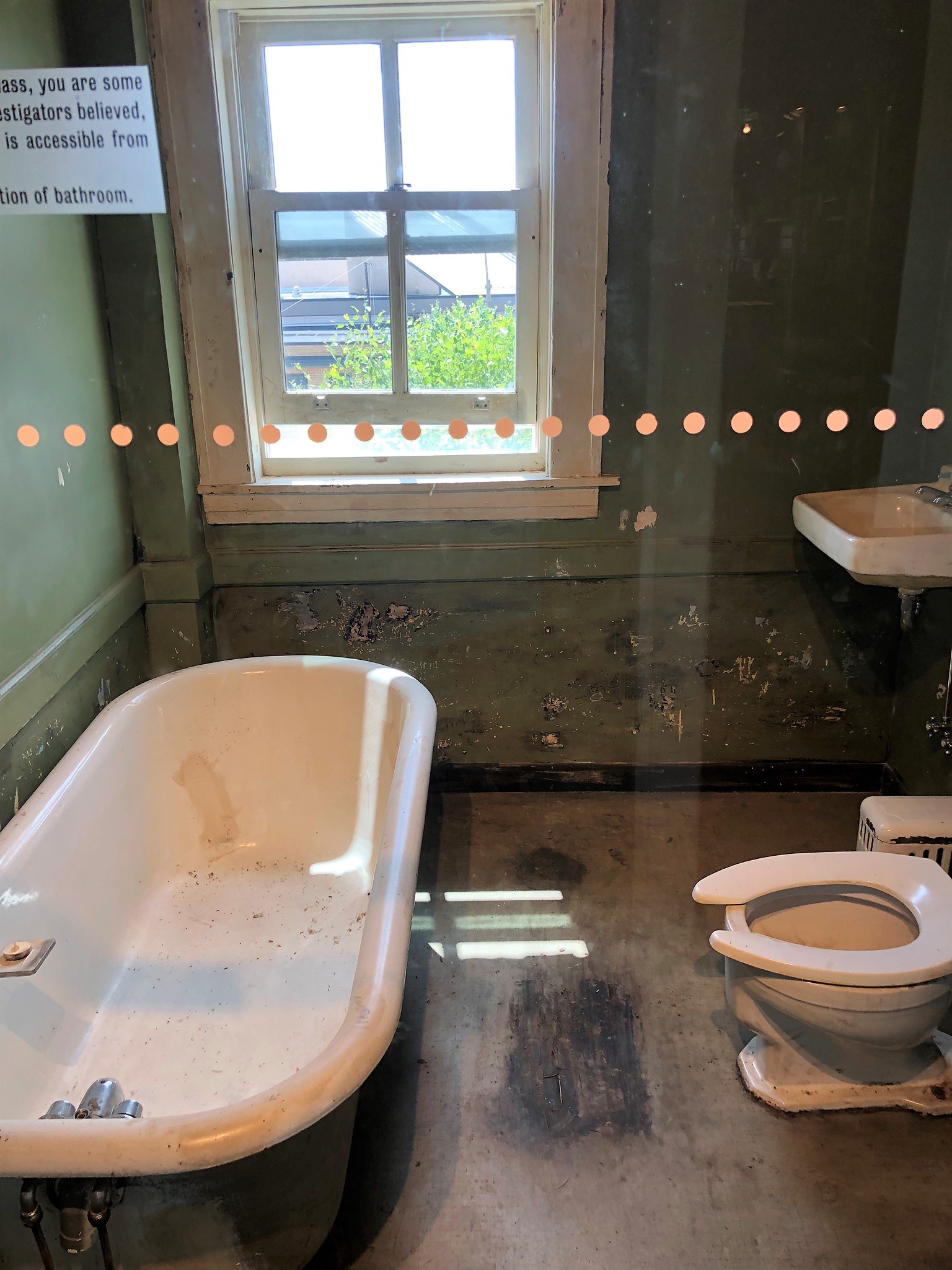
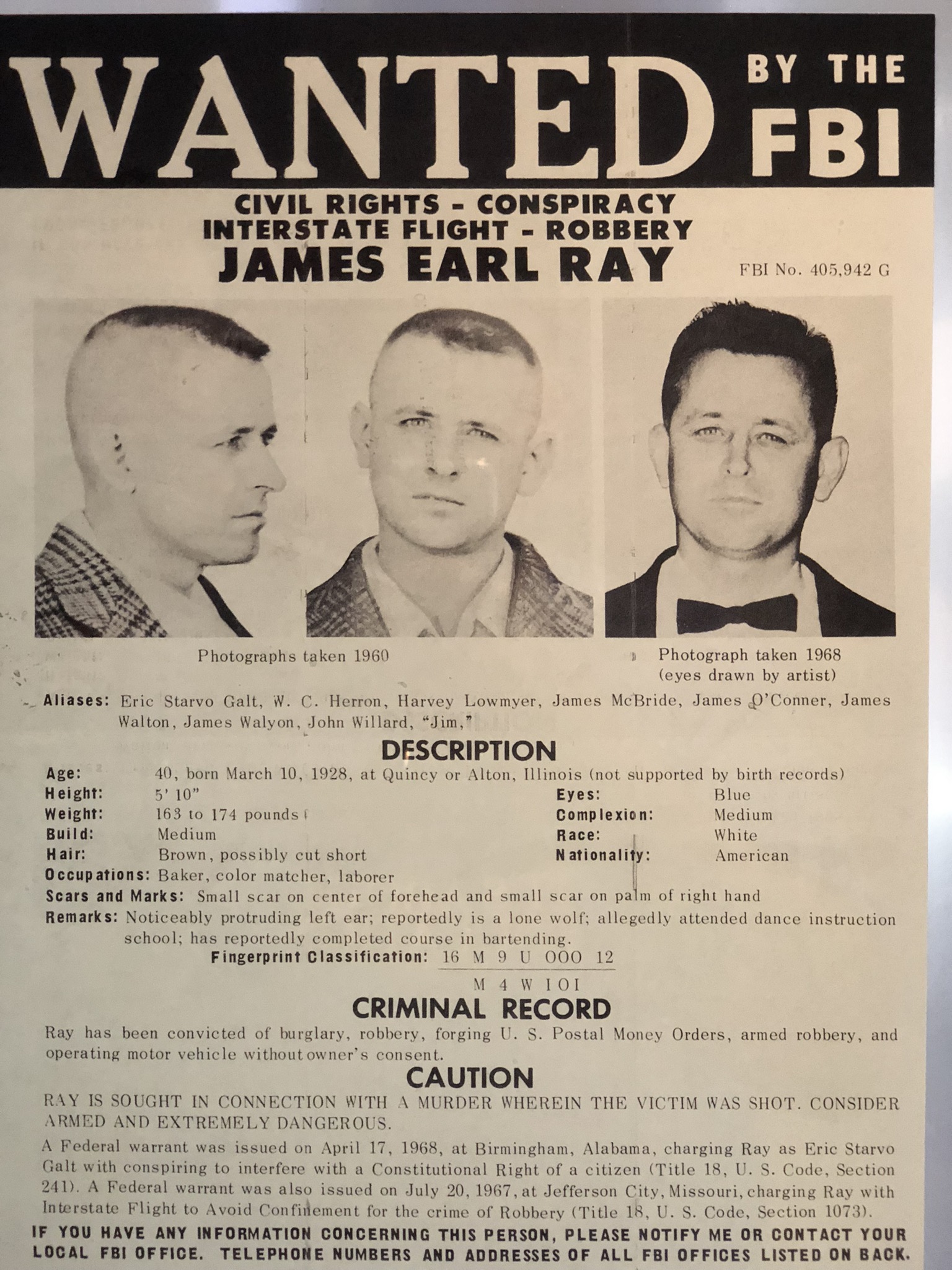
The tour continued across the street at an old boarding house. This is where the assassin was when he shot King. That assassin, later identified as James Earl Ray, a drifter, would eventually be caught and convicted, spending the rest of his life in prison. It was chilling when he see the view that he saw through the scope of his gun. Again, the sadness, this time mixed with anger. I couldn’t imagine what I would’ve felt if I were a black man in 1968. I cannot blame them for their anger boiling over, resulting in riots across the United States. What more did they have to do? The struggle is still not over.

The actual spot where the assassin stood when he fired the fatal shot (now preserved behind glass)
The assassin’s view of the Lorraine Motel
James Earl Ray’s wanted poster

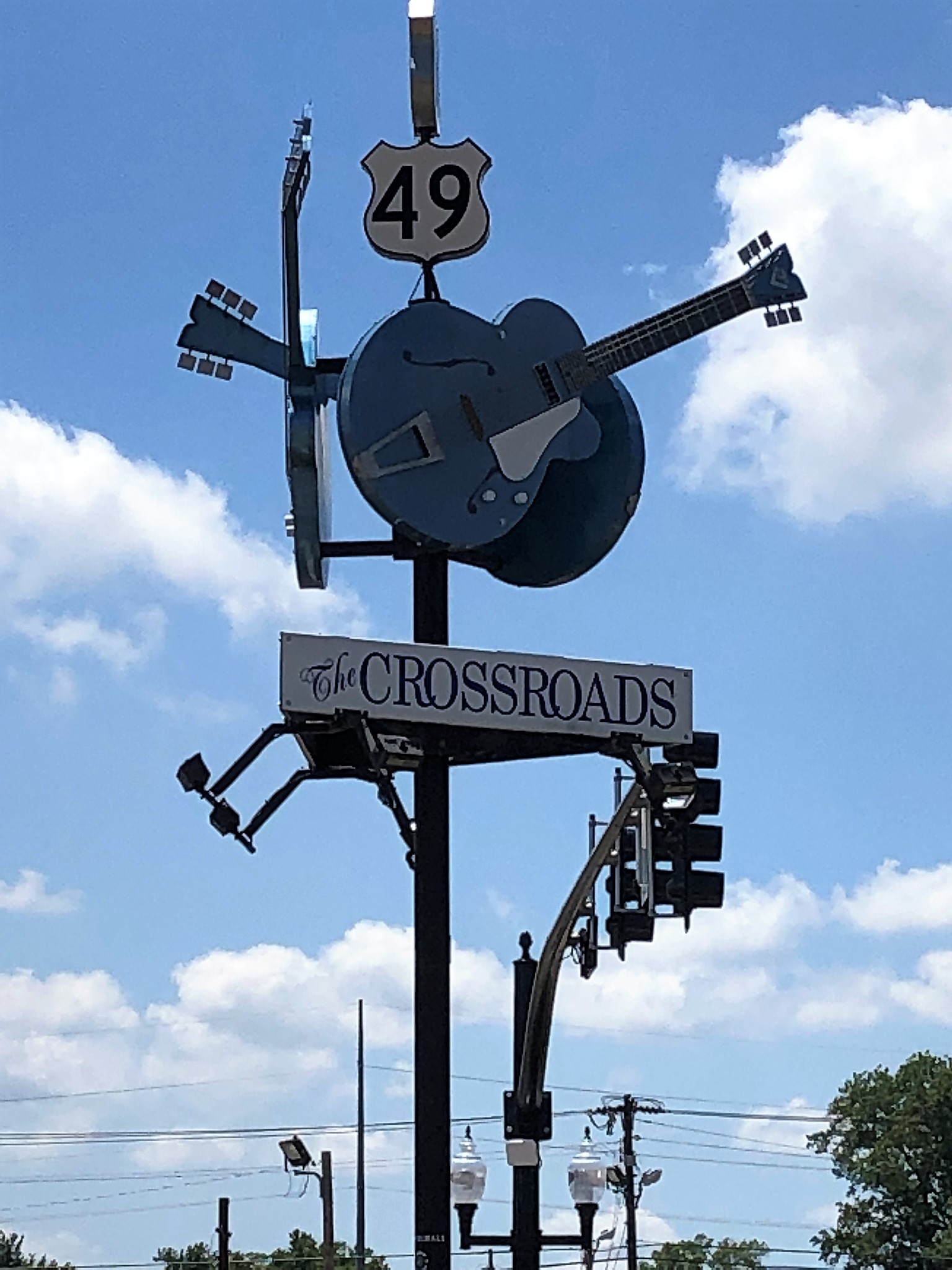
We ended the day with something less sad, sort of. We drove south, first through Clarksdale, Mississippi. Clarksdale is a legendary place in the blues music world, and one of the enduring stories involves a blues musician named Robert Johnson, and a certain little place called “The Crossroads”. Now as legends often are, there is a lot of “that’s B.S.” involved, but it is still fun. Legend has it that a crappy young blues wannabe named Robert Johnson was pretty much laughed out of the business, because, let’s face it, he sucked. He went away for a while, months, a year, and then returned a new man. Now he was an awesome blues man. He could do things with a guitar that nobody had seen before. He was Jimi Hendrix, before Jimi Hendrix. Soon, word was getting around that Johnson’s talent was otherworldly. Like literally. According to stories, one dark night, Johnson went out to the crossroads and sold his soul to the Devil. Old Pitchfork and hellfire himself. That is how he got so good. According to the good people of Clarksdale, the crossroads were the ones located just outside of town. To add to the mystery, Robert Johnson would die young, under mysterious circumstances. Old Satan had recovered what was due to him.

Didn’t see the devil, but I can say that it was hotter than Hell!

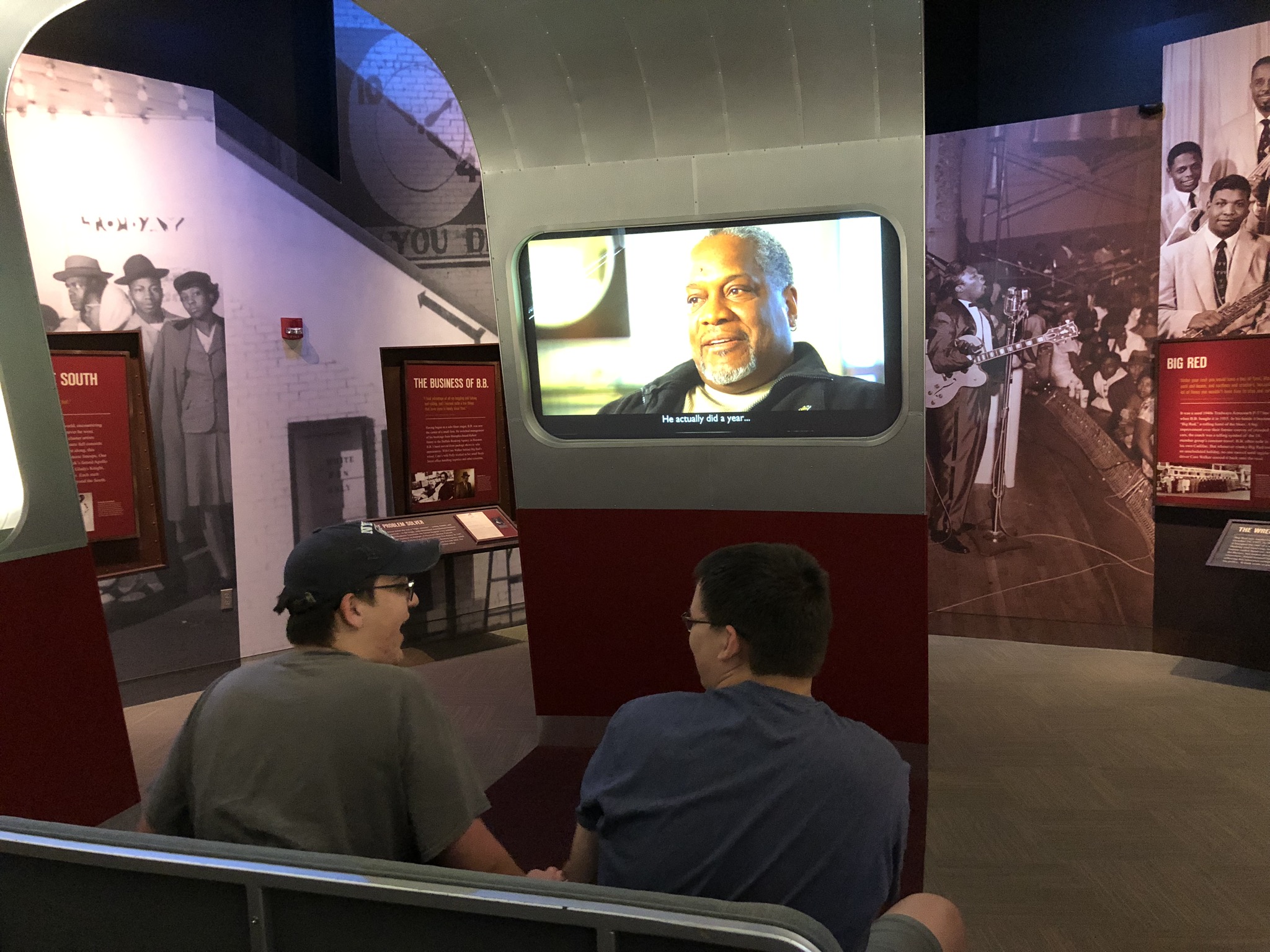
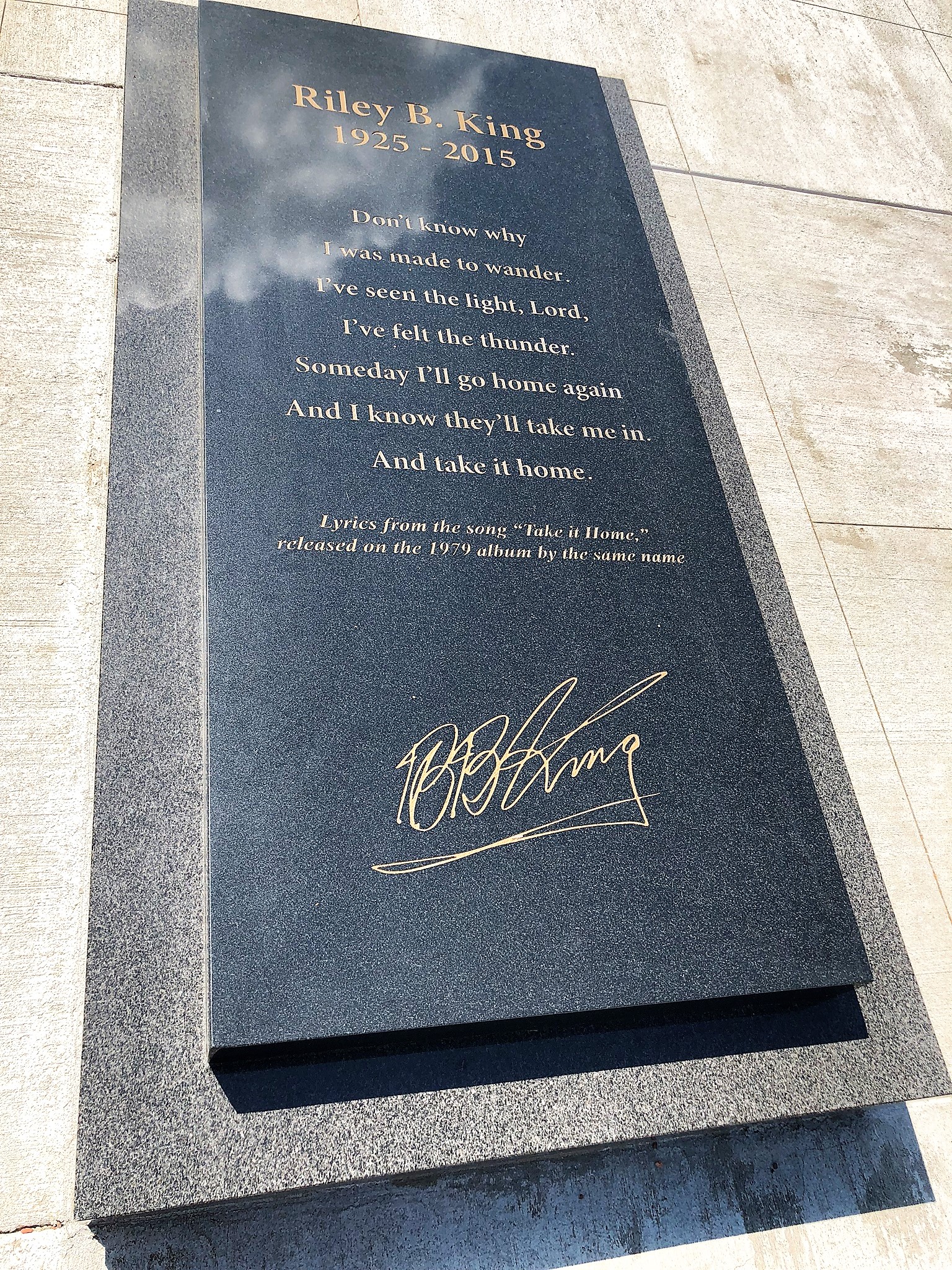
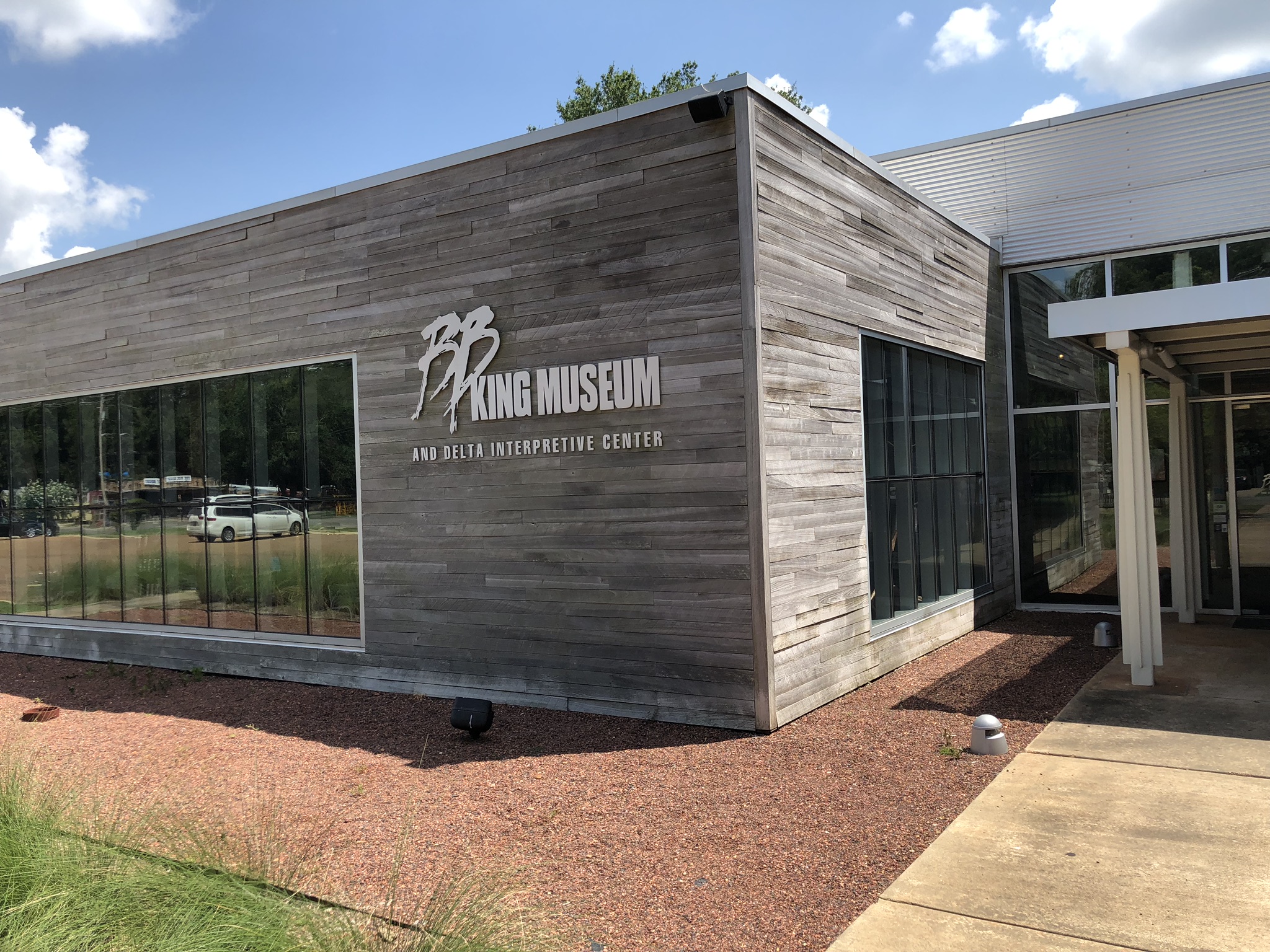
Our last stop of the day was in Indianola, Mississippi. That is where one of my favorite musicians has a museum dedicated to him, and it is where he is now buried. That man is the one, the only, the King of the Blues, Mr. B.B. King!

The museum was bigger and more extensive than I had imagined. All in all, it was a pretty cool place. I had to play my favorite B.B. King songs as we drove away. Some people think that the blues is sad music. Nope, that’s old country music you’re thinking of. Blues music is funny, raunchy, and optimistic. I felt much better as we headed off to Jackson, Mississippi for the night.

The one, the only….
The boys listen to musicians talk about the influence of Riley B. “B.B.” King
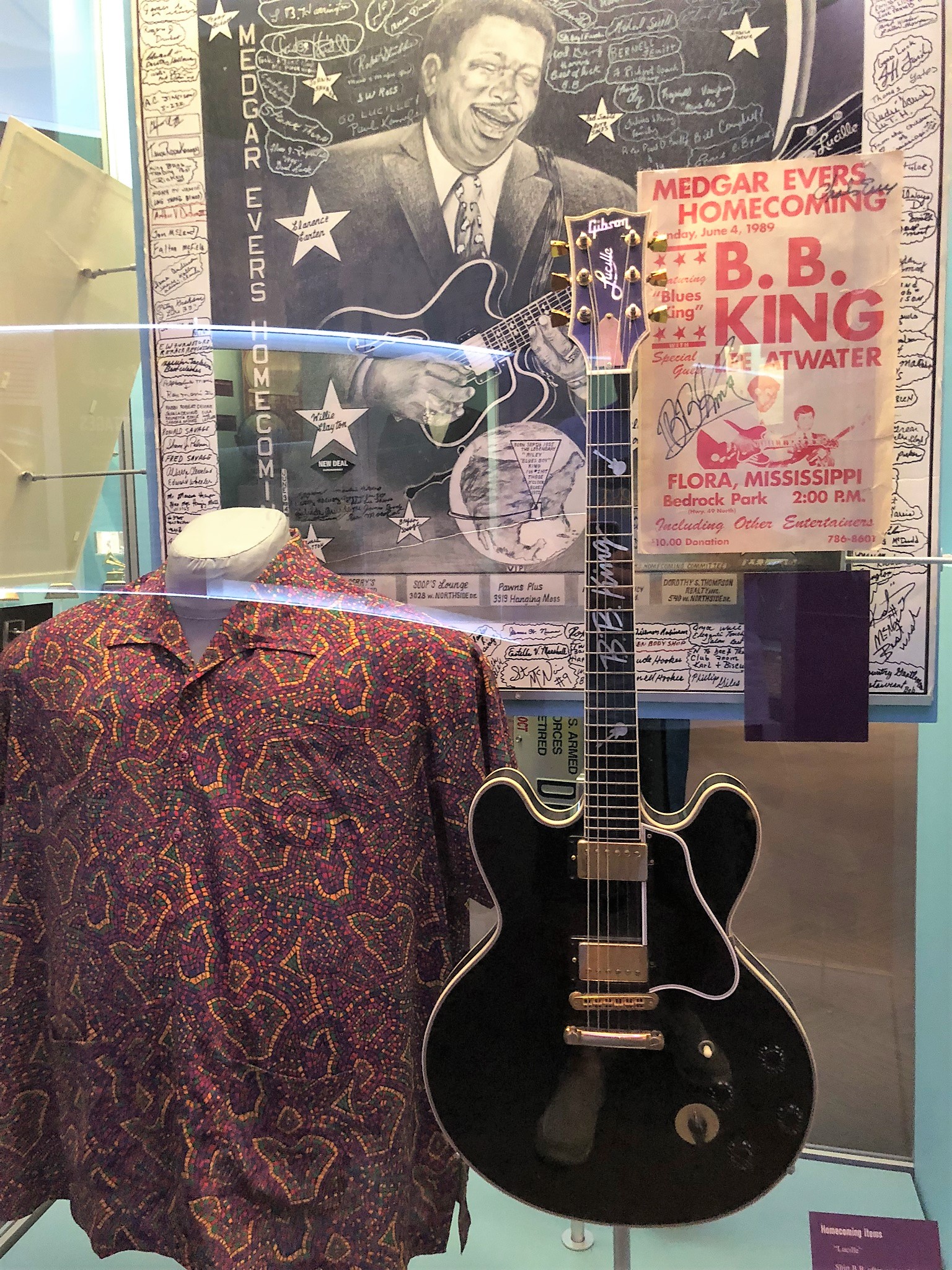
King’s clothing, and of course, one of many guitars he named “Lucille”
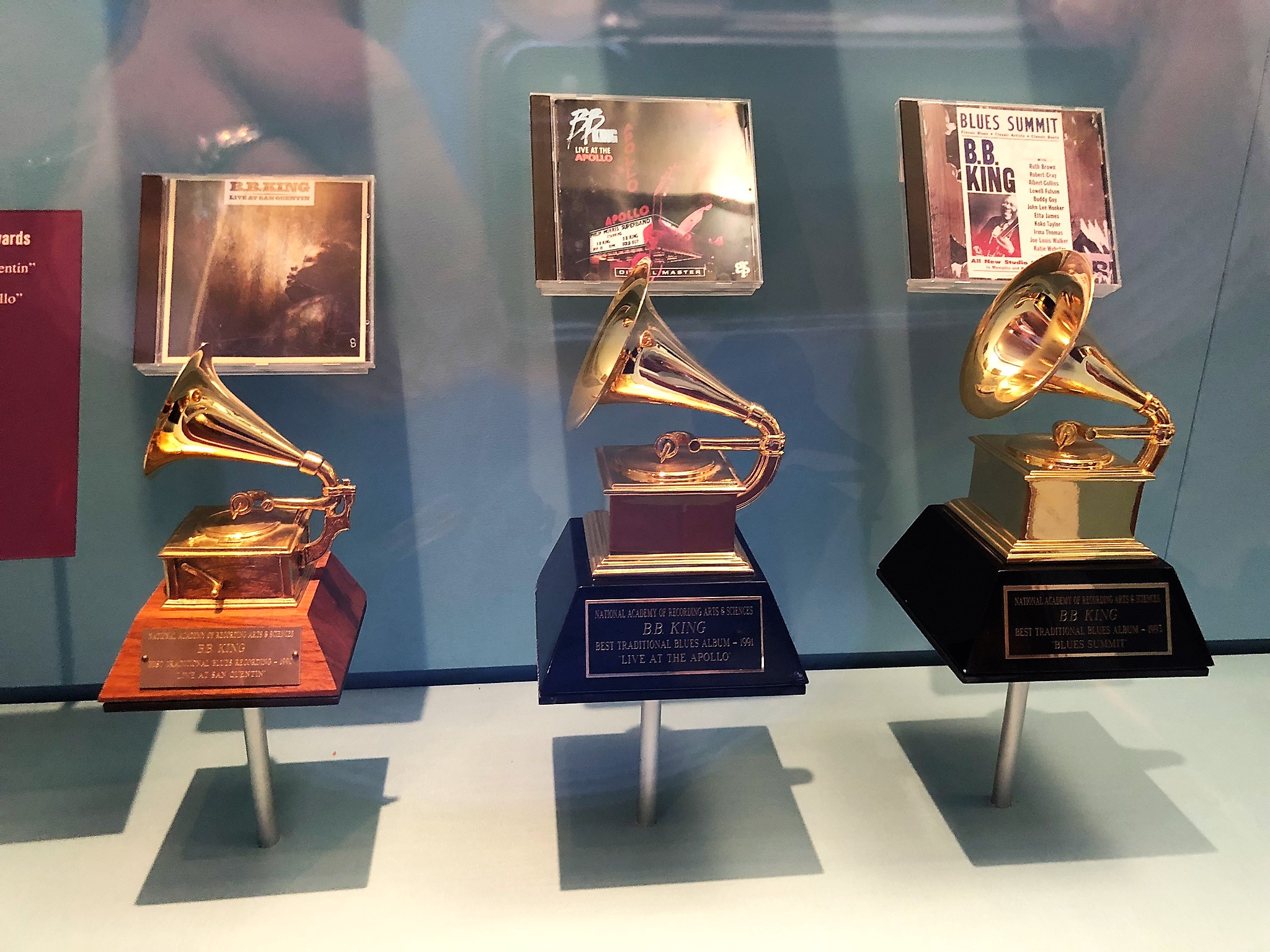
Some of the many Grammy awards King won in his life
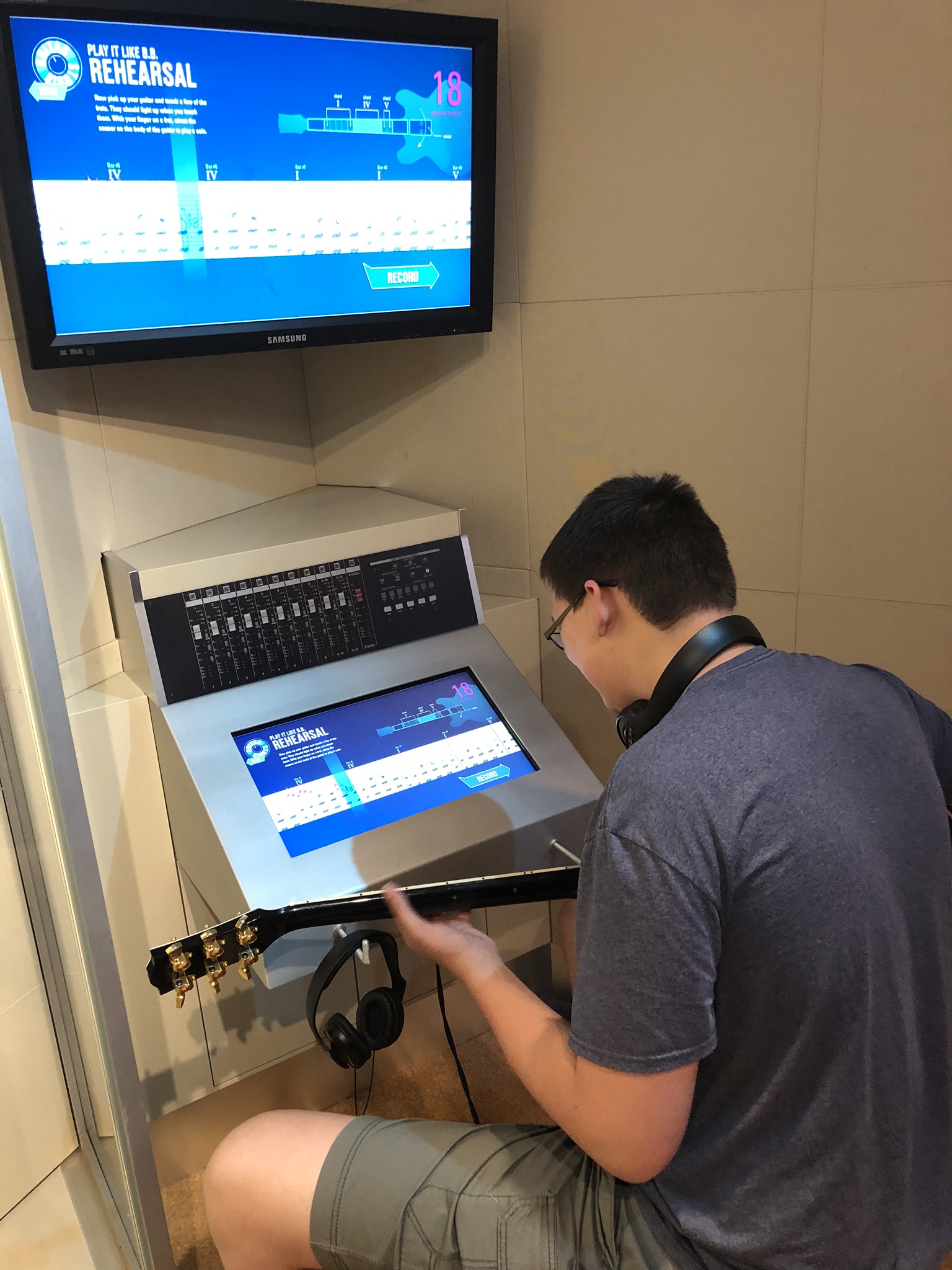
Nathan trying to keep up with B.B. King on guitar
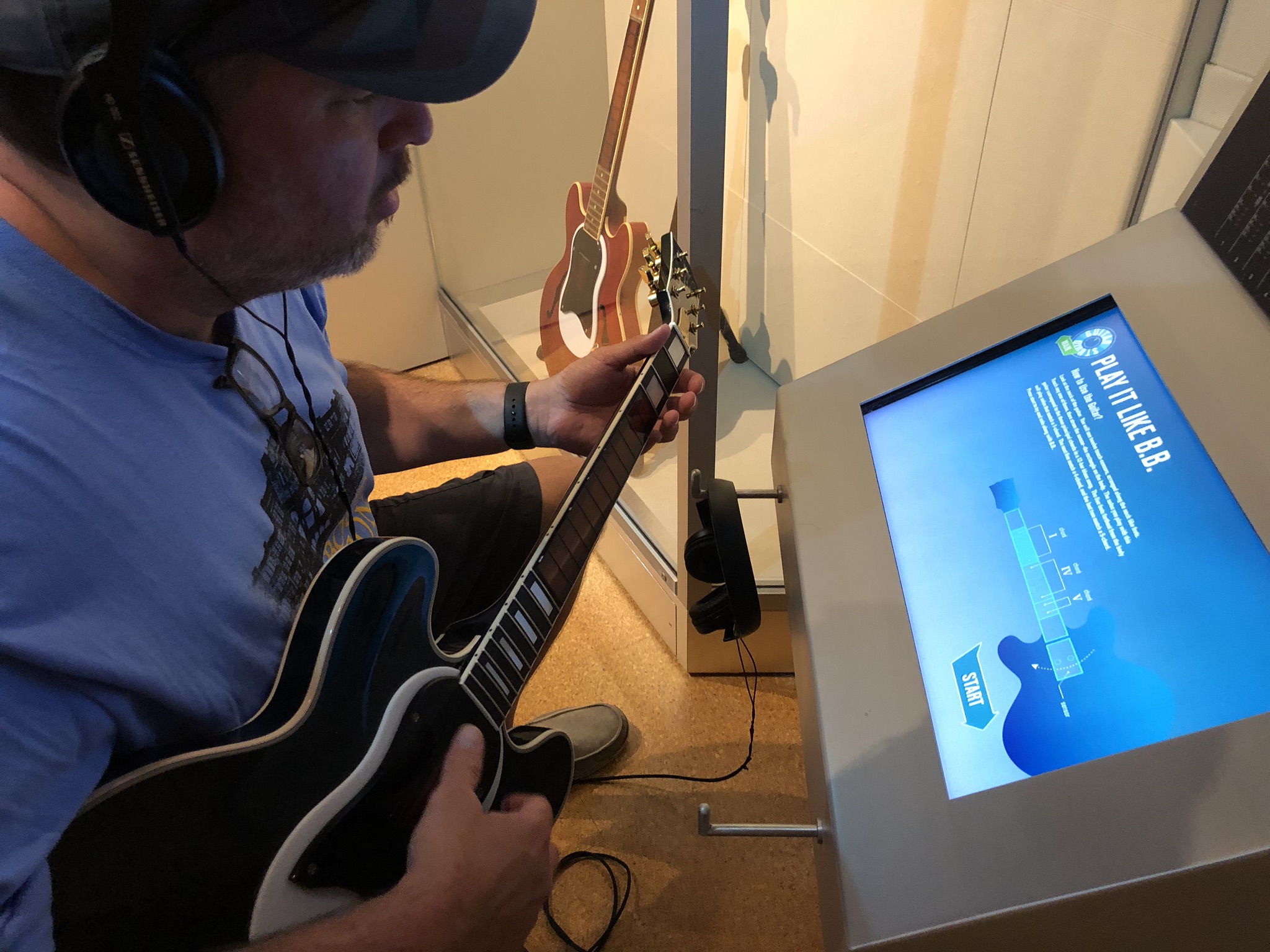
I got to try. I was horrible!
The King’s final resting place

Some final thoughts for today:

  • Is it me, or are these blogs getting longer? Sorry! I have always liked a good story. 🙂
  • One last thing about Robert Johnson’s weird story. There are at least 3 different places in Mississippi which claim to be the final resting place of Mr. Johnson. Not sure why, but nobody really knows where he is buried. Even his relatives go to different sites to pay their respects. His mystery endures!
  • The hurricane has certainly put a crimp into our trip. It is a serious curve ball. We still don’t know if United will alter Deborah’s plane tickets. We don’t even know if and when she will be joining us. She’s sad and pissed, and I’m mostly pissed. I had some prepaid tickets which have been affected, like the ones I purchased for Cape Canaveral, which now we will be going there four days earlier than planned! It’s either that or sit around in Florida or something for four days until those tickets are good. Crappy crap of craptastic proportions indeed.
  • Ahead of the storm, there has been some pretty spectacular lightning and thunderstorms this evening, and there has been some serious Hawaii-like downpours where you can’t see where you’re driving. Kind of exciting, and scary at the same time. As I’m typing this, there are flashes outside and rumbling thunder.
  • Tomorrow is Selma and Montgomery, Alabama. Saturday is Birmingham and Atlanta, Georgia. After that, who knows. Still looking for that Plan B…

That’s it for now. Bed time! Will let you know when we know. 🙂

Day Six: Memphis, Tennessee

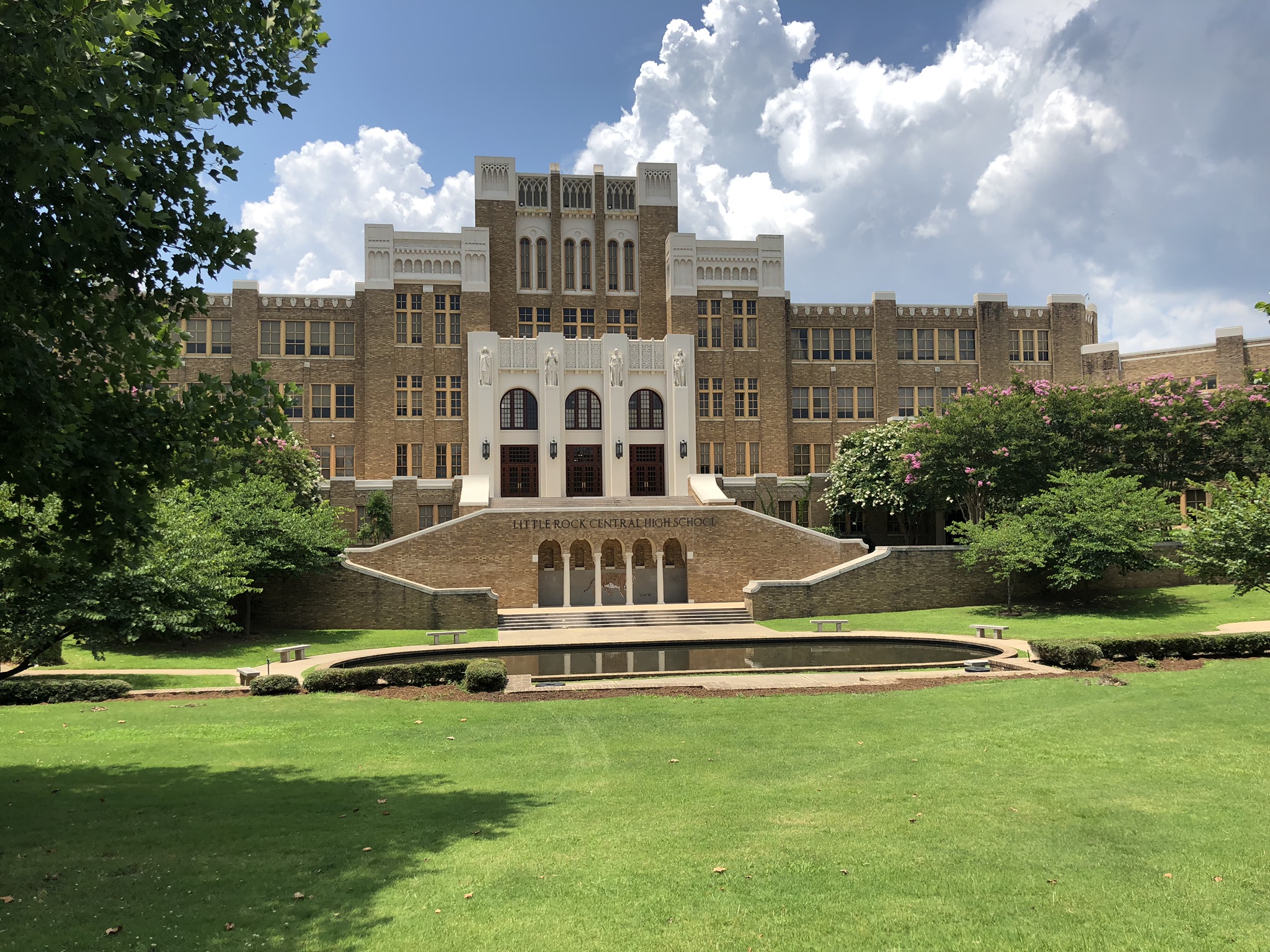
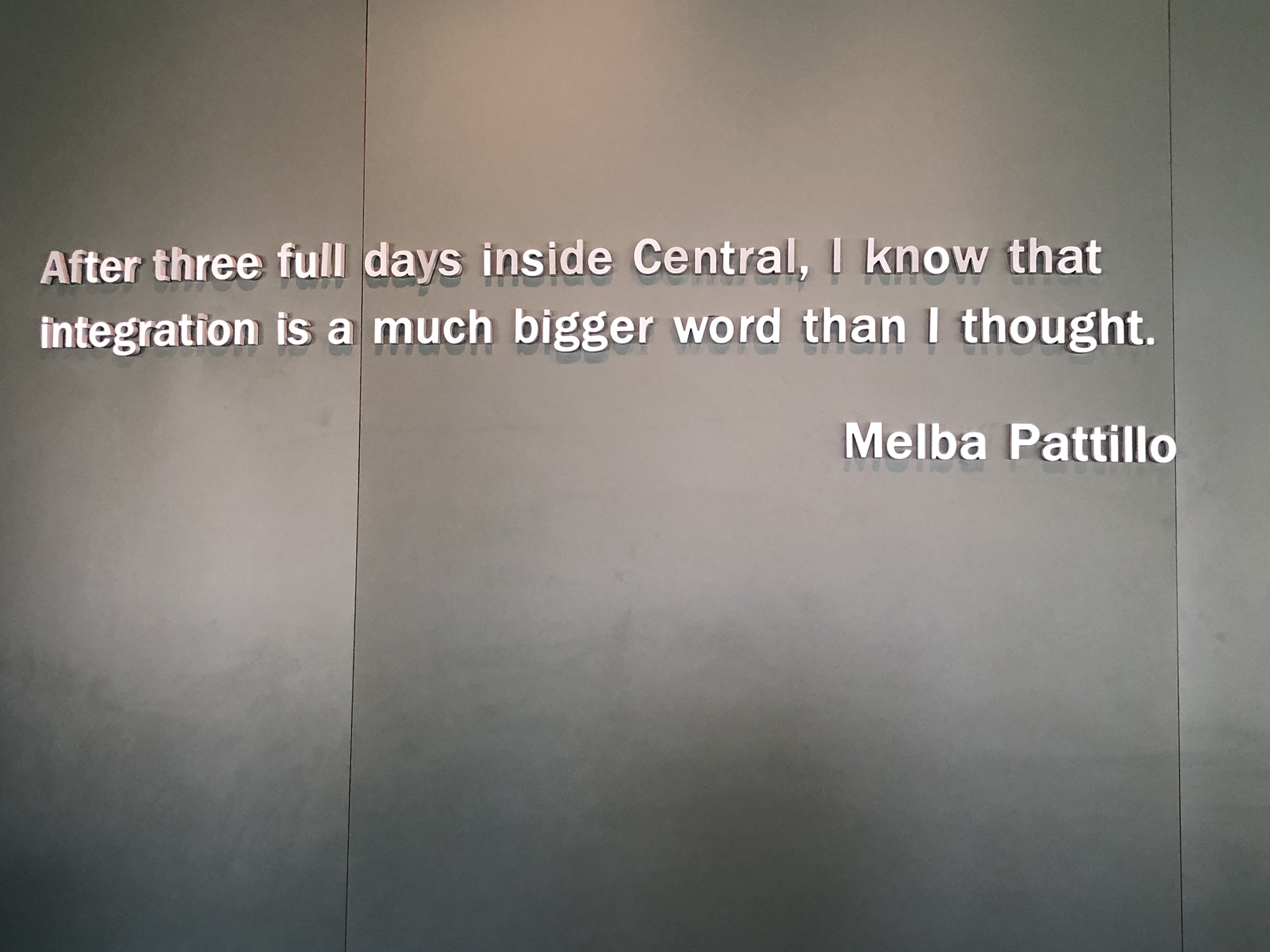
Today we drove from OKC to Little Rock, Arkansas. It’s been really hot and muggy the last two days, so I guess the nice thing about driving so long is that it is air-conditioned at least! In Little Rock, we visited the Little Rock Central High School. It was the site of the first famous battle over integration of schools following the Brown vs. the Board of Education Supreme Court Ruling – which basically said that “separate, but equal” was not cool, and that everyone deserved “equal rights”. Period.

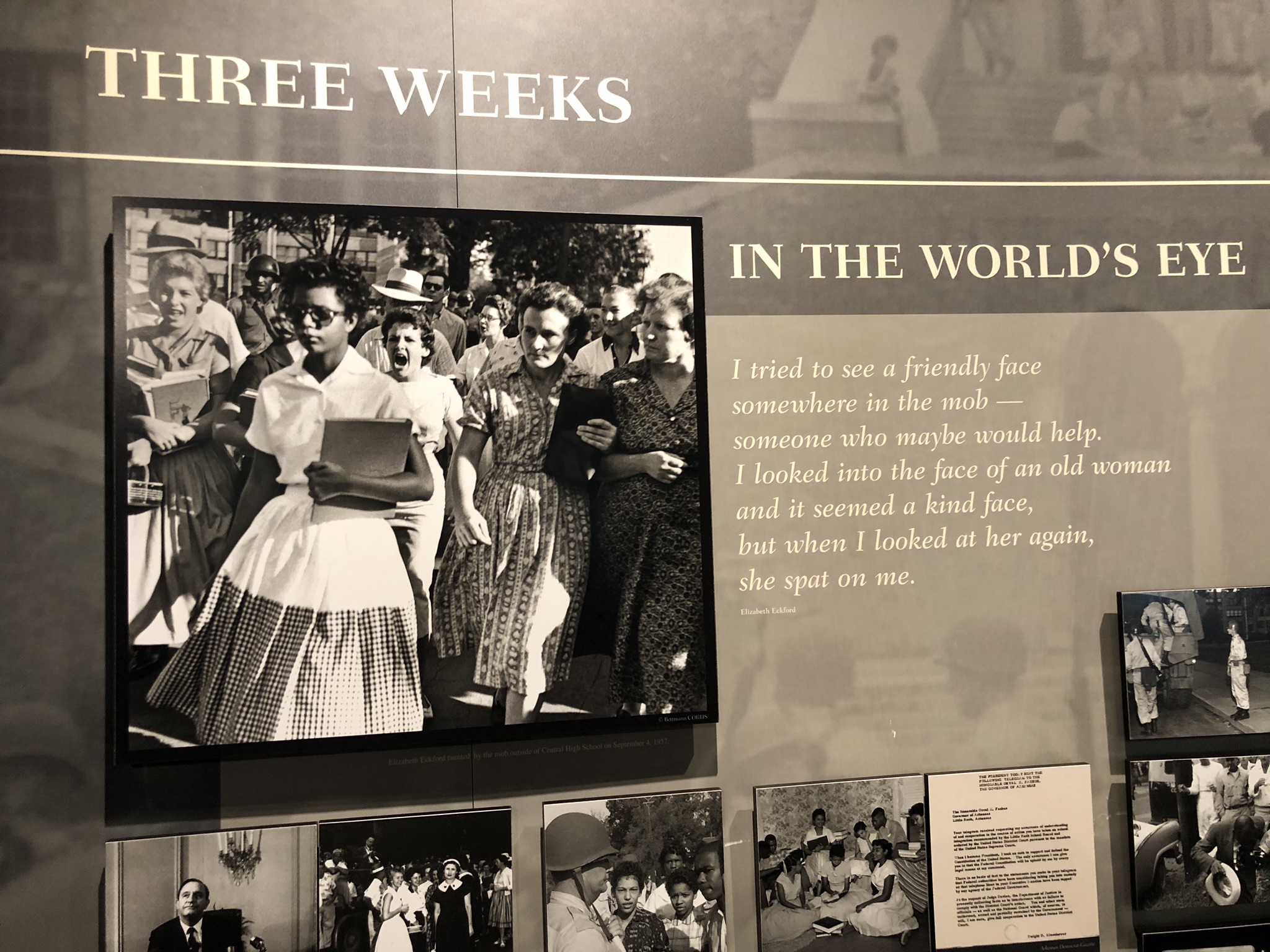
The “Little Rock Nine” were nine black kids who tried to integrate Central High School in 1957. They were met by crowds of protesters who shouted racial epithets, carried signs telling them to go back where they came from, spitting on them, and threats against their lives. The governor at the time basically said that these kids were not going to attend that school, but as police tried to escort the kids into the school, things got violent, and they had to be removed. President Eisenhower ordered the U.S. military in to take charge, and he also overtook the Arkansas National Guard so that these kids could attend school. It was a major test of America’s will to end segregation. Many in the south were not enthused about the changes.

The school sits on an absolutely gorgeous campus. There is a museum dedicated to this moment in U.S. history, right across the street. Both boys had read a book called “Warriors Don’t Cry”, which was a memoir written by one of the “Little Rock Nine”. They were very impressed with the museum, and found our visit to be a very cool one. I was impressed with their knowledge of the event. Chalk one up for reading! I, too, was greatly moved by the exhibits, which were informative and full of first-person accounts in audio recordings and videos. I highly recommend visiting this place if you ever happen to find yourself in Little Rock, Arkansas.

Little Rock Central High School, Little Rock, Arkansas
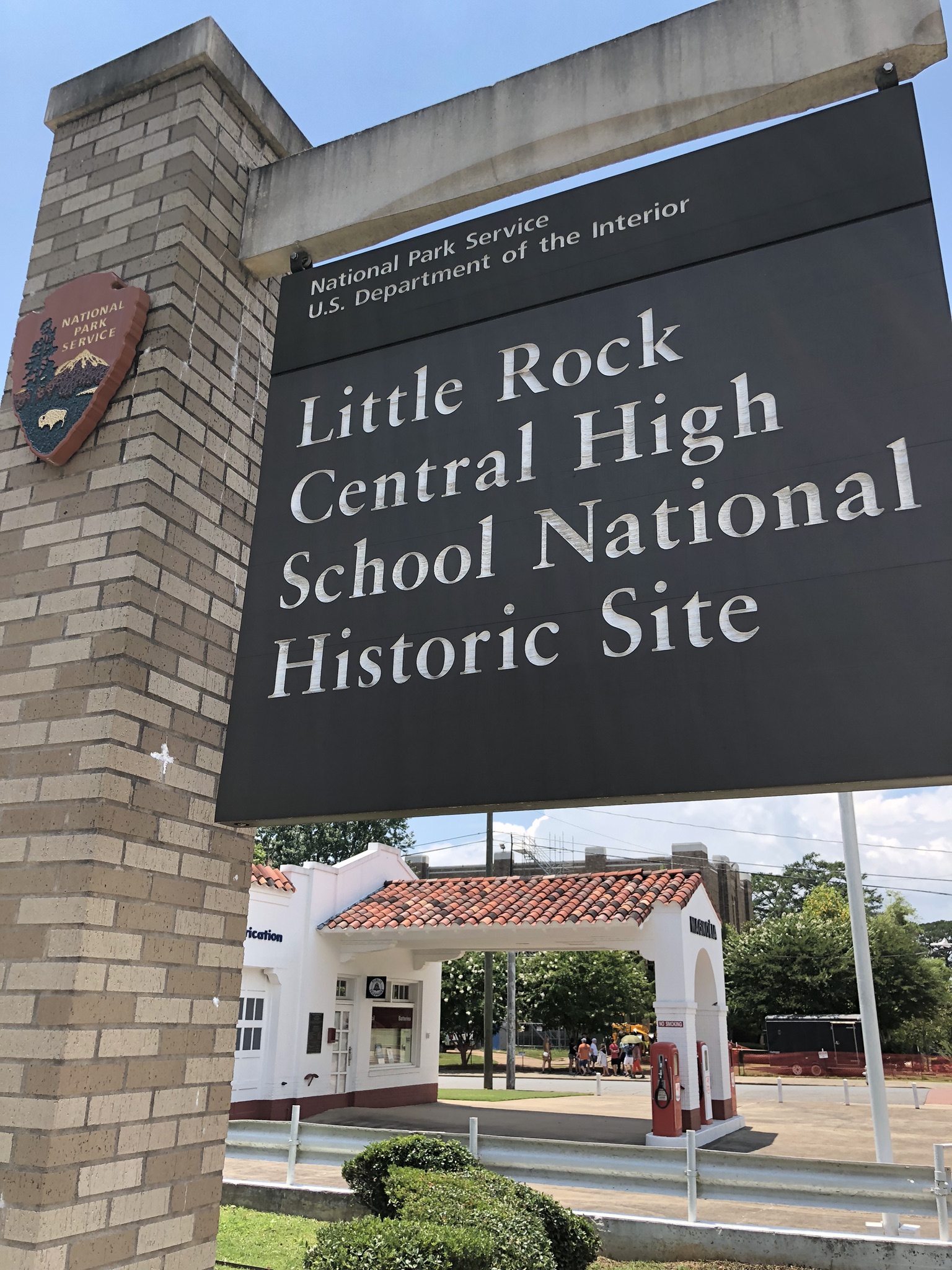
Behind the sign is a gas station, exactly as it was in 1957
Famous photo of Melba Pattillo being escorted into the school by an angry mob
Remember that the “Little Rock Nine” were high school teenagers
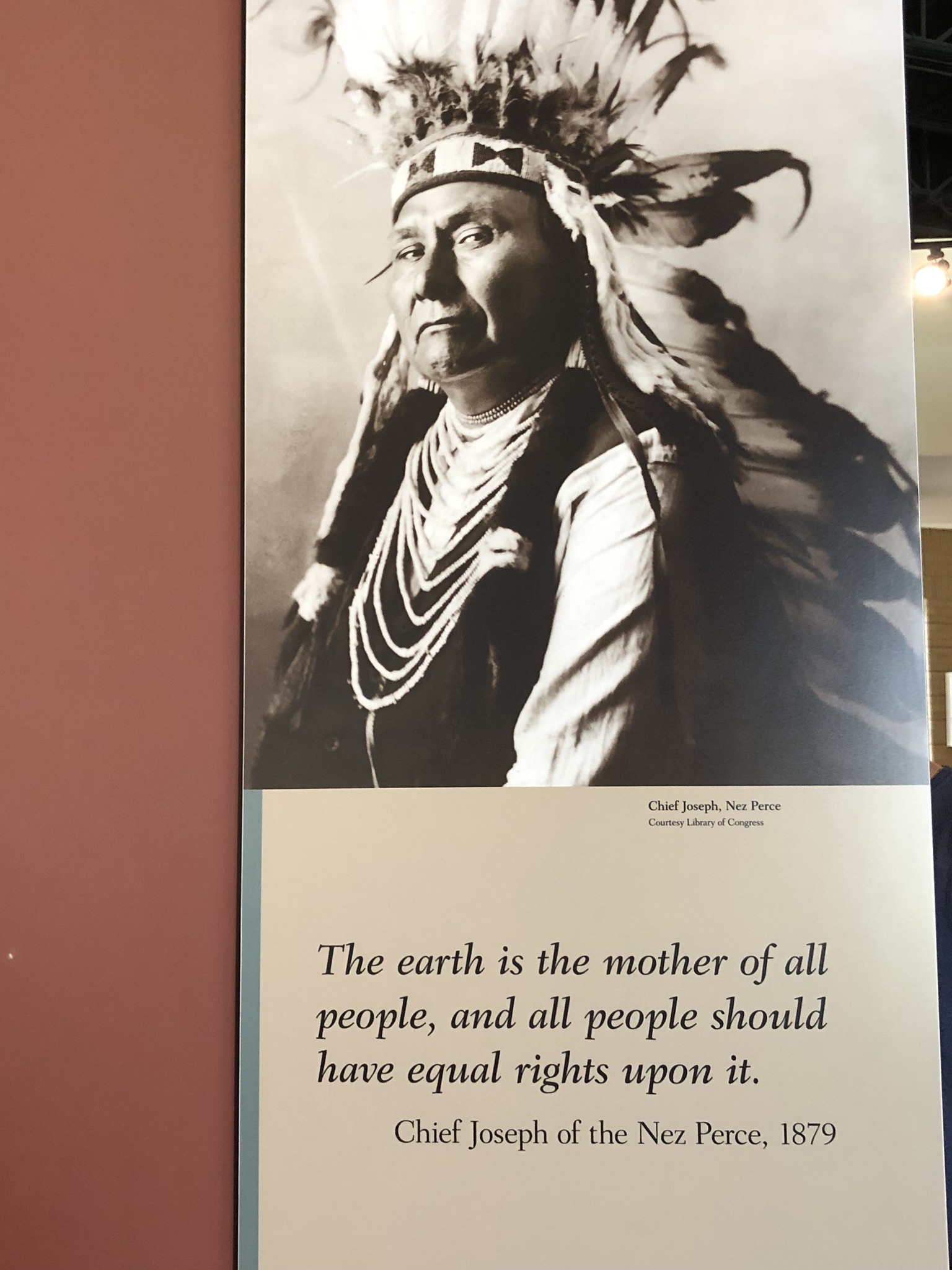
True today as well as in 1879

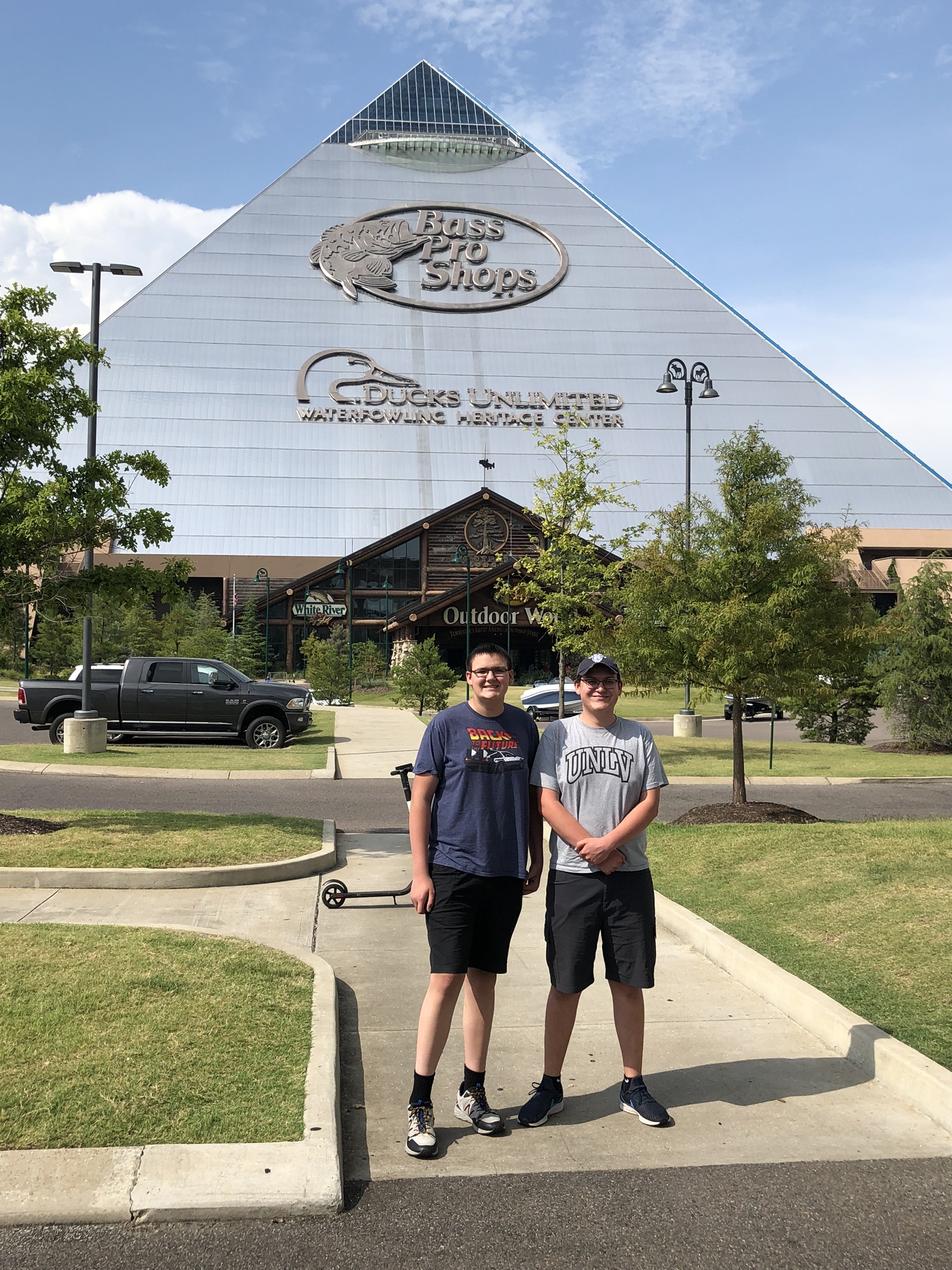
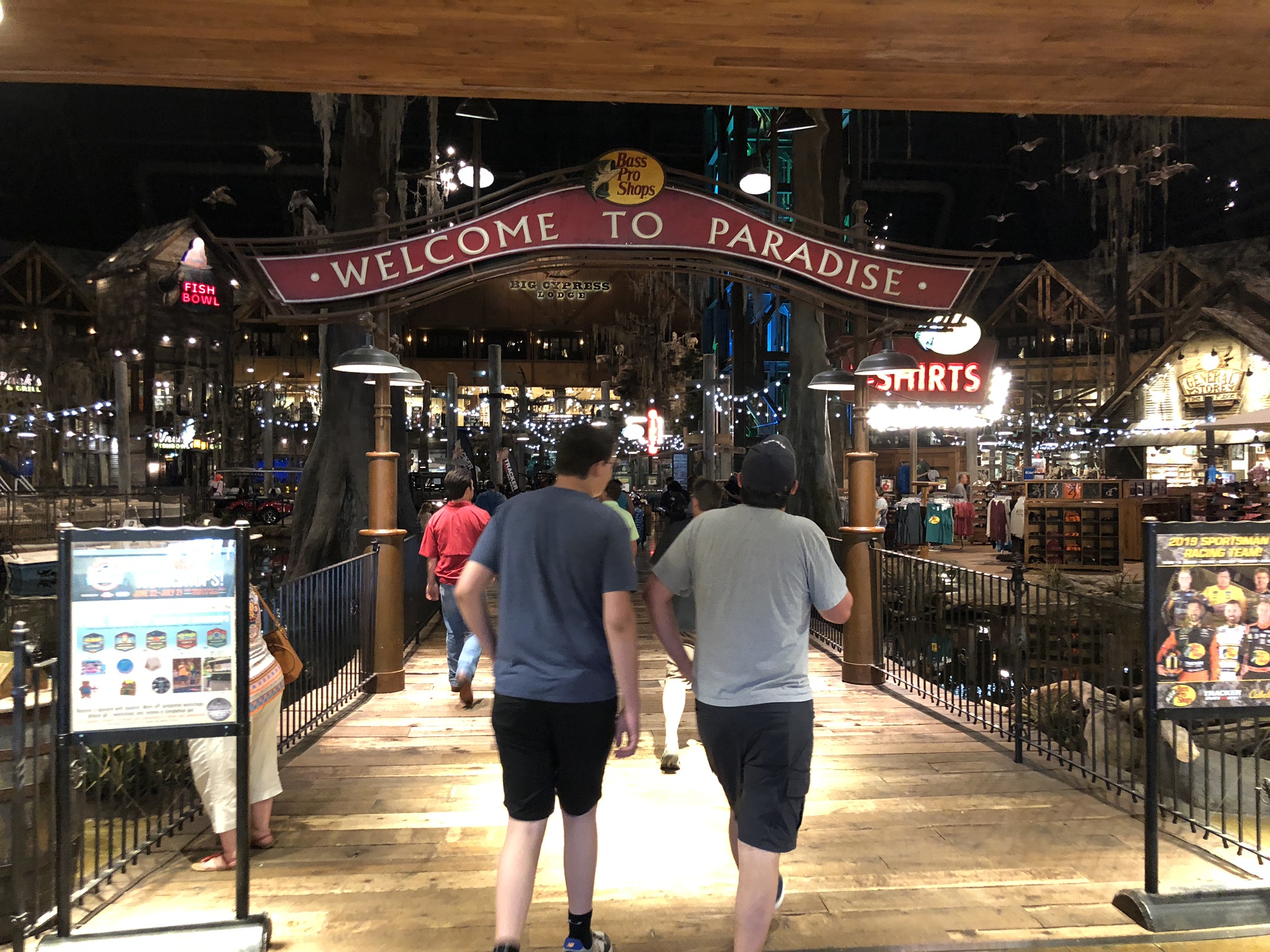
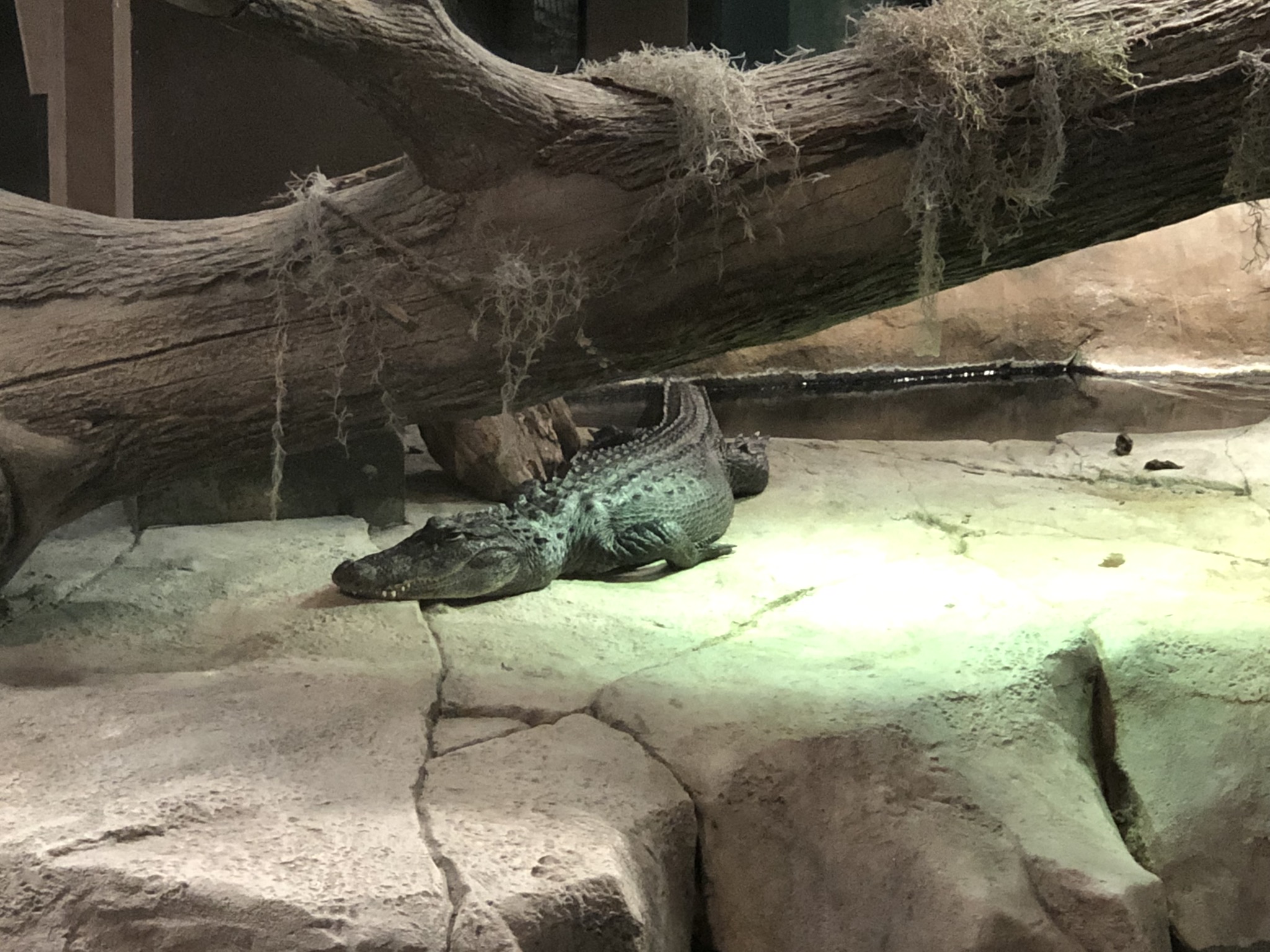
After Little Rock, we got back in the truck and continued down I-40 to Memphis, Tennessee. There are several things we wanted to do and see while in town. All of that had to wait, though, because as we crossed the bridge from Arkansas to Tennessee, the boys caught sight of something which blew their minds: The biggest friggin’ Bass Pro Shops they had ever seen. This was not a planned stop, but I have to admit that it was pretty impressive, so we took a detour, and pulled up to what had to be one of the Earth’s man-made wonders. What’s funny is that neither boy is very outdoorsy, but that didn’t stop them from gawking at this store. Like I said, it is huge. There is actually a hotel inside this place. That’s right, you can rent a room inside the store, overlooking just about any outdoor camping, hunting, and fishing equipment you would ever need or want. There were ponds full of trout, catfish, and even sturgeon. Another pond has live alligators. This place was unreal.

The 8th wonder of the world? Nah, it’s a Bass Pro Shop dude
The boys described it as “Fishing Disneyland”. Sounded about right
Gator sighting!

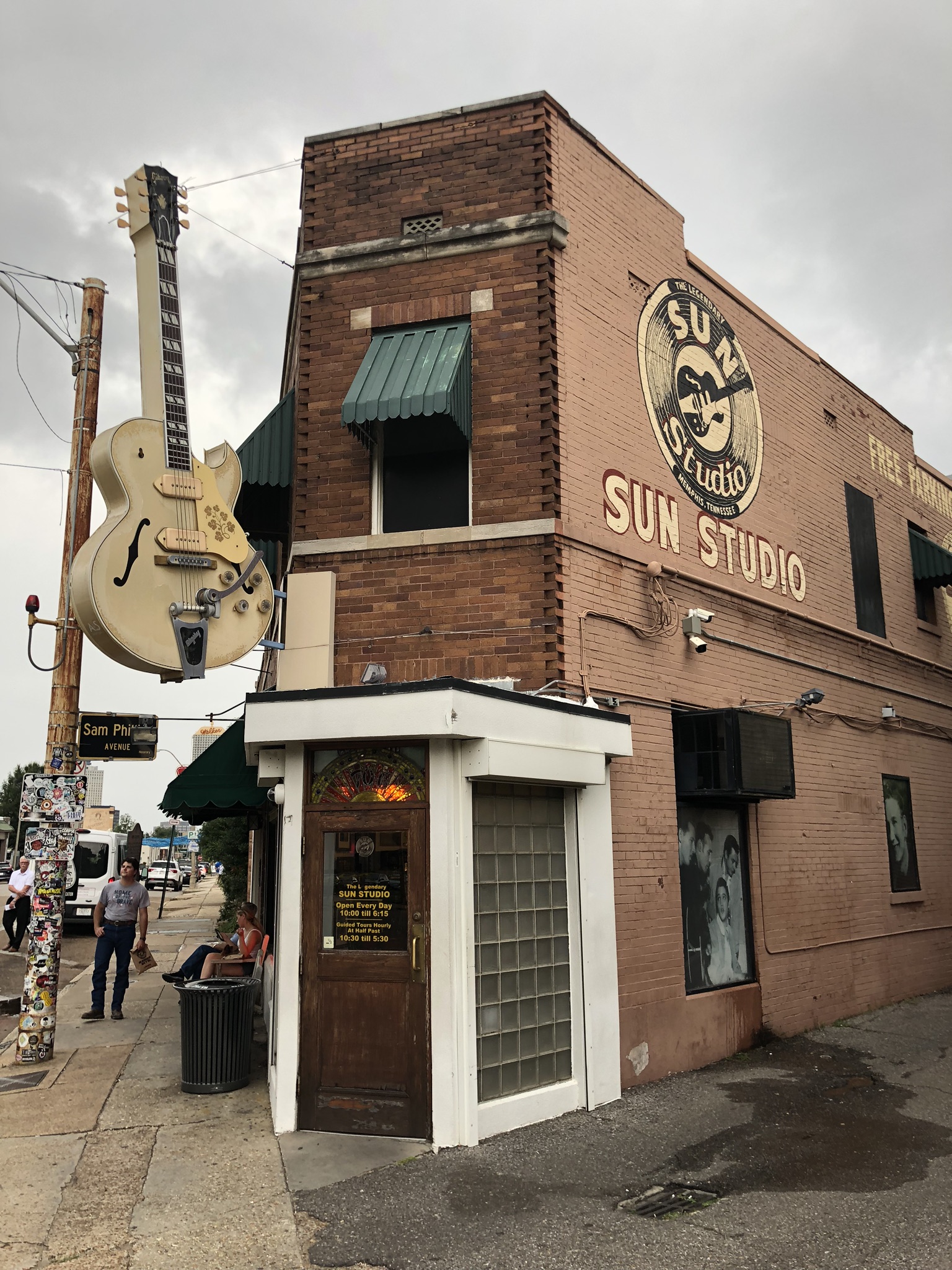
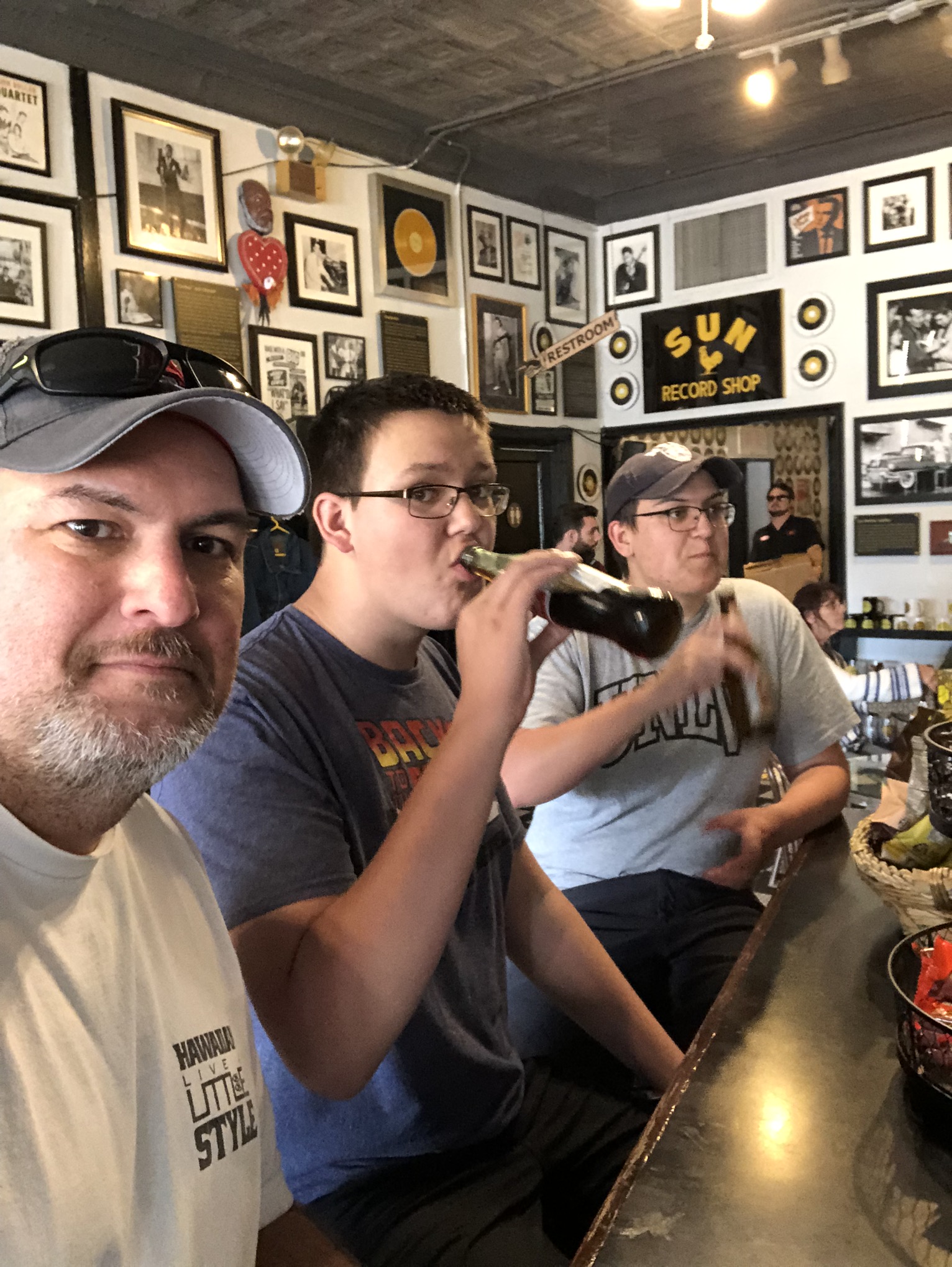
After departing the Pyramid, we headed on down to a place I had been looking forward to: Sun Studio. Although Nashville often steals the music limelight from Memphis, Memphis can always claim that they birthed the King Of Rock and Roll: Elvis Presley. We made it to the last tour of the day, and in fact we were a little early, so we had time to sit at the bar in the lobby and drink sodas and gawk at all the memorabilia on the walls. Signed photographs from some of rock and country’s biggest early stars were on the walls. Blue music played on the speakers on the walls. Gold albums and 45’s were also on the walls. It was starting to feel like heaven to this old blues rocker! The tour got started upstairs where there were lots of interesting artifacts like the actual sound equipment that Sam Phillips (owner of the studio) used to record Elvis Presley, Johnny Cash, and Jerry Lee Lewis. Our tour guide told us some great stories like how Phillips’ first recording he did at his studio was a group which feature Ike Turner (Tina’s former husband). He told us the story of how Phillips heard about some inmates who had an A Capella group, and he got the warden to allow them to come to the studio to record an album. The prisoners arrived, in chains, and they recorded their album, with prison guards standing behind them with shotguns! My favorite story was about how Elvis came to the studio because he heard Sam Phillips would allow anyone to record a demo for $4. Sam wasn’t in the day Elvis showed up, but the secretary knew how to work the equipment, so she set it up, and became the first person to record Elvis Presley. Phillips would later produce and record Elvis’ very first song, and hit, “That’s All Right Mama” – which made Elvis an overnight star.

The second part of the tour was downstairs in the actual recording studio. Nothing in the studio had been changed. It was the way it was in the 1950’s. It was incredible to be standing where people like Johnny Cash recorded “I Walk the Line”, or Carl Perkins recorded “Blue Suede Shoes”, and to be able to sit at the piano Jerry Lee Lewis used when he recorded – right at that spot – “Great Balls of Fire”. I must say that I was awestruck throughout this portion of the tour, and more than once I got goosebumps (chicken skin for my Hawaii peeps). Before the tour, the boys weren’t so sure they were going to really get into this stop, but at the end, they too were in awe, and they enjoyed this museum a lot.

The outside of the studio. Awesome
Sitting at the bar drinking cokes – from the bottle. Tastes better that way, right?
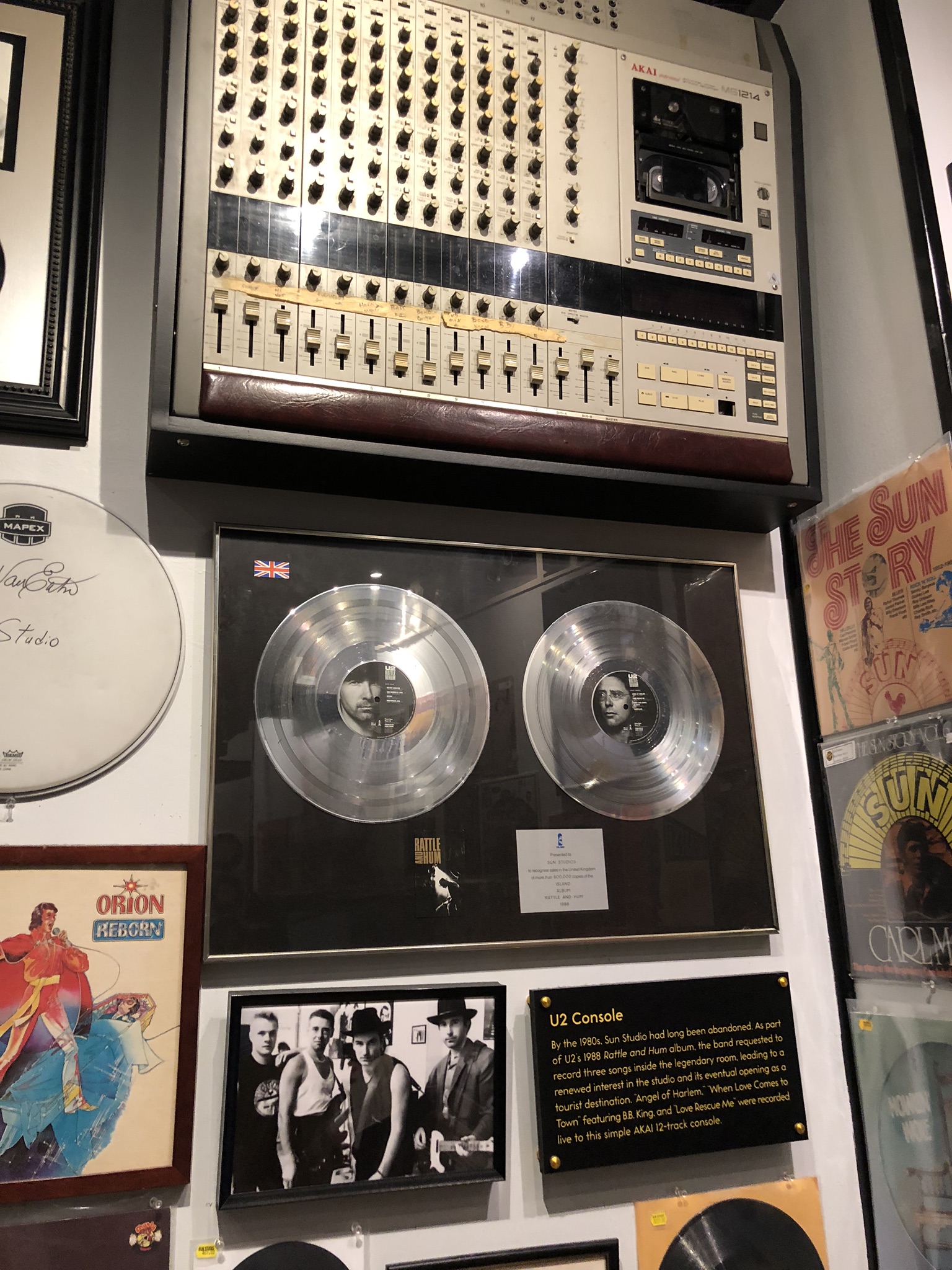
U2 recorded part of their “Rattle and Hum” album in this studio
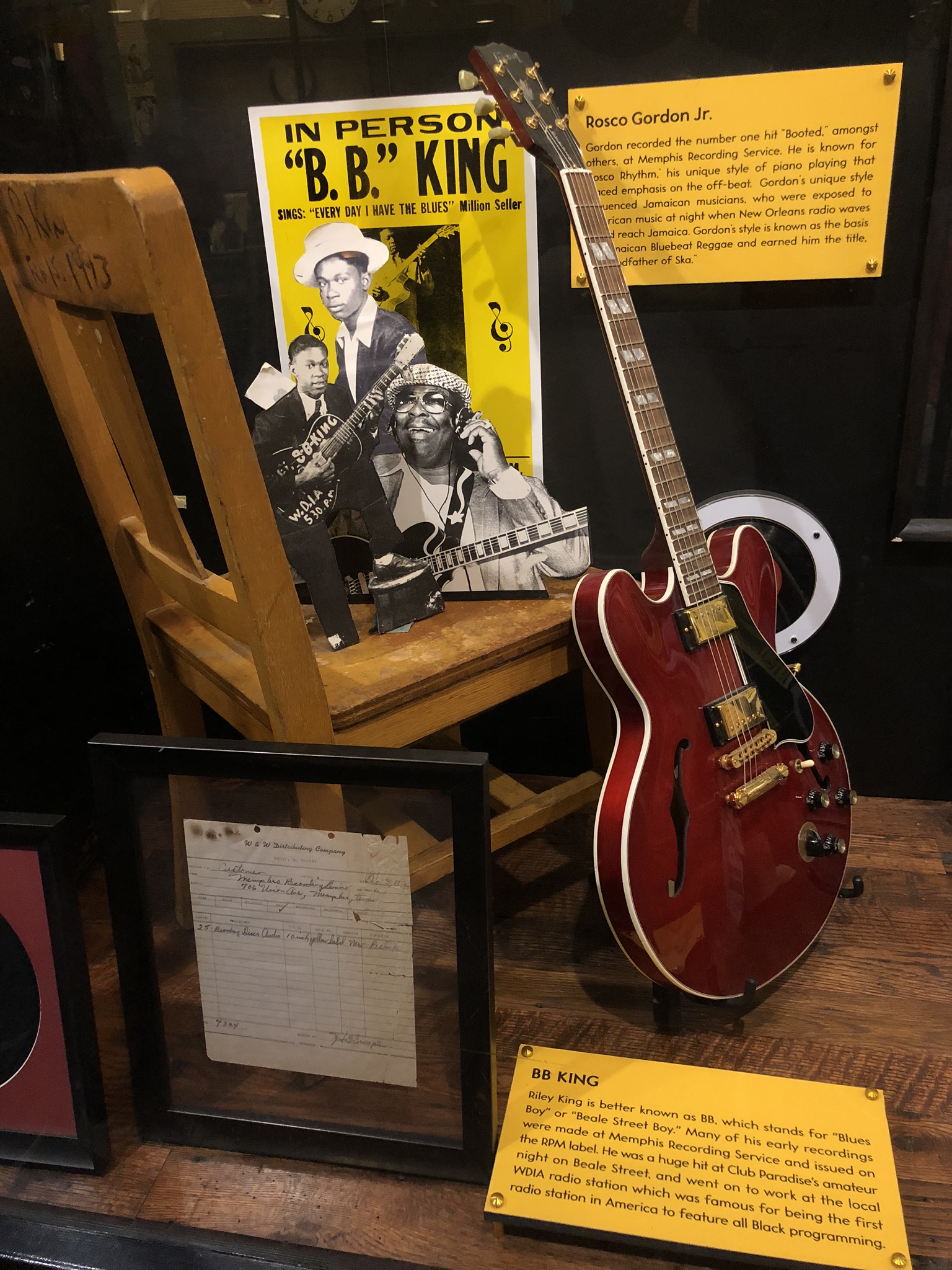
B.B. King recorded his first songs here
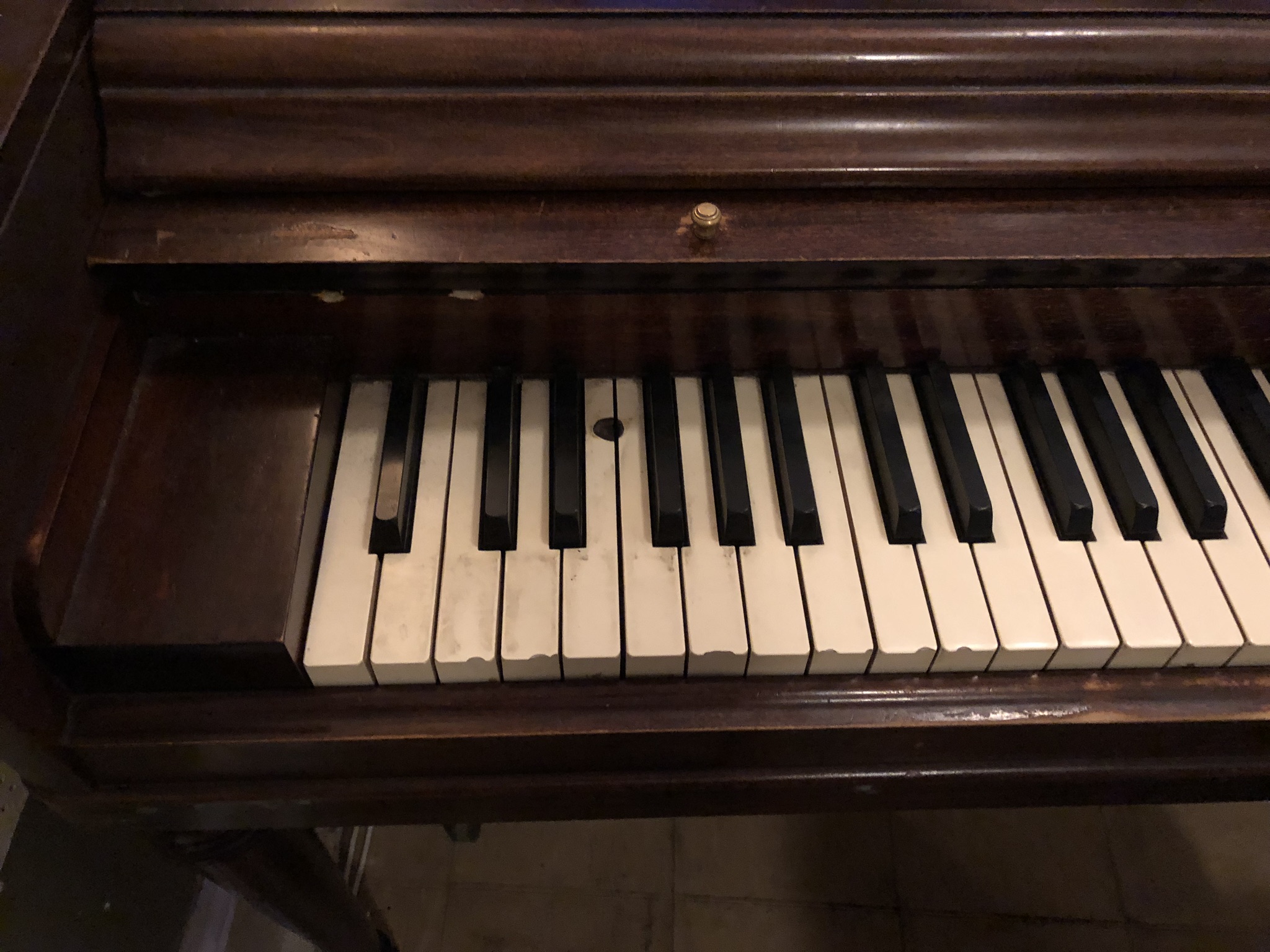
Jerry Lee Lewis put out his cigar on the keys of this piano, and said “If anybody asks, tell ’em Jerry Lee was here!” Totally cool.
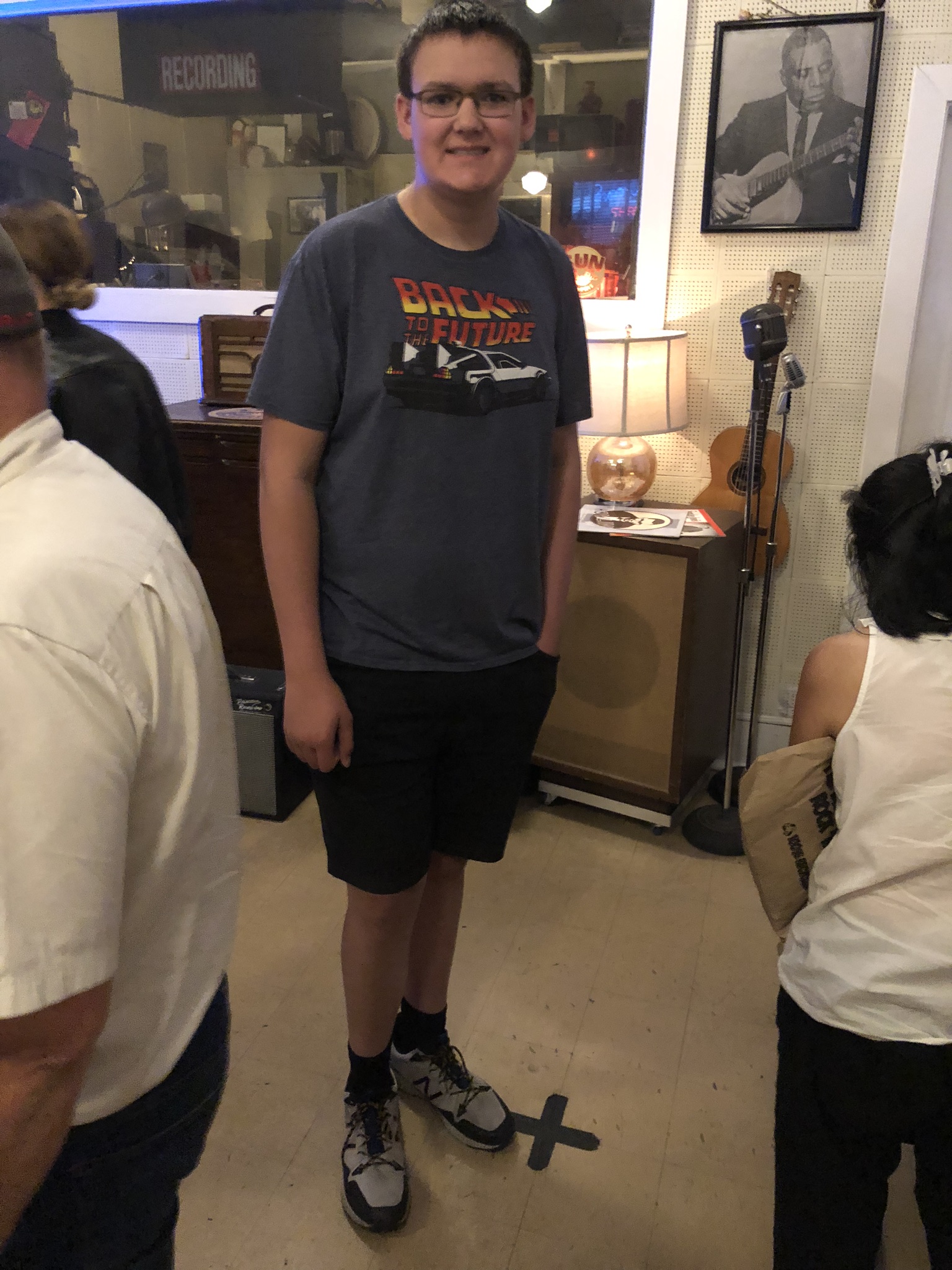
“X” marks the spot where Elvis Presley stood when he recorded his first hit, “That’s alright Mama”
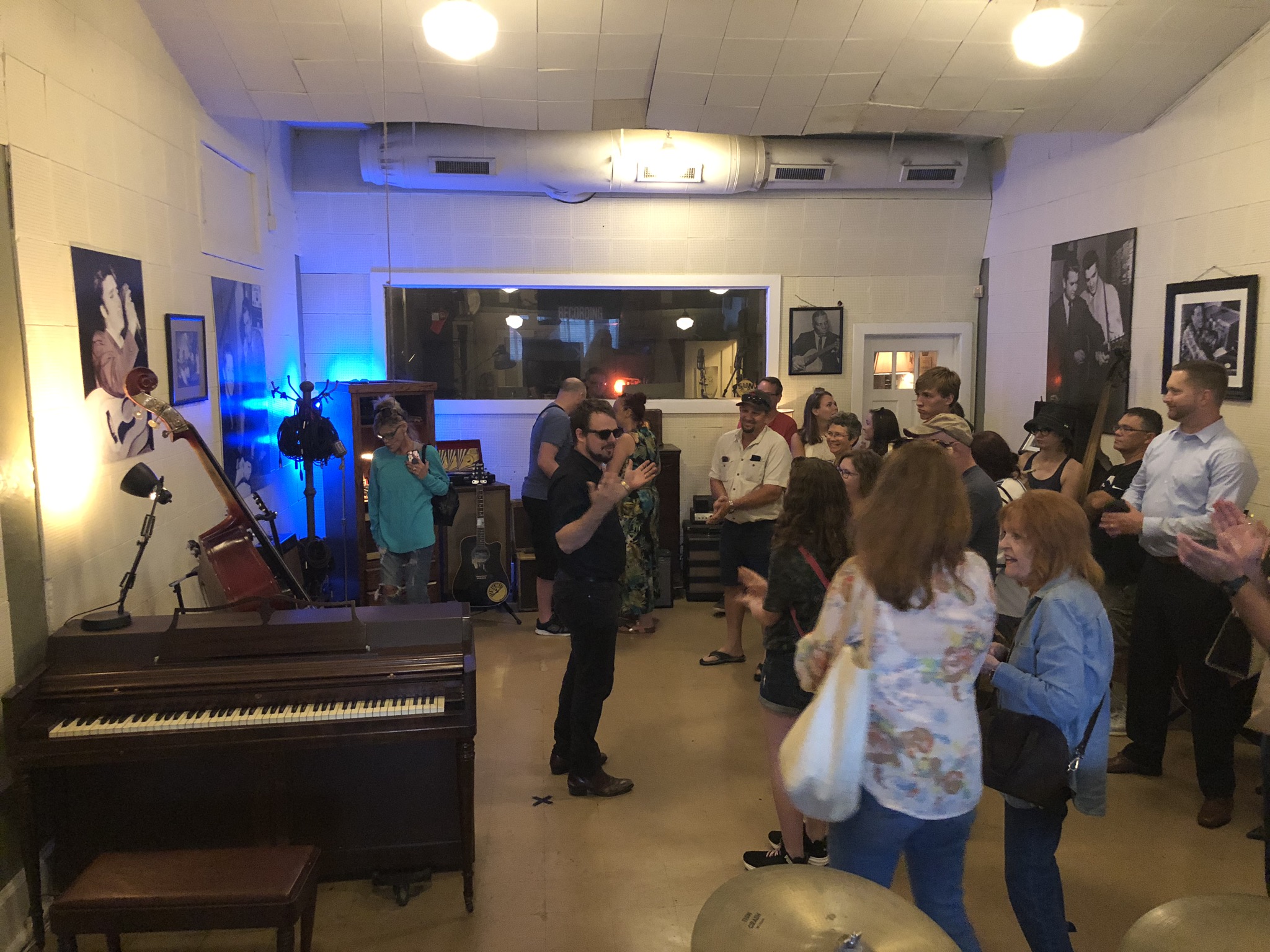
The recording studio (with Jerry Lee Lewis’ piano on the left)
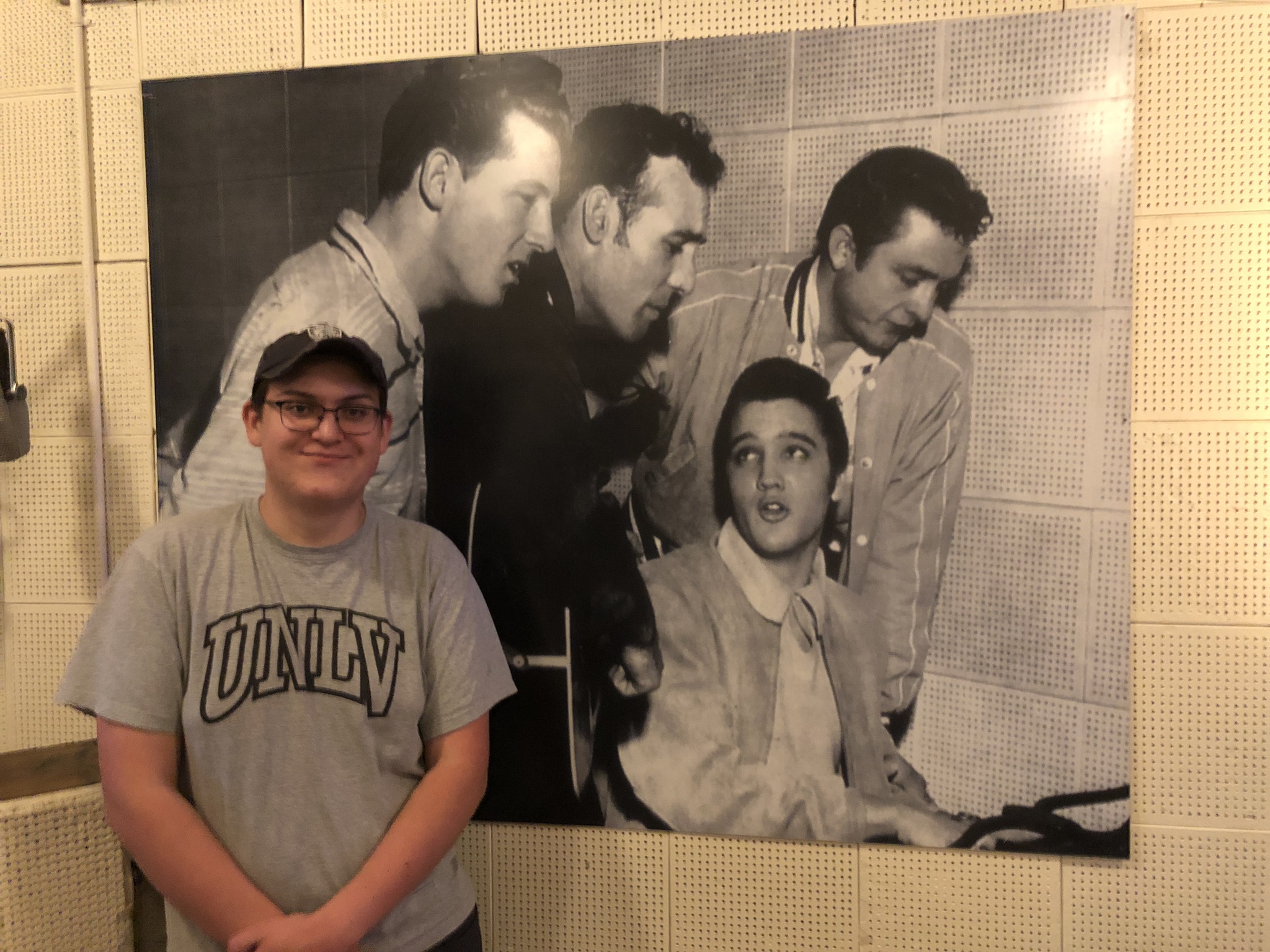
Nolan standing in front of the famous photo of the “Million Dollar Quartet”, at the spot where the picture was taken. Left to right: Jerry Lee Lewis, Carl Perkins, Elvis Presley, and Johnny Cash. They had gotten together for an impromptu jam session (after Elvis had already hit it big). Also cool.

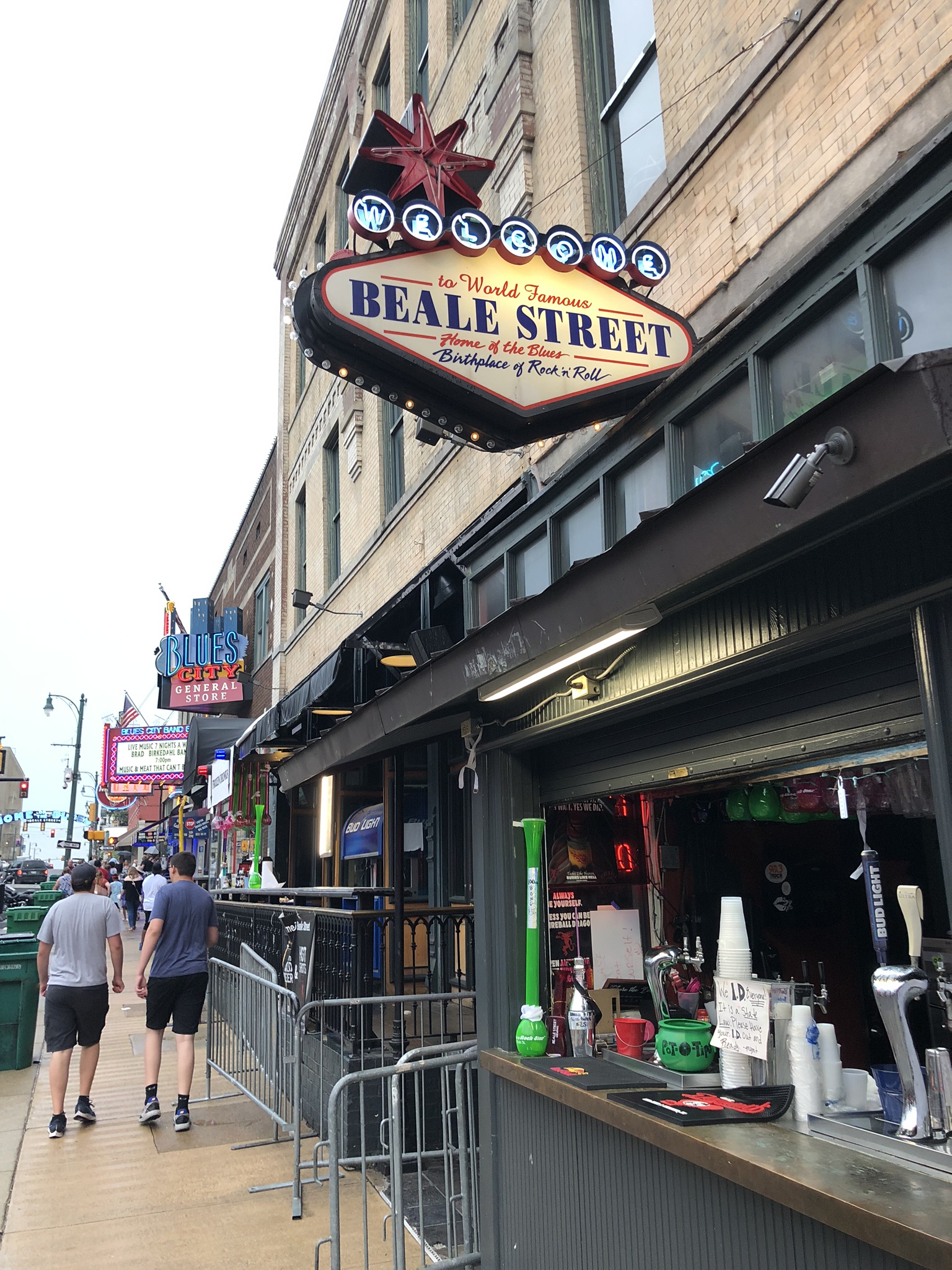
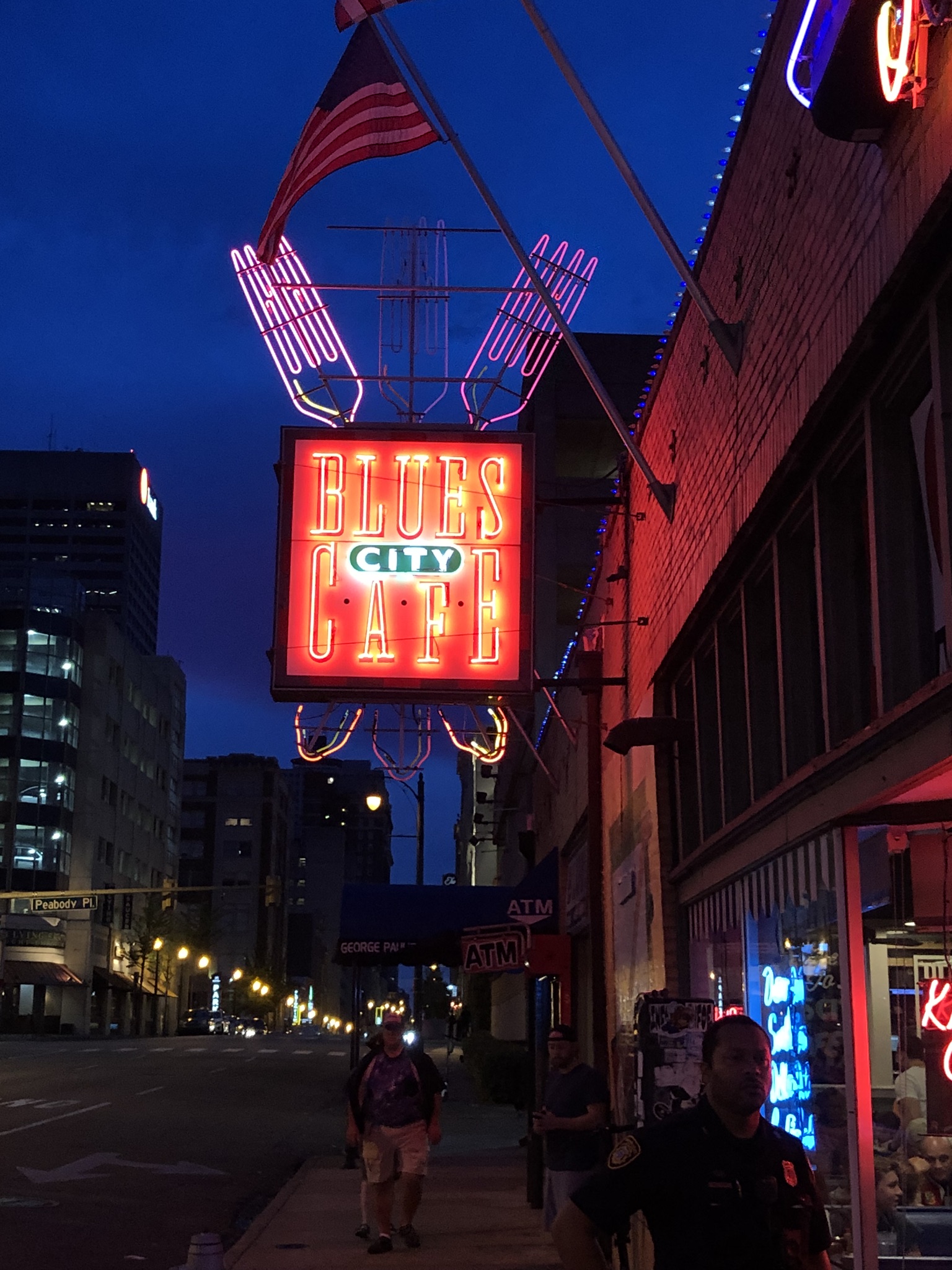
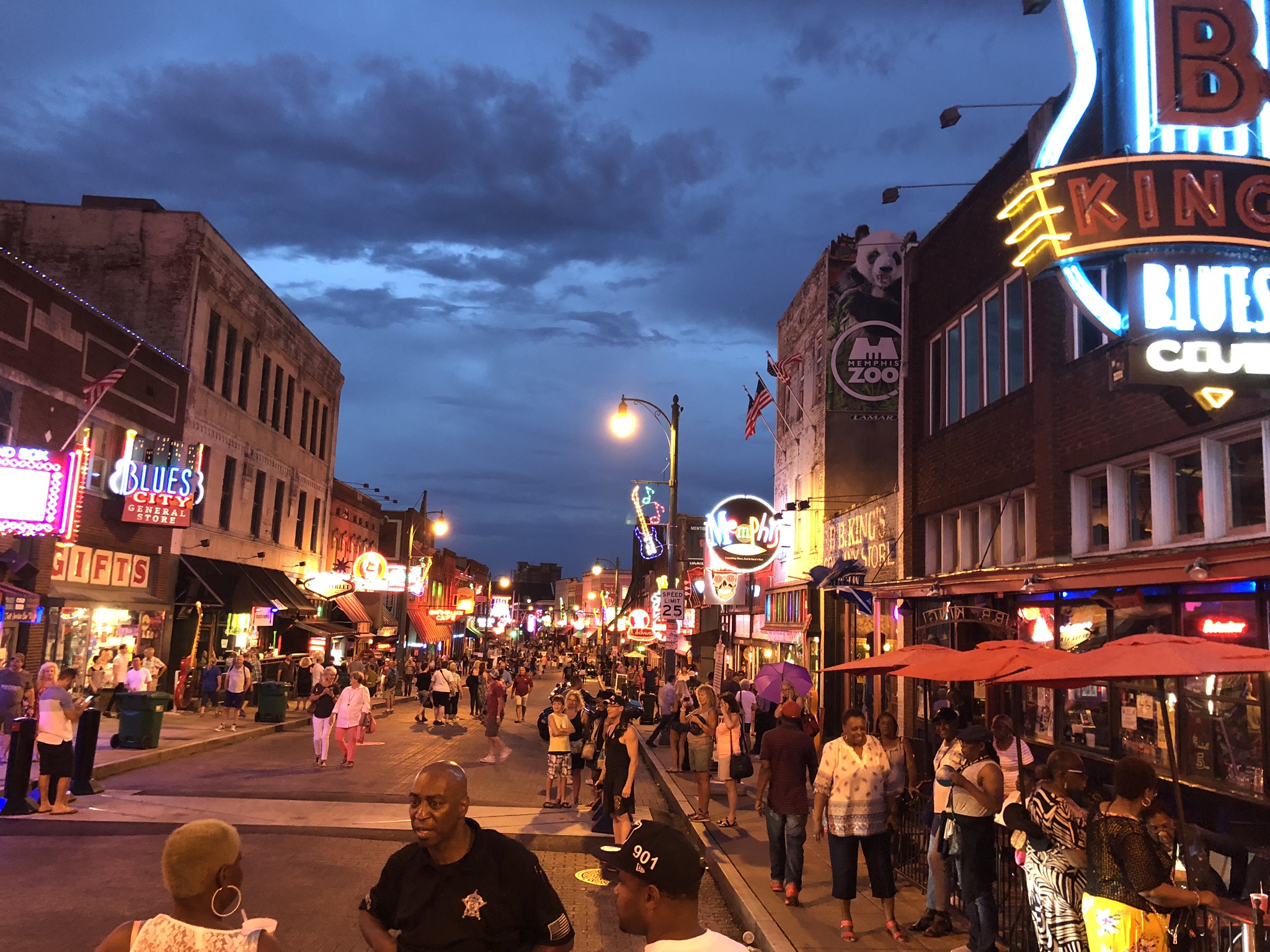
After the tour, we hit Beale Street – one of the most famous music related streets in America. There were a dozen blues clubs, juke joints, and bars on this street, and from every one of them, blues music poured out into the humid night. I was in heaven. We ate at a place called the Blues City Cafe (awesome fried catfish and Memphis ribs). Then, we walked around for a bit and took in the sights. I think today was an awesome day!

Beale Street: Home of the Blues, and the Birthplace of Rock and Roll. Memphis, Tennessee
Blues City Cafe – Highly Recommended! Memphis, Tennessee
Beale Street at night, Memphis, Tennessee

Some final thoughts about today:

  • People have been nice on this entire trip. No matter what color or nationality. I’m not a talkative guy, yet people are always striking up conversations with me. At the VLA, I had a very nice conversation with two Native American men (“Don’t go to Roswell. It’s too touristy”). I had a funny conversation with an elderly white woman in an elevator in Roswell about how it sucks getting old (she had ridden the elevator down, forgot what she had gone down to the lobby for, and in the elevator ride back up to her room exclaimed, “Goddammit, I just remembered what I had gone down for!”). In Texas, I had a conversation with a large black woman about how crappy humidity was for large people (like she and myself), and for her hair.
  • Deborah had booked our room for us in Oklahoma City, and when I checked us in, the front desk lady told me “you requested the handicapped room.” I didn’t know what to say – I was a little embarrassed. Obviously I wasn’t handicapped, and I’m sure Deborah just asked for a room with two queen beds, so I told her, “I’m not a small guy, and the other two people I’m with are just like me. We need a big room because we’re big.” I was surprised when she said, “I don’t blame you, honey. I would want a big room too!” Later, when I returned with my two boys, she said “My Lord, you weren’t lying!”
  • We’re planning on being in New Orleans on Friday, and I heard that there is a possible hurricane heading our way. Not sure what we’re going to do besides just play it by ear. Last I heard, it was “just” a tropical storm. Our trip is suddenly getting VERY exciting…Stay tuned!

Thanks for hanging out with us. See you tomorrow!

Day Five: Oklahoma City, Oklahoma

Day 5 was mostly a driving day. We drove from Roswell, New Mexico, through the panhandle of Texas (Amarillo), and ended up in OKC. I can safely say that I am looking forward to shorter driving days ahead. We pretty much have our travel routine set. I’m up at 6:00 am, I watch a little news, check on emails and messages, then I take a shower. Start getting the boys up around 6:45. I say “start” because it will take them about 1/2 an hour before they actually get out of bed after my harassing them. They are actually pretty efficient once they are up. They pack up their stuff then leave their bags in the room and go downstairs to eat the motel’s free breakfast. I follow them down soon after. While I finish packing up my stuff, the boys take theirs to the truck and load up. They drain the water (melted ice) from the cooler, and if necessary, refill the cooler with ice from the ice machine. Meanwhile, I come downstairs with the rest of the stuff, and I pack the truck. The boys take out any snacks and drinks they will want while we’re driving, and put them in a small collapsible cooler we keep in the cab of the truck. Like clockwork, we have pulled out and hit the road consistently between 8:00 AM and 8:15. We have the motel breakfast, and then either stop somewhere to make sandwiches for lunch, or we eat out. If we eat out for lunch, then the sandwiches will be our dinner (or vice-versa). That way, we’re keeping the fast food stops to a bare minimum. This has worked so far, but the trip is a long one…

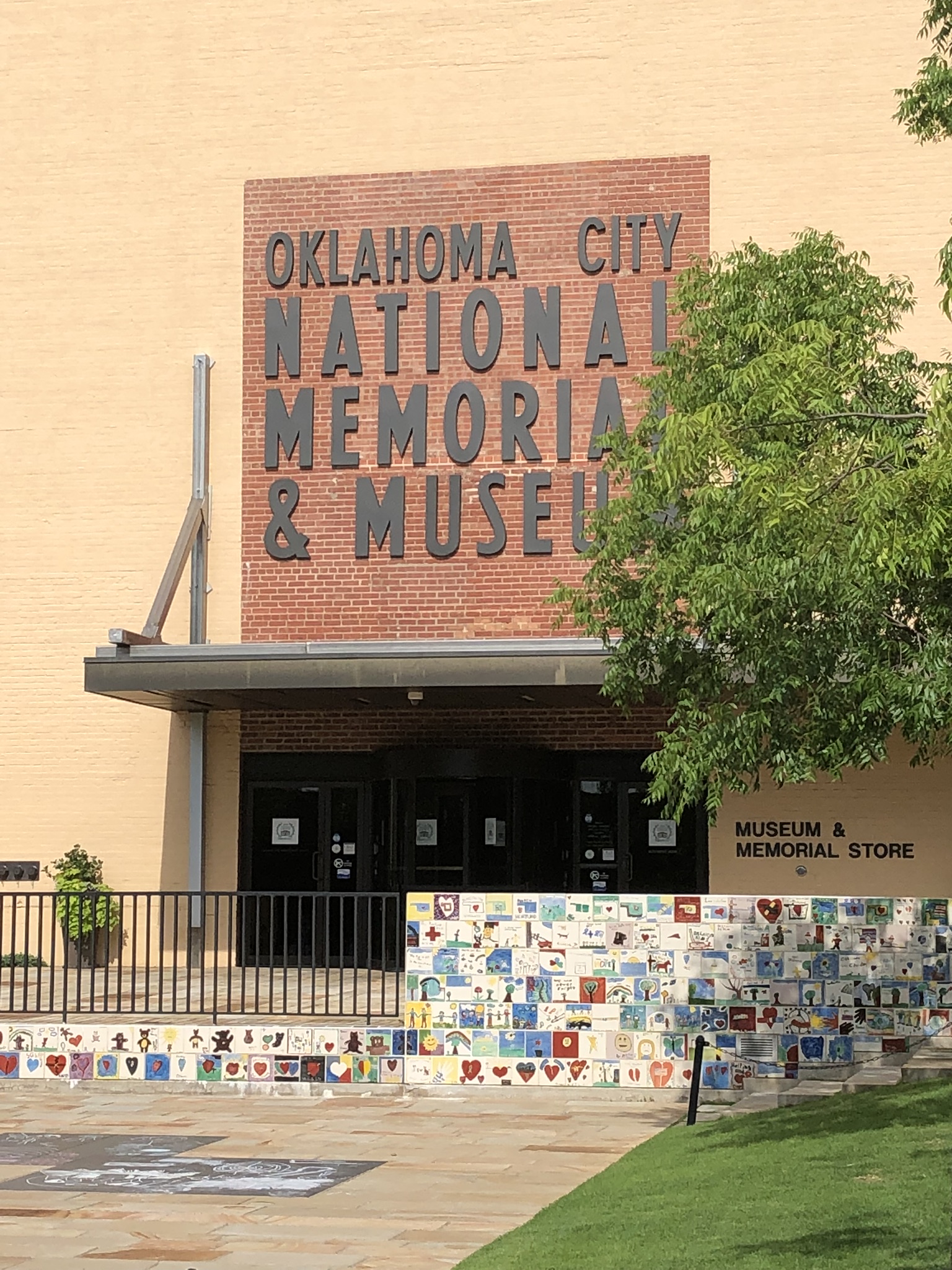
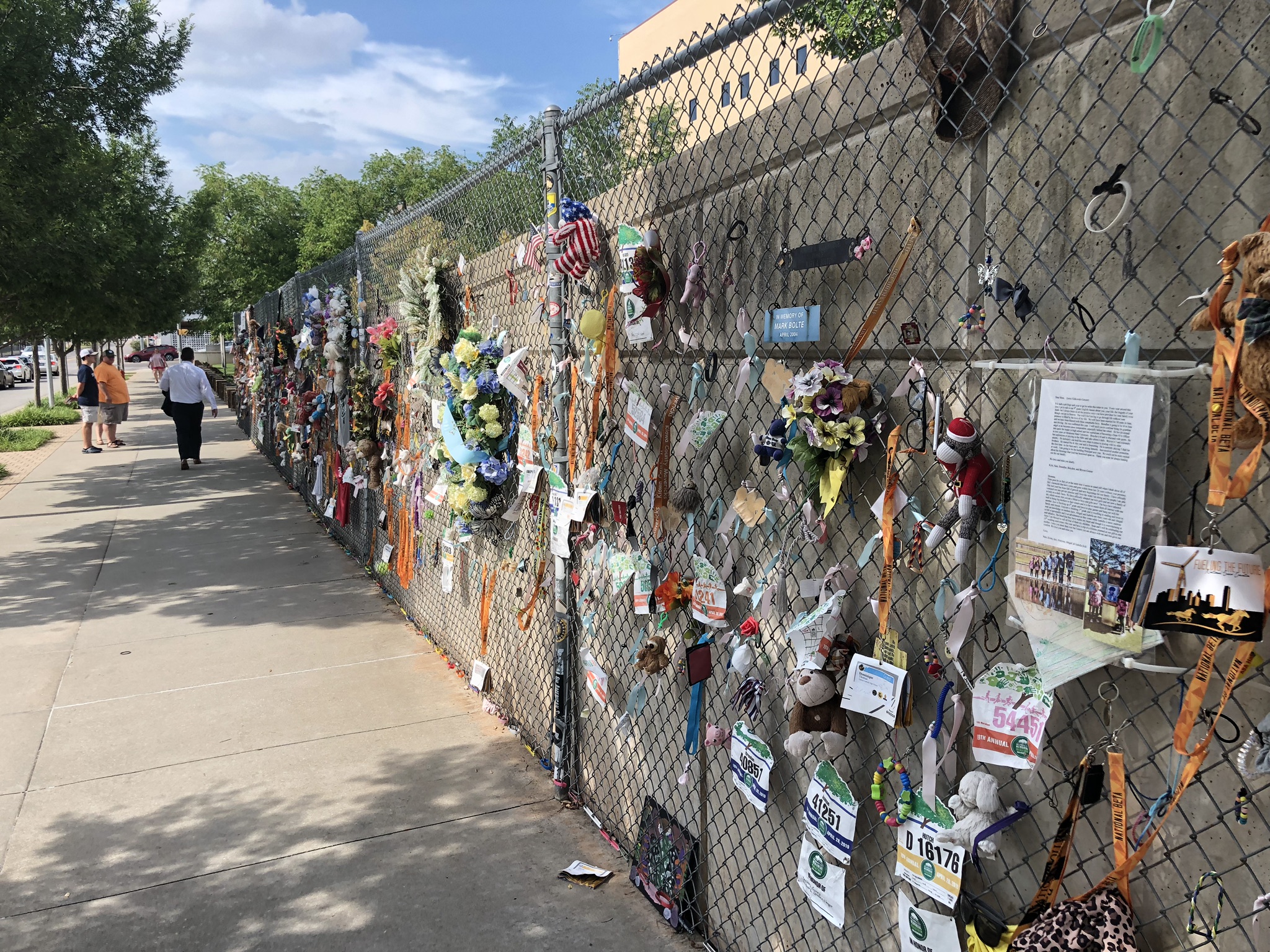
Our only sightseeing stop for today was a doozy. We visited the Oklahoma Bombing Memorial and Museum in downtown Oklahoma City. It was a very sobering place. Outside was a fence which people periodically leave notes and mementos at, much like the Vietnam Wall in D.C. The memorial is also outside. The museum is housed in a re-purposed building which originally was a block away from the Murrah Building.

The entrance to the museum
The fence outside, with things left by loved ones and others
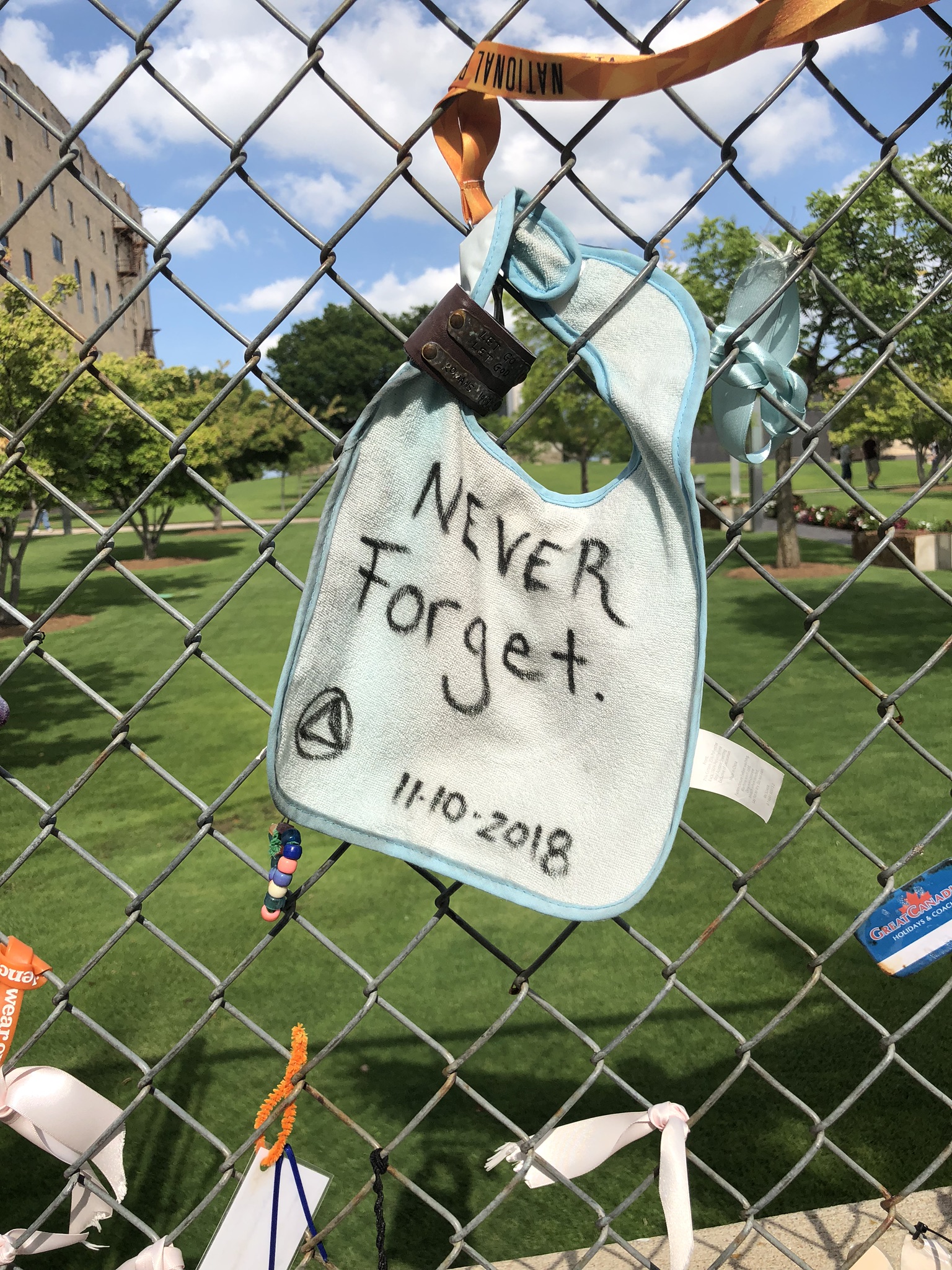
A baby’s bib. Many of the killed were children in 2 daycare classes in the building

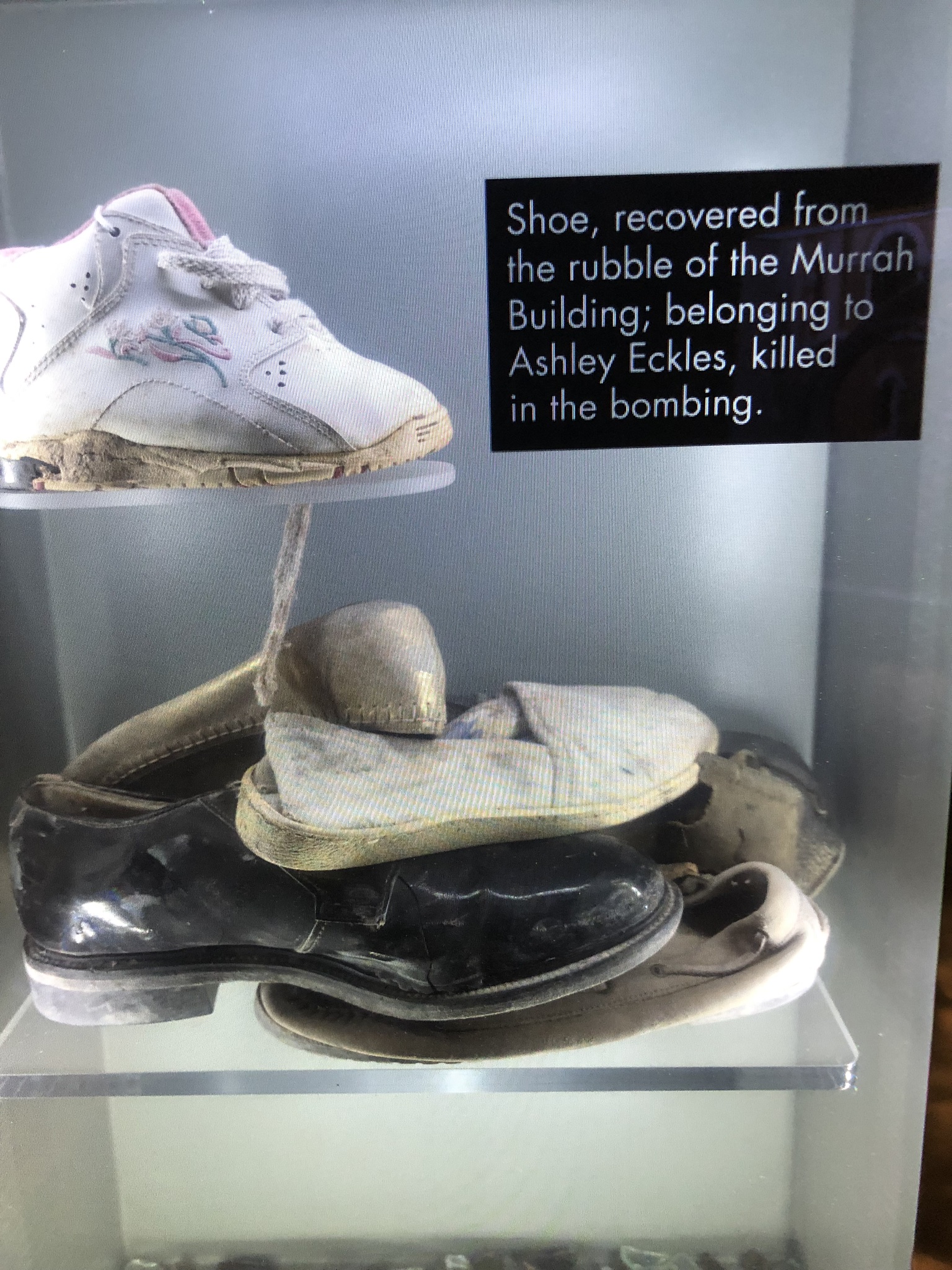
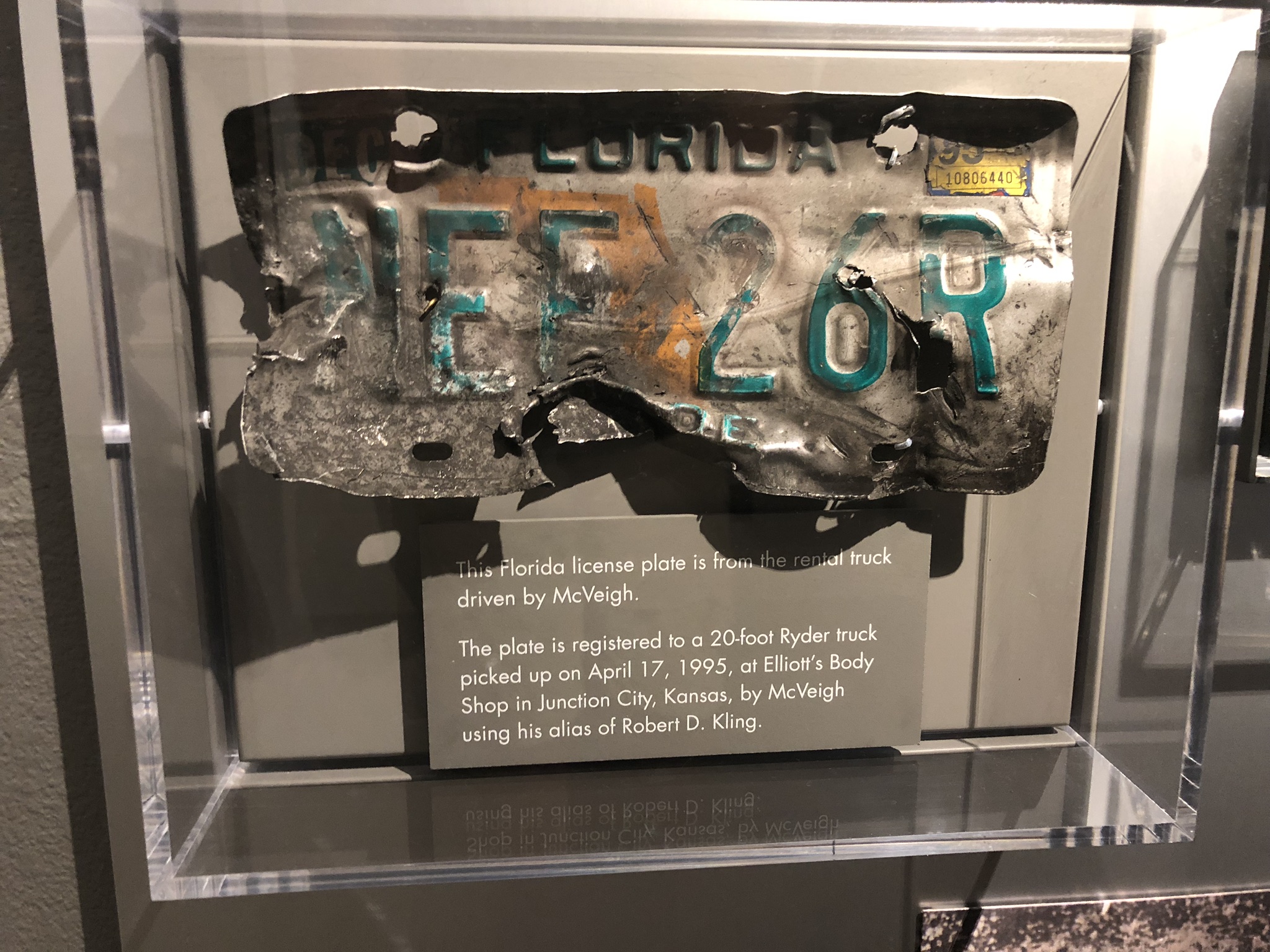
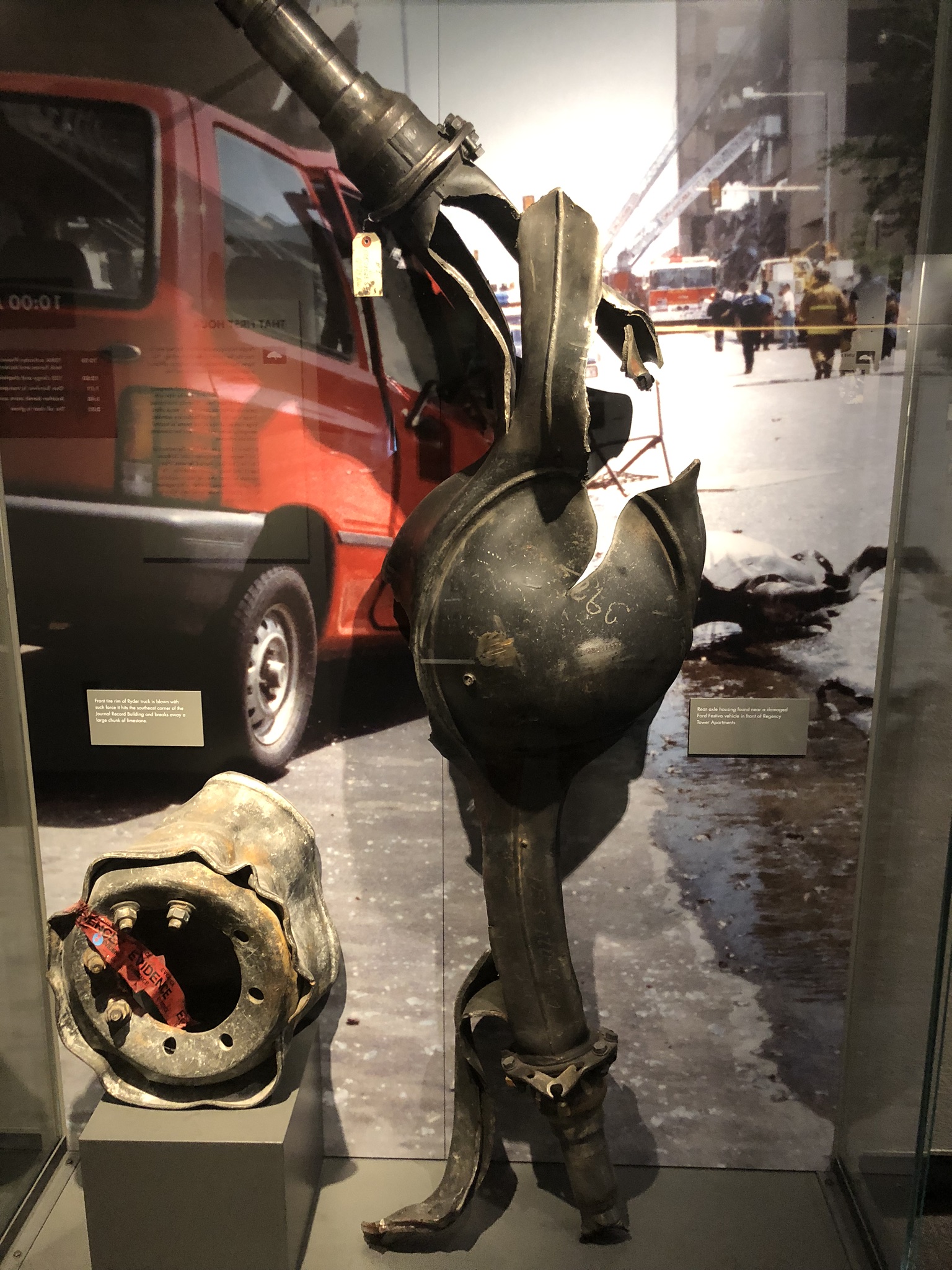
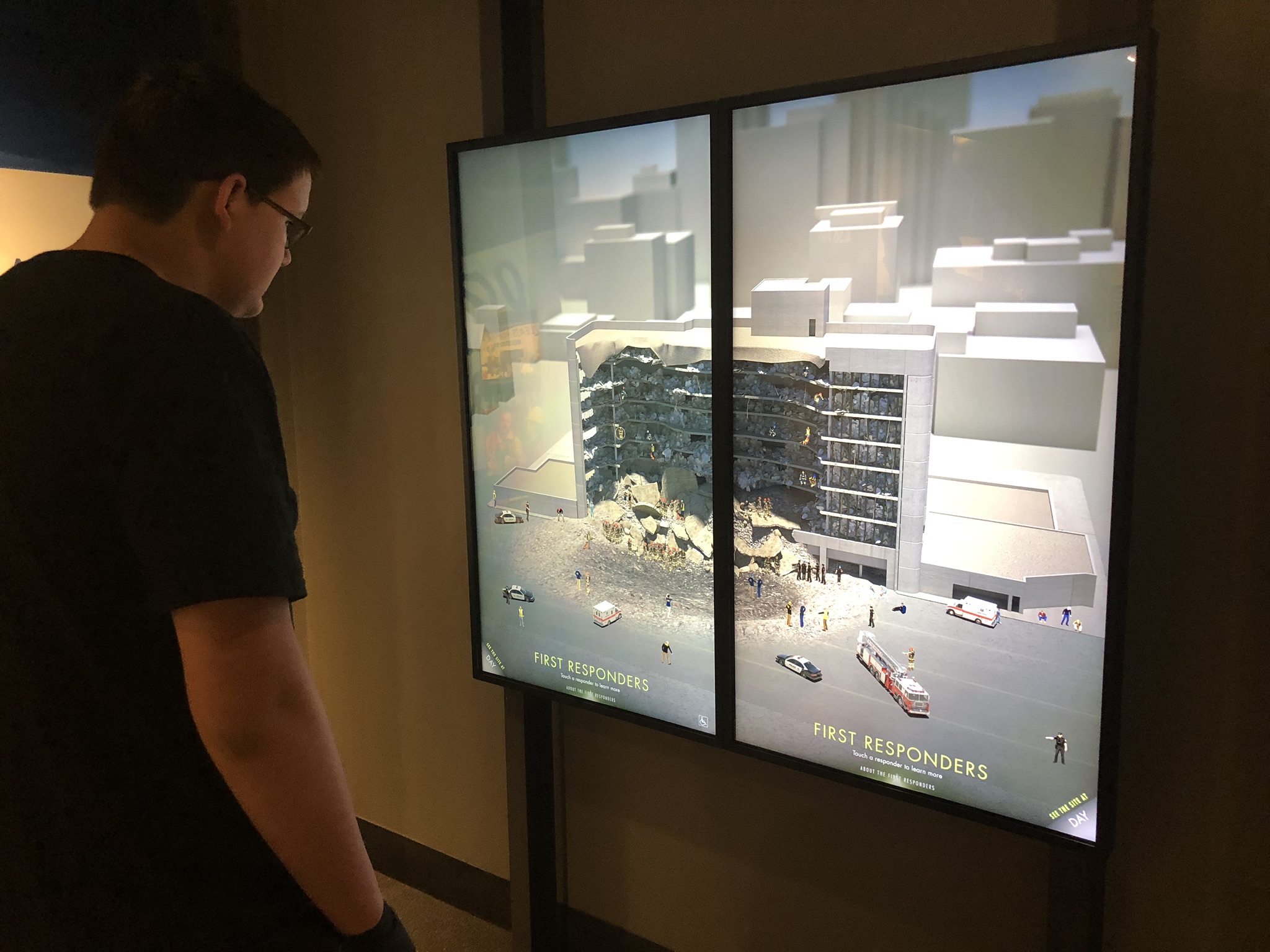
The museum itself is much larger than I thought it would be. It is two floors of artifacts and survivor testimonies, as well as the manhunt and capture of the perpetrators. It was very detailed and dramatic, starting with you listening to an audio recording of a city planning meeting occurring across the street from the Federal building at the time of the blast. I could only imagine what it was like. The panicked voices on the audio recording were scary to listen to (and they were across the street). Many of the most touching exhibits were the belongings of those who survived, and those who were killed. The pieces of wreckage on display were horrifying.

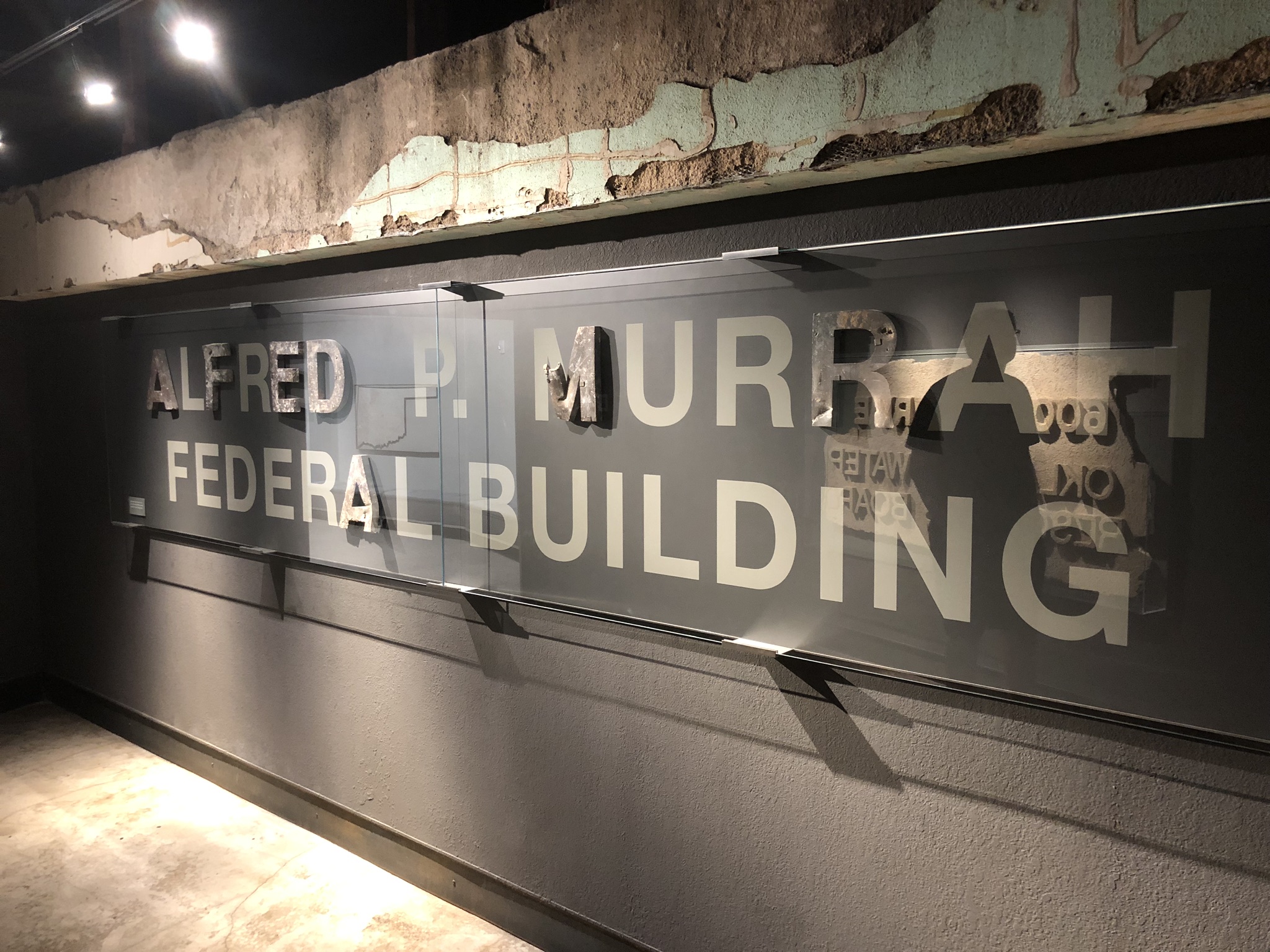
What’s left of the original sign on the Alfred P. Murrah Federal Building
A child’s shoe
The license plate from the Ryder truck rented by Timothy McVeigh and used as a bomb
The axle of the Ryder truck (which became a key piece of evidence in McVeigh’s trial)
Nathan watching a recreation of the bombing
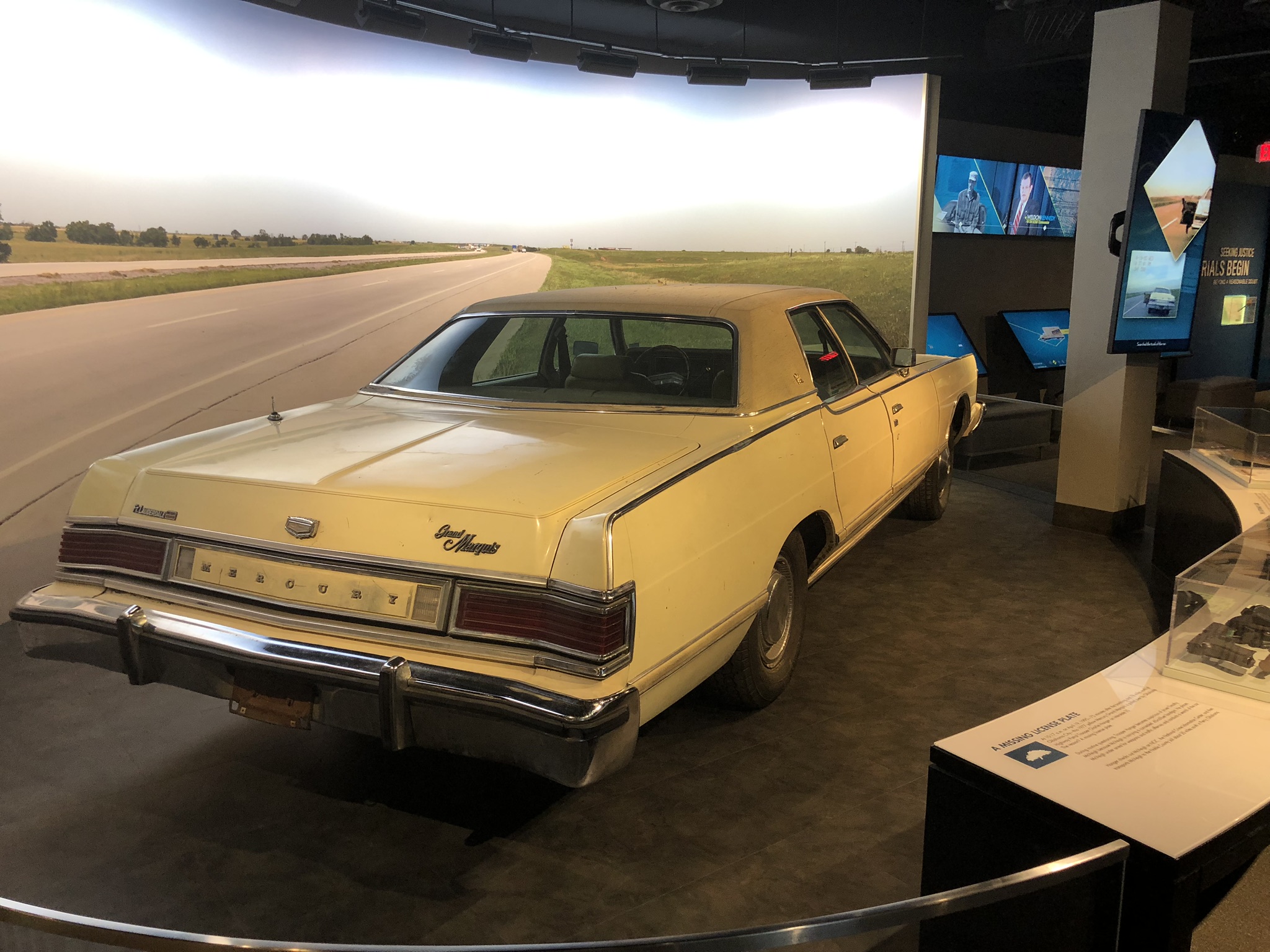
The car McVeigh was driving when he was pulled over (for no license plate)
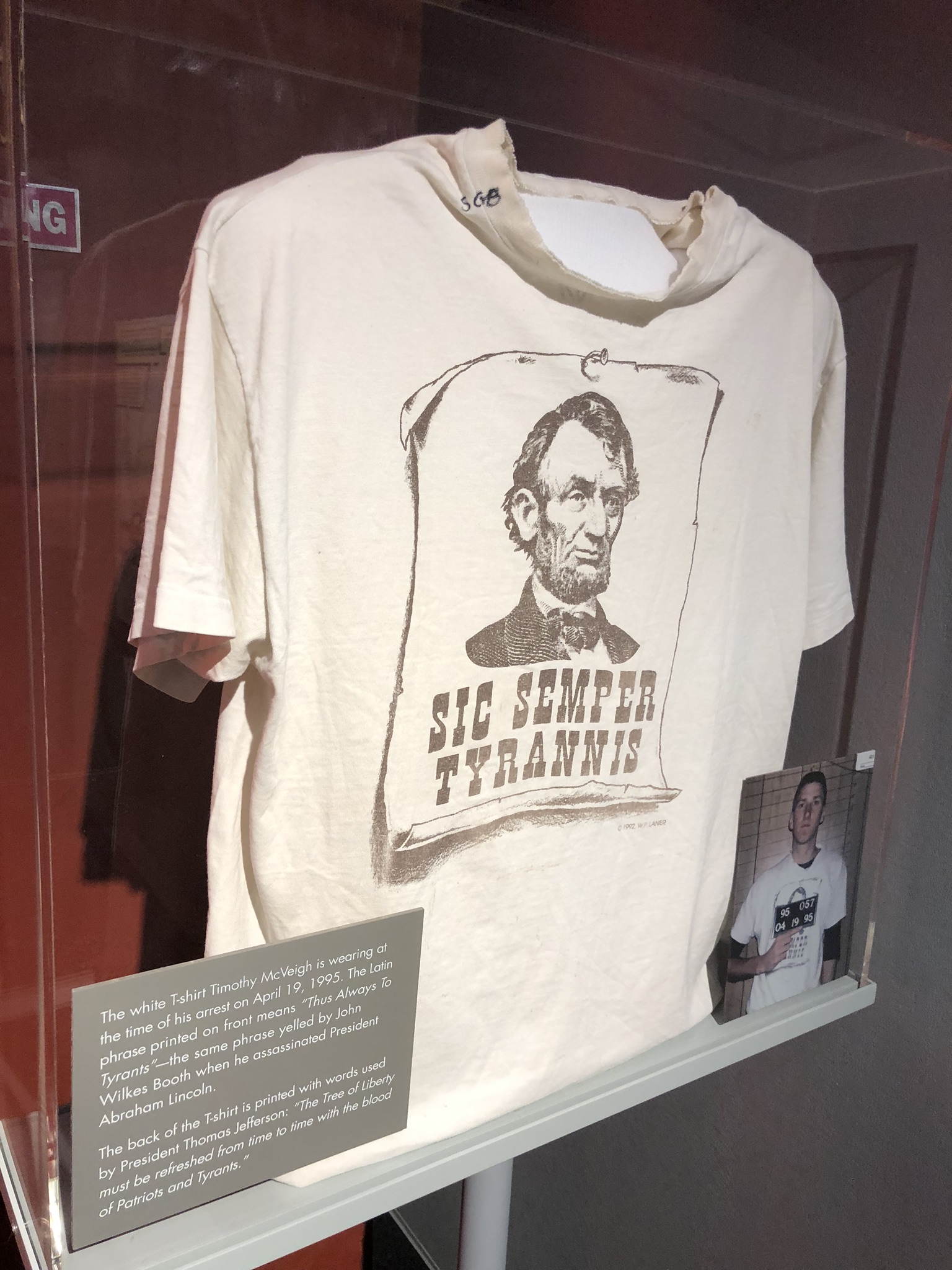
The shirt McVeigh was wearing when he was arrested

The second floor (where you started the tour) was mainly the before the blast stuff, followed by the actual bombing. The first floor (where you ended) was mostly dedicated to the capture of McVeigh, Terry Nichols, and co-conspirators Michael and Lori Fortier. It also detailed the trial, the evidence found and used, and ended with McVeigh’s death by lethal injection in June, 2001.

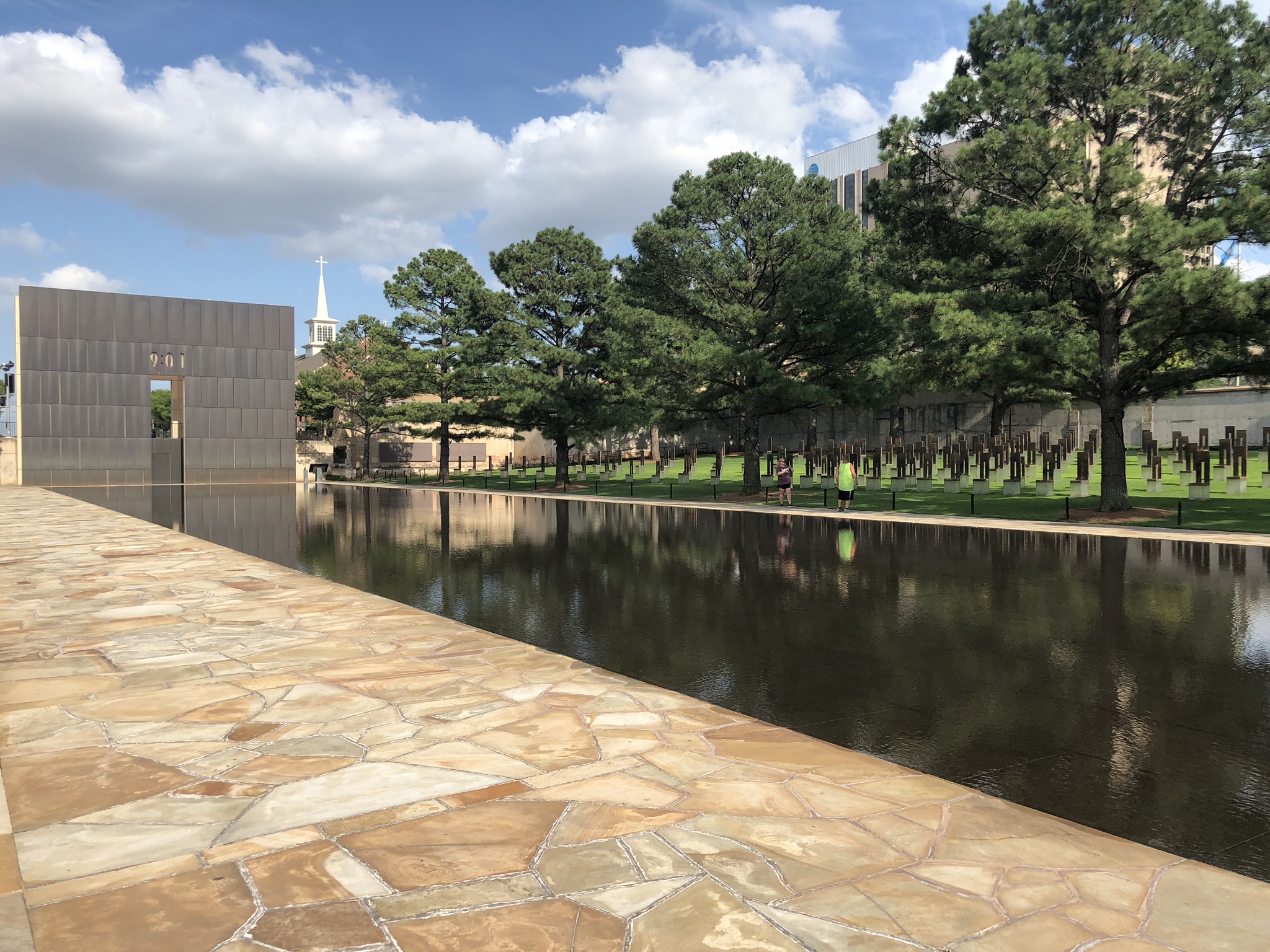
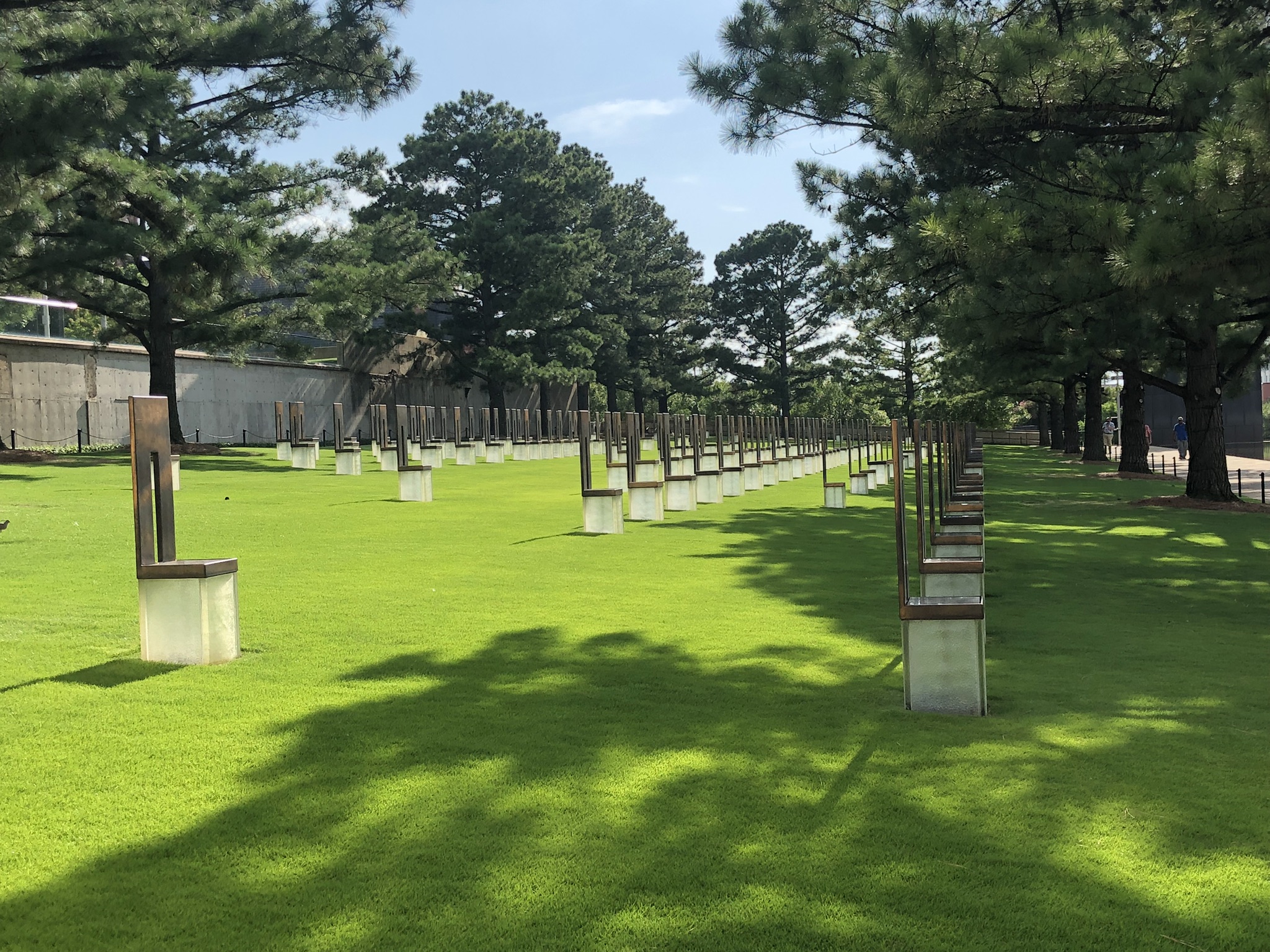
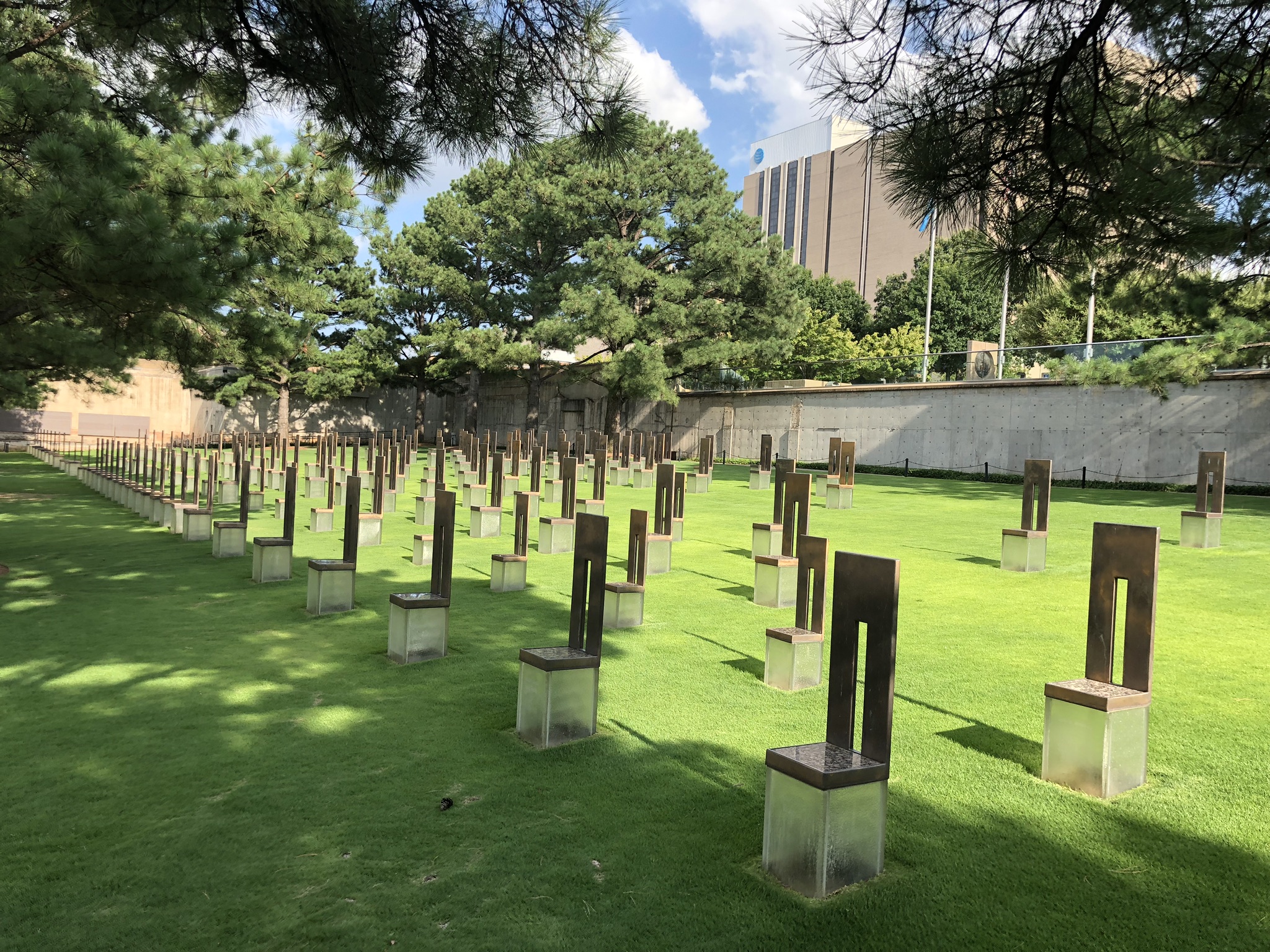
After the museum tour, we headed outside to view the memorial. There is a lot of symbolism in how the memorial was created. There are two monoliths, one on each end of a reflecting pool. On the far side of the pool is a grassy knoll with 168 empty chairs, representing each of the victims. On one monolith is the number 9:01. At the other end of the pool, there is 9:03. This signifies the moment before the blast, and the moment after the blast. The pool is actually the exact location of 5th street, where the Ryder truck was parked. I was told that the idea was that the 9:01 represented the past, and 9:03 represented the future (as in moving on from the past and starting over). It was all very moving and beautiful.

The 9:01, the reflecting pool (5th street), and the grassy knoll (where the Murrah building once stood)
The Empty Chairs. Each row represents the floor each victim was on when the blast occurred
Each chair has a name of a victim. The chairs light up at night

Some final thoughts about today:

  • We pulled in to town at 5:00 PM, and the Museum closed at 6:00 PM. The guy at the front desk said they were done selling tickets because it would take too long to go through the entire exhibit, and we wouldn’t be able to finish. I told him I was from Oregon, and we had driven 8 hours (actually more like 7 1/2) just to see this place. He checked with his manager, and she allowed us to go on. Can you imagine? We were going to see it, dammit!
  • Update from yesterday’s post: I saw a rabbit (alive), and no joke – a giant tarantula-like spider crossing the road.
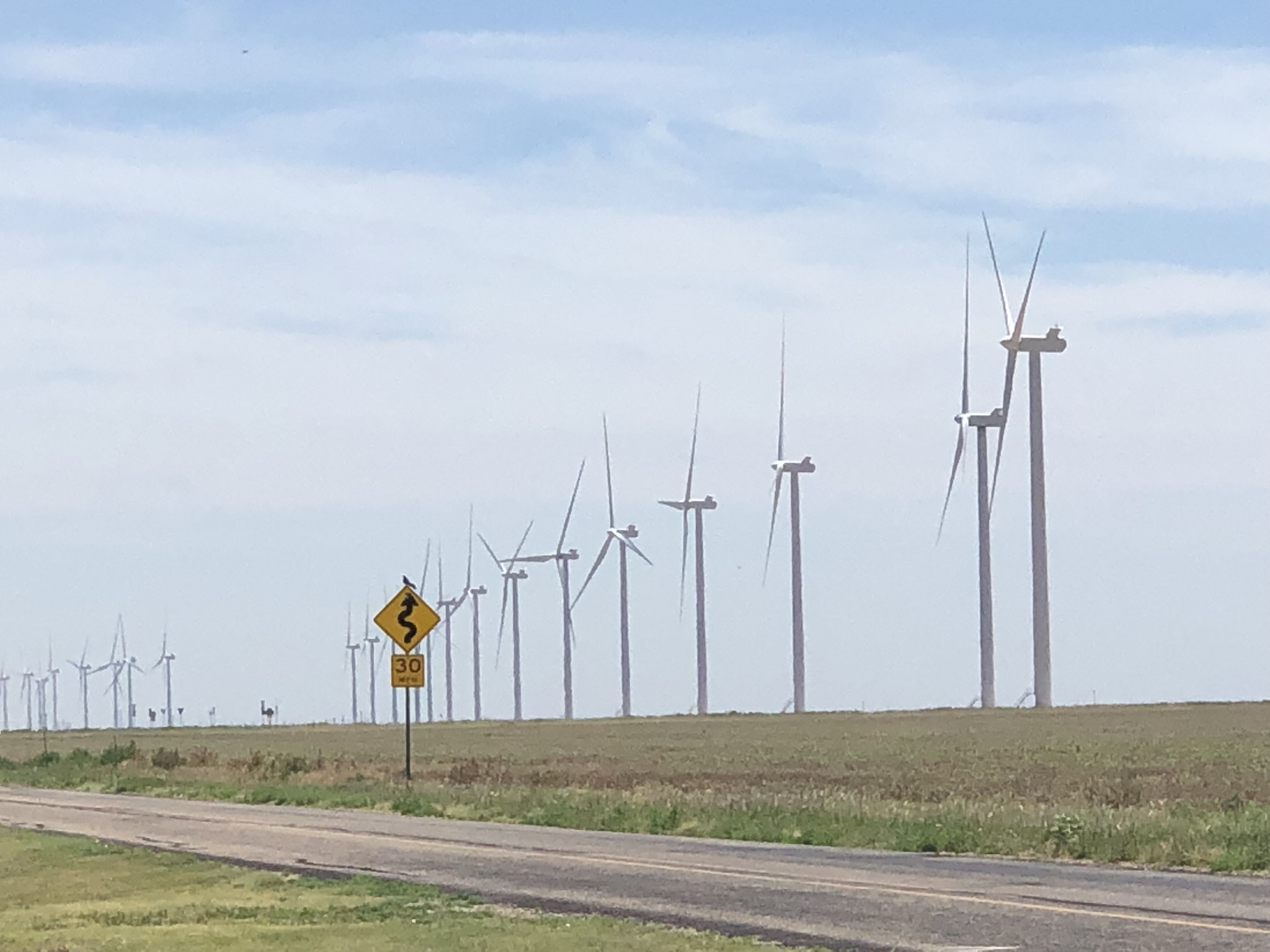
  • Although we would have liked to have lingered longer, our trip through the Texas panhandle was quick. Our only stops were for gas, and for lunch at a picnic site on the side of the road. There were a lot of these wind turbines though, and that was cool:
Wind Turbines, somewhere in the Panhandle of Texas

Tomorrow, we drive through Arkansas and land in Memphis, Tennessee. It will be the beginning of our Civil Rights Tour of the southern states. It will start with a visit to the Little Rock Central school where black kids were escorted by the National Guard so that they could integrate an all white school. Should be interesting. Memphis will be cool because the Civil Rights Museum is there (at the sight of MLK Jr’s assassination at the Lorraine Motel), and because, as a blues fan, there will be blues history and music there!

Thanks for checking in on our ongoing journey. Hopefully we won’t kill each other on this trip (some cracks are beginning to show!). Peace.

Day Four: Roswell, New Mexico

Man, it was hard to get up this morning! My biggest secret fear going into this trip was that I was too old for this crap, and that my stamina just isn’t what it used to be. So far, so good, but my butt hurts from sitting, and my shoulders hurt from being tense. I’m really missing my wife Deborah right now! I might be losing my mind…

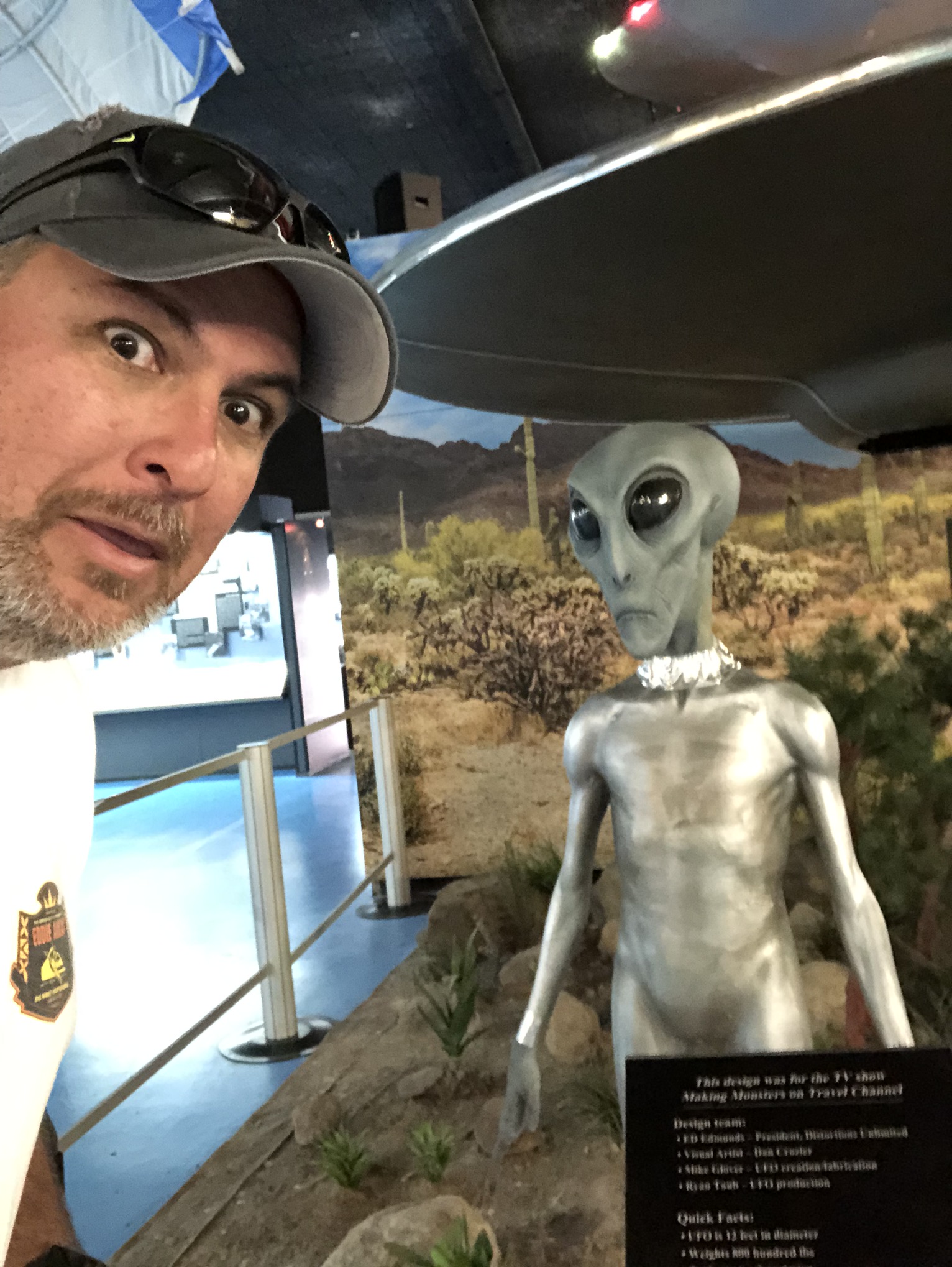
Fun game: Which one is the alien?

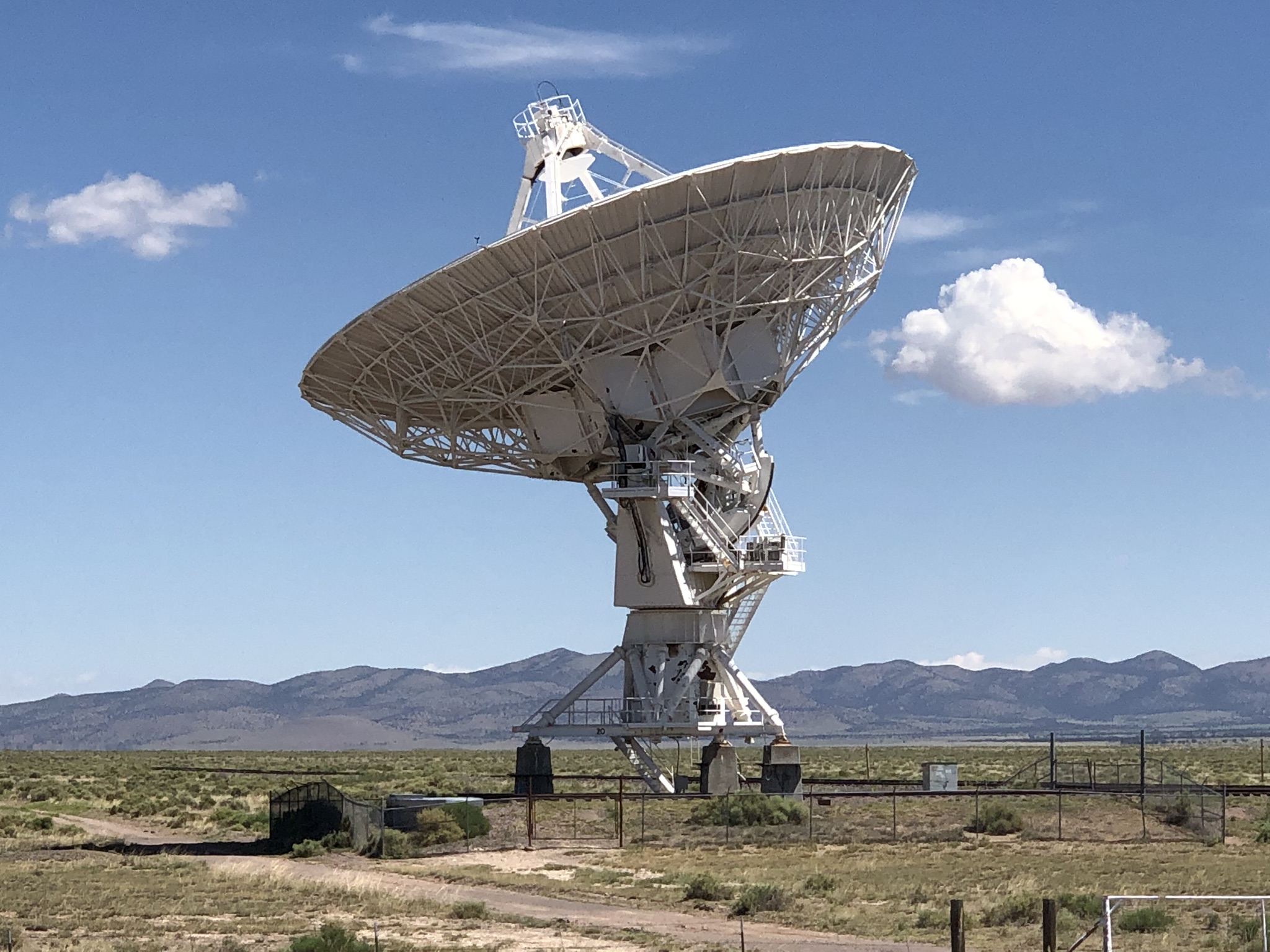
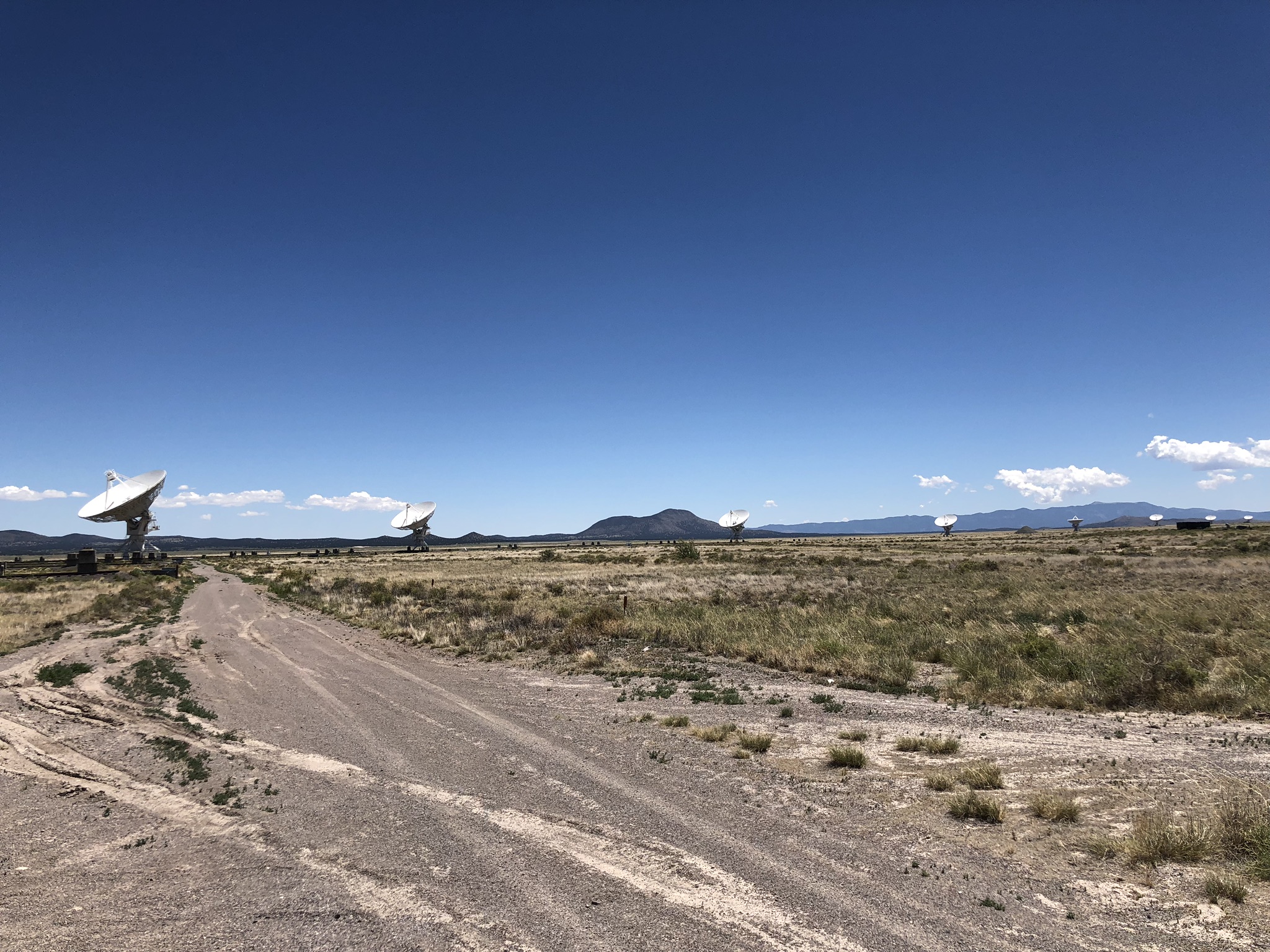
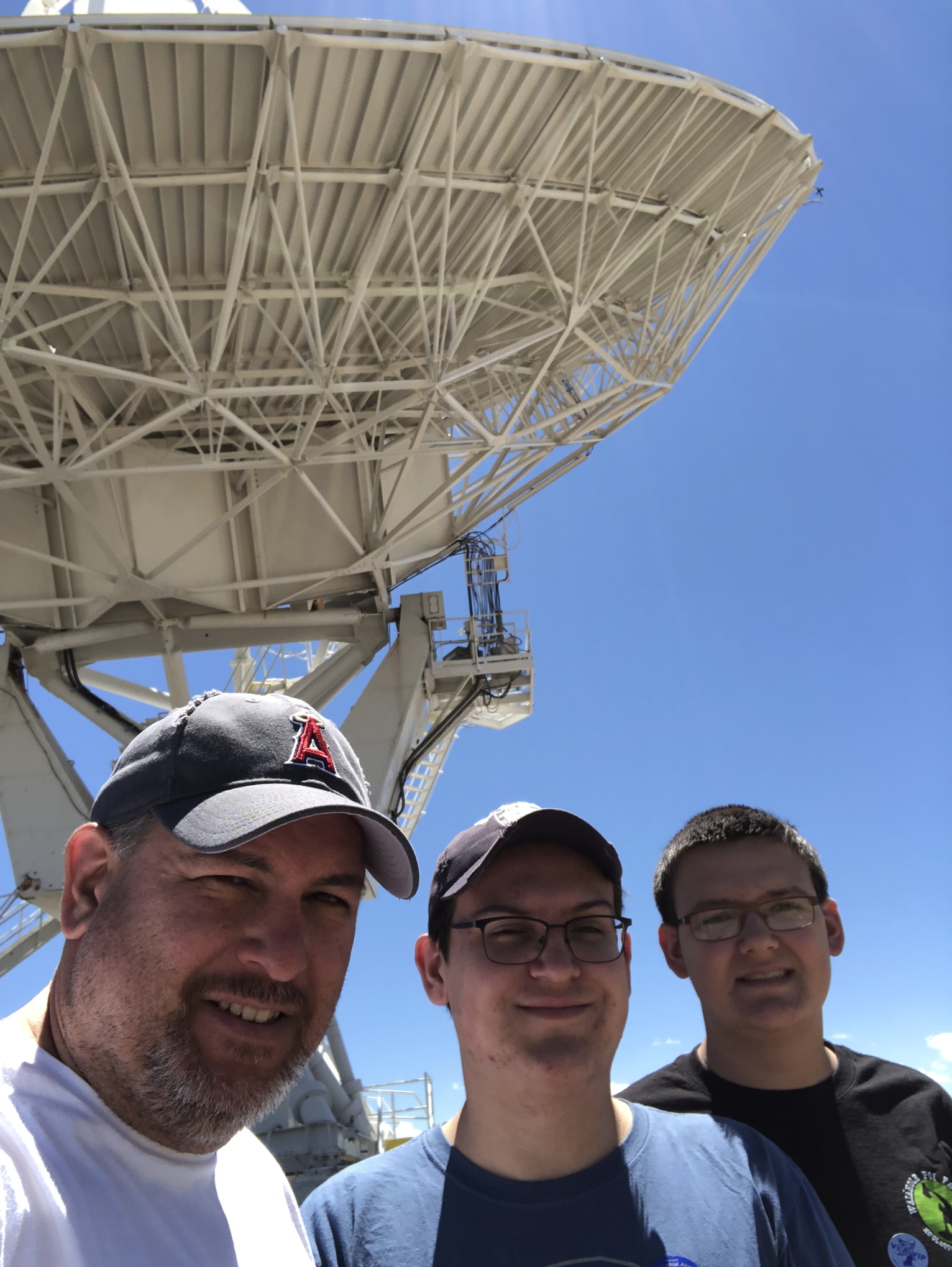
Today was all about science, and science fiction. From Gallup, we drove about 3 hours to somewhere between a little village called Magdalena, and a town called Socorro. What is it that brought us out to the desert plains in the middle of nowhere? Why, a giant array of radio telescopes! What in the world is that? I’m glad you asked. I’m not sure how to describe it. First of all, radio telescopes are like regular telescopes, except instead of images we can see with our naked eye, it detects images we can’t see – radio frequencies. Radio telescopes come in many different shapes and sizes. Here is one of the telescopes at the VLA (Very Large Array) that we visited:

A Radio Telescope, The VLA, somewhere in New Mexico

Now take that radio telescope, make 20 more of them, and then place them in a Y-shape that stretches out 14 miles and connect them together – into an array. Using all 21 radio telescopes, connected together, you can create one giant array which can reach the vast distances of outer space! By listening to, and categorizing the different radio frequencies, you can determine what is a natural frequency, like a black hole or a pulsar, and what is who-knows-what-probably-aliens.

Radio Telescopes in an “Array”, the VLA, somewhere in New Mexico

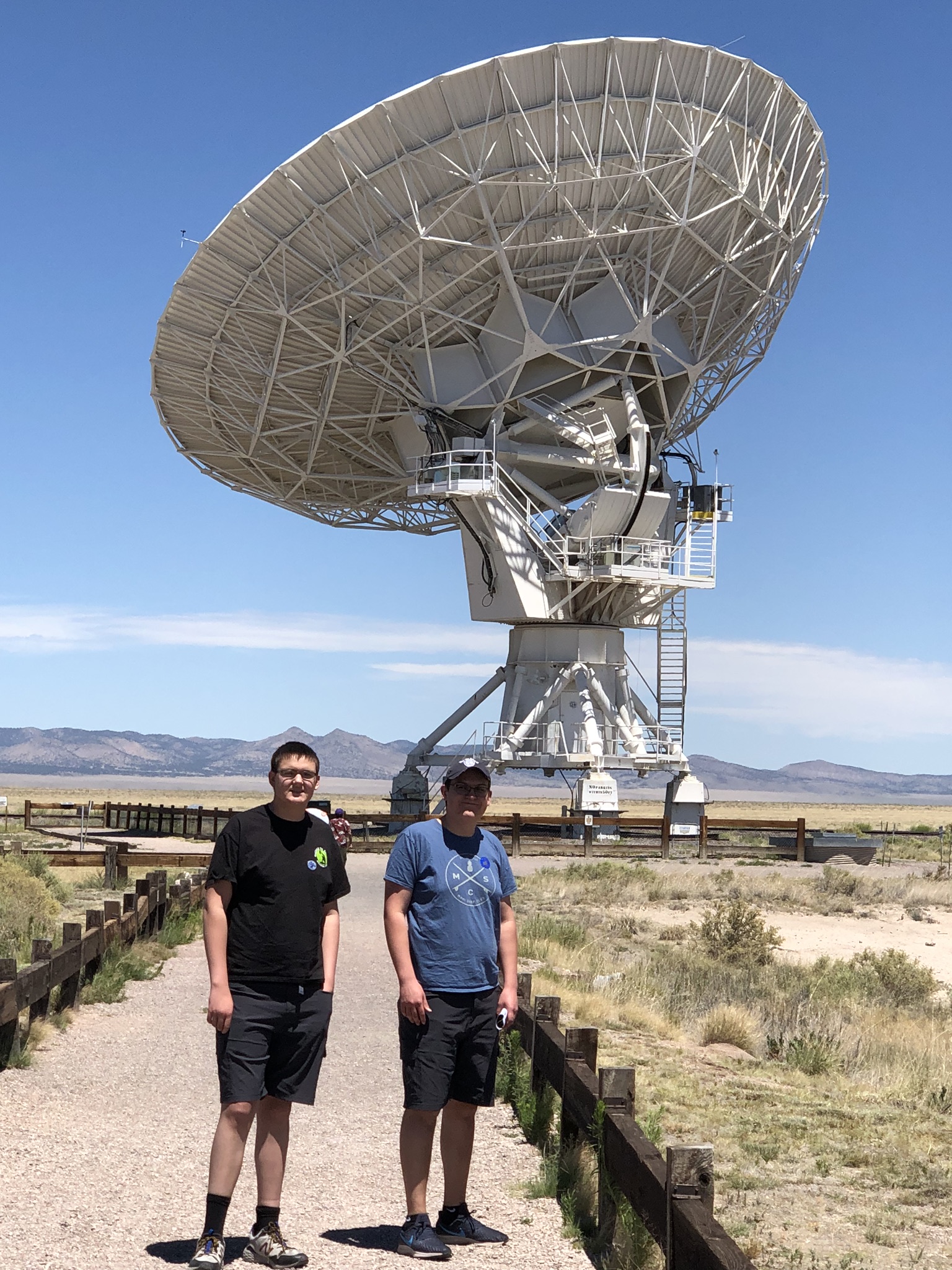
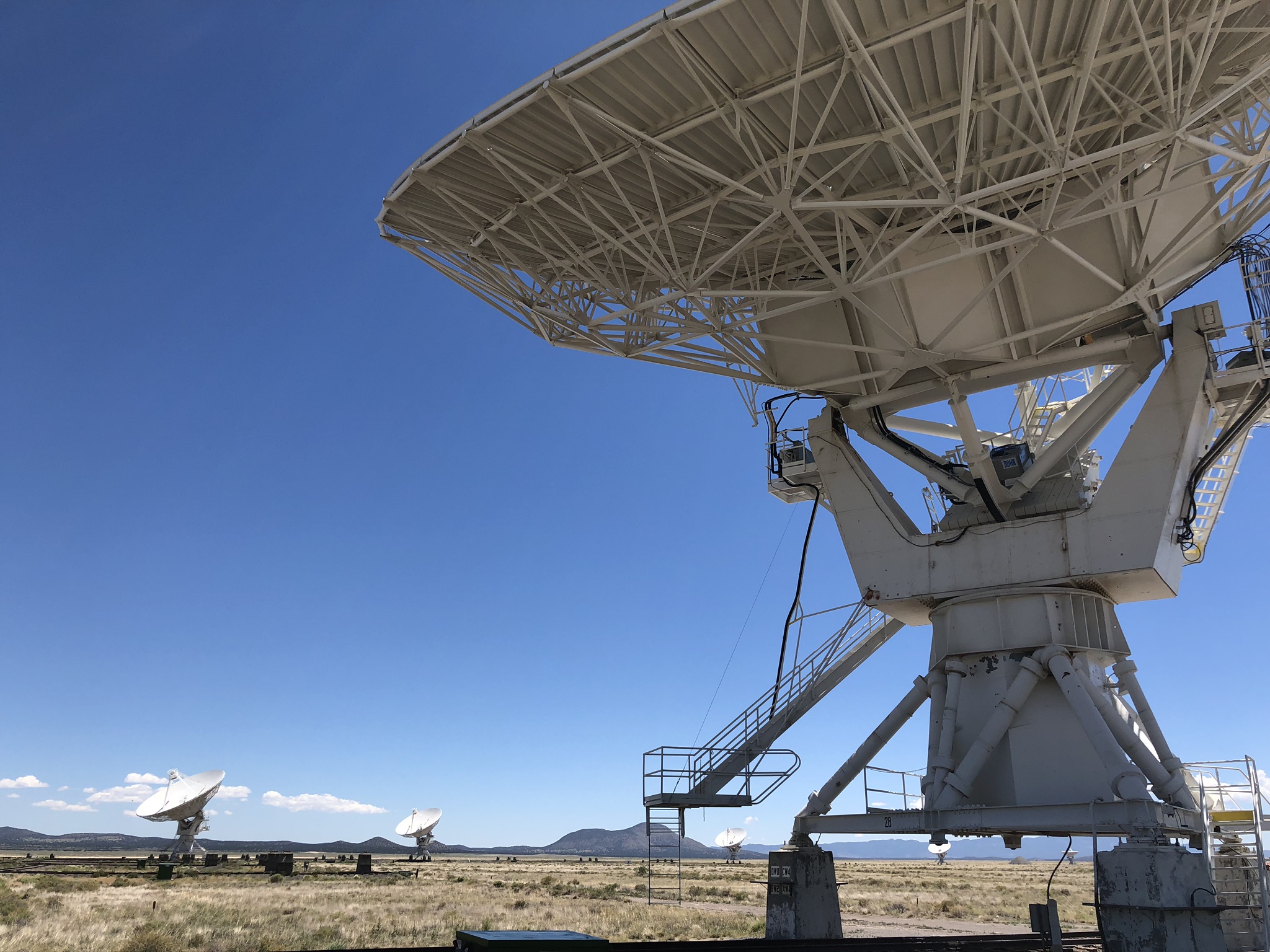
These telescopes are huge. They stand 94 feet tall. The VLA is (I believe) government owned, but scientists can schedule time with these telescopes to do research on various projects. Currently, the VLA is in the middle of “mapping” out the entire sky, or something like that. The people there were very friendly, and they tried to explain it as best they could, but I have to admit that I was just nodding my head a few times – without actually understanding what they were saying. Sorry!

You may have seen the VLA in movies or Television. The site has been seen in movies like “Contact” (based on a book by Carl Sagan – and one of my favorite movies), “Terminator” 3 or 4, or something (the one with Christian Bale), as well as some video by Bon Jovi which I didn’t recognize. All in all it was well worth the stop, and the boys enjoyed being there. It was all very interesting!

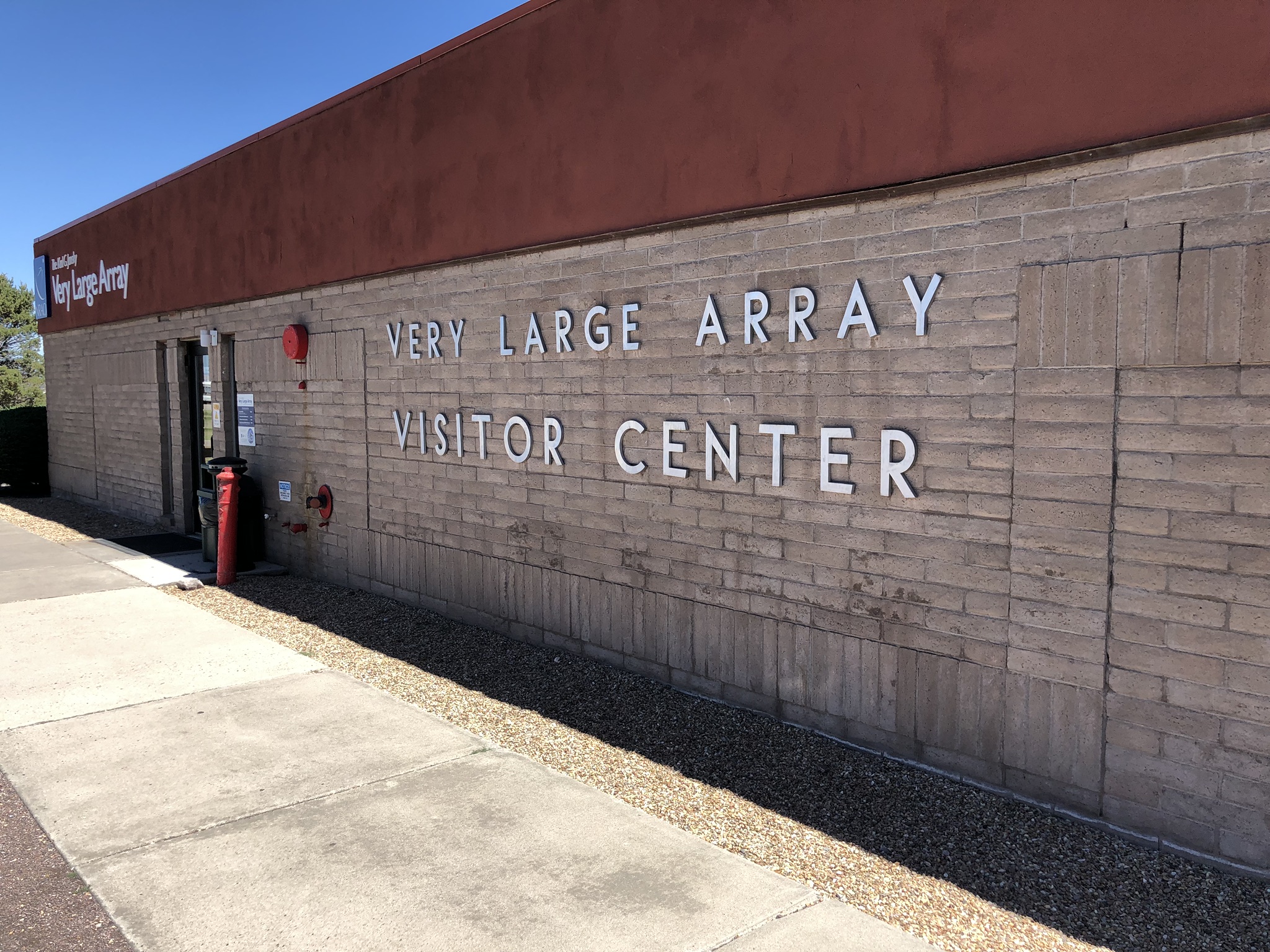
The Very Large Array (VLA) – a horrible name for a cool place
The boys were actually more interested than they look
The Array
Wassup!

After visiting the VLA (the science portion of today), we drove another 3 hours or so south to Roswell, New Mexico, for what would be our science fiction portion of our day. In case you didn’t know, Roswell is known for several things: It’s the dairy capital of the Southwest! (saw it on a billboard entering town), it’s the location of the New Mexico Military Institute, and oh yeah, in 1947 an alien spaceship crash-landed somewhere outside of town and the U.S. military has been covering up the fact that they retrieved the spaceship and ONE OF ITS OCCUPANTS! This town has “The Hart Boys” written all over it!

It’s actually kind of funny how some parts of town pretend like nothing ever happened, and the other parts of town act like they actually, personally, have been probed, and liked it.

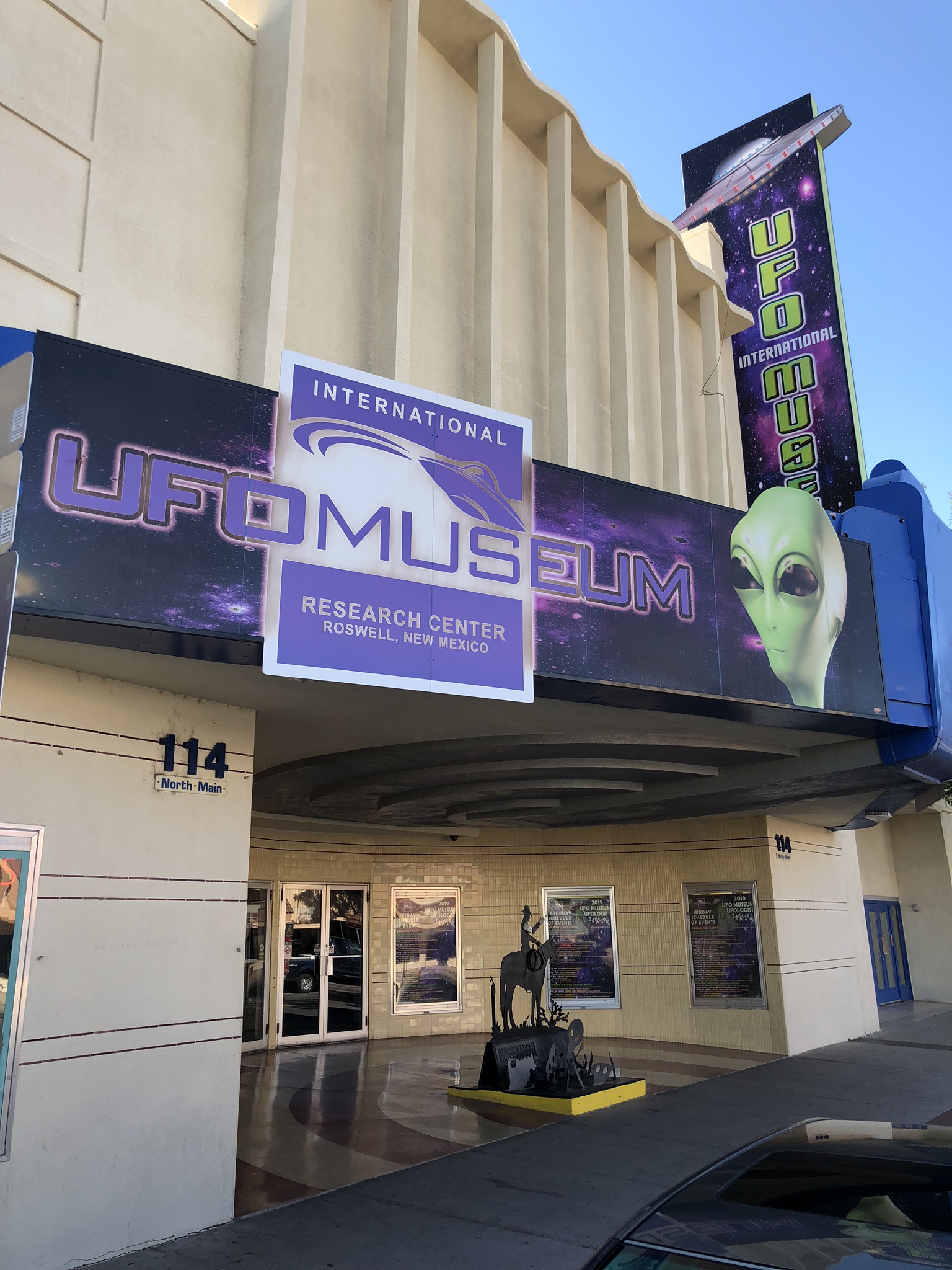
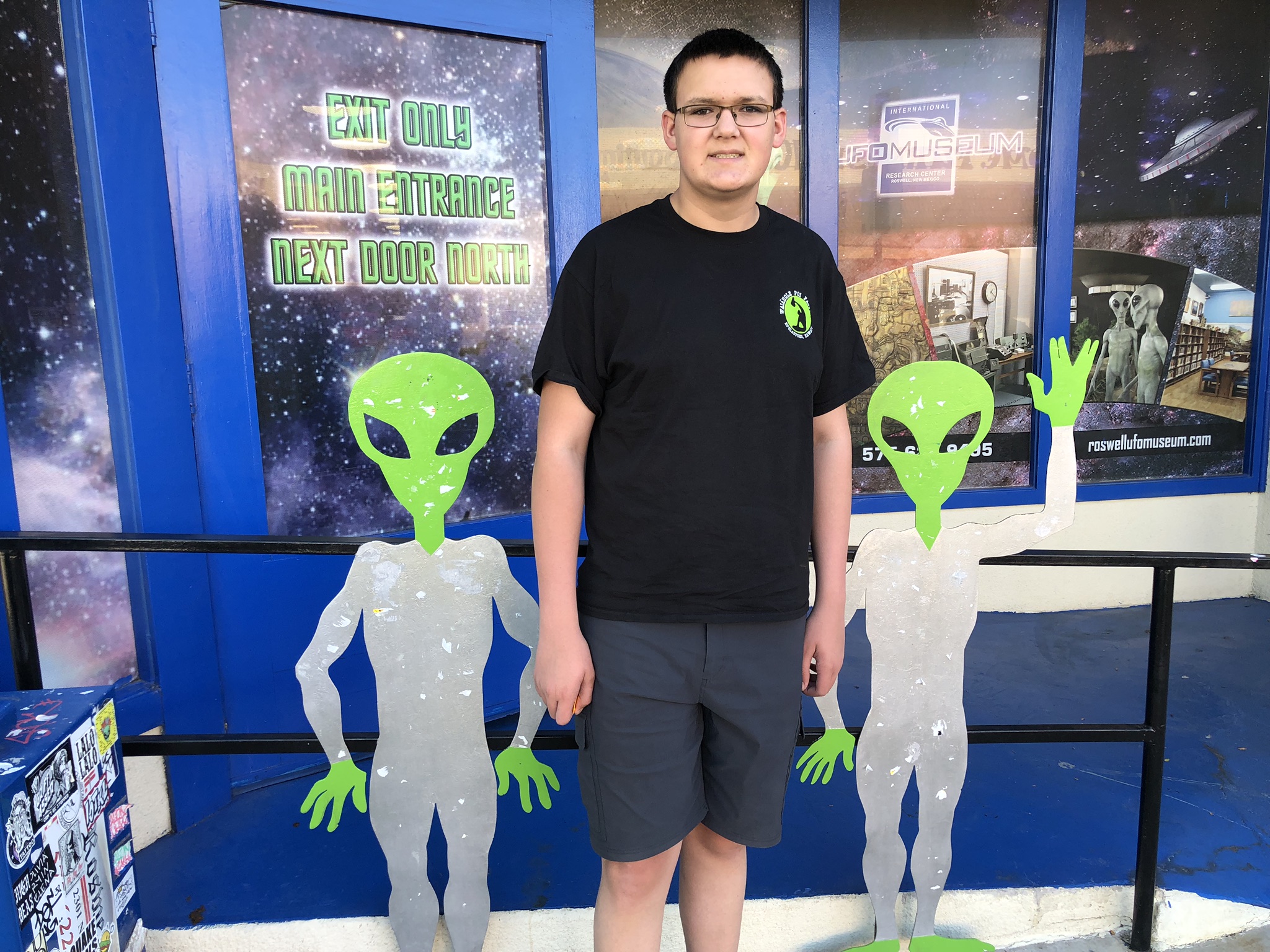
We ended our day visiting the “International UFO Museum and Research Center” in downtown Roswell. We knew it was some hokey tourist trap (we knew the actual aliens are being stored at Area 51), but we just couldn’t resist paying a few bucks to be entertained.

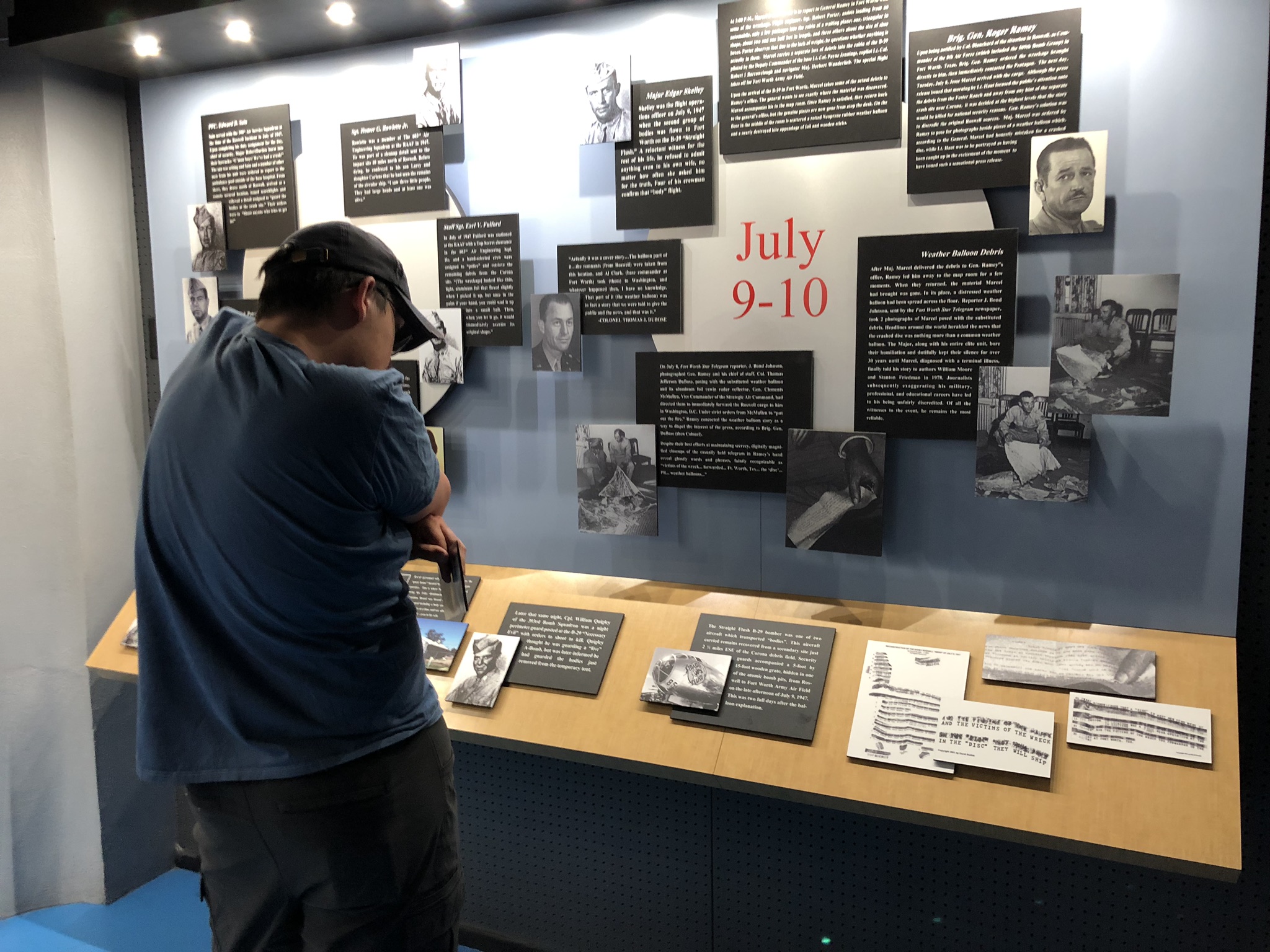
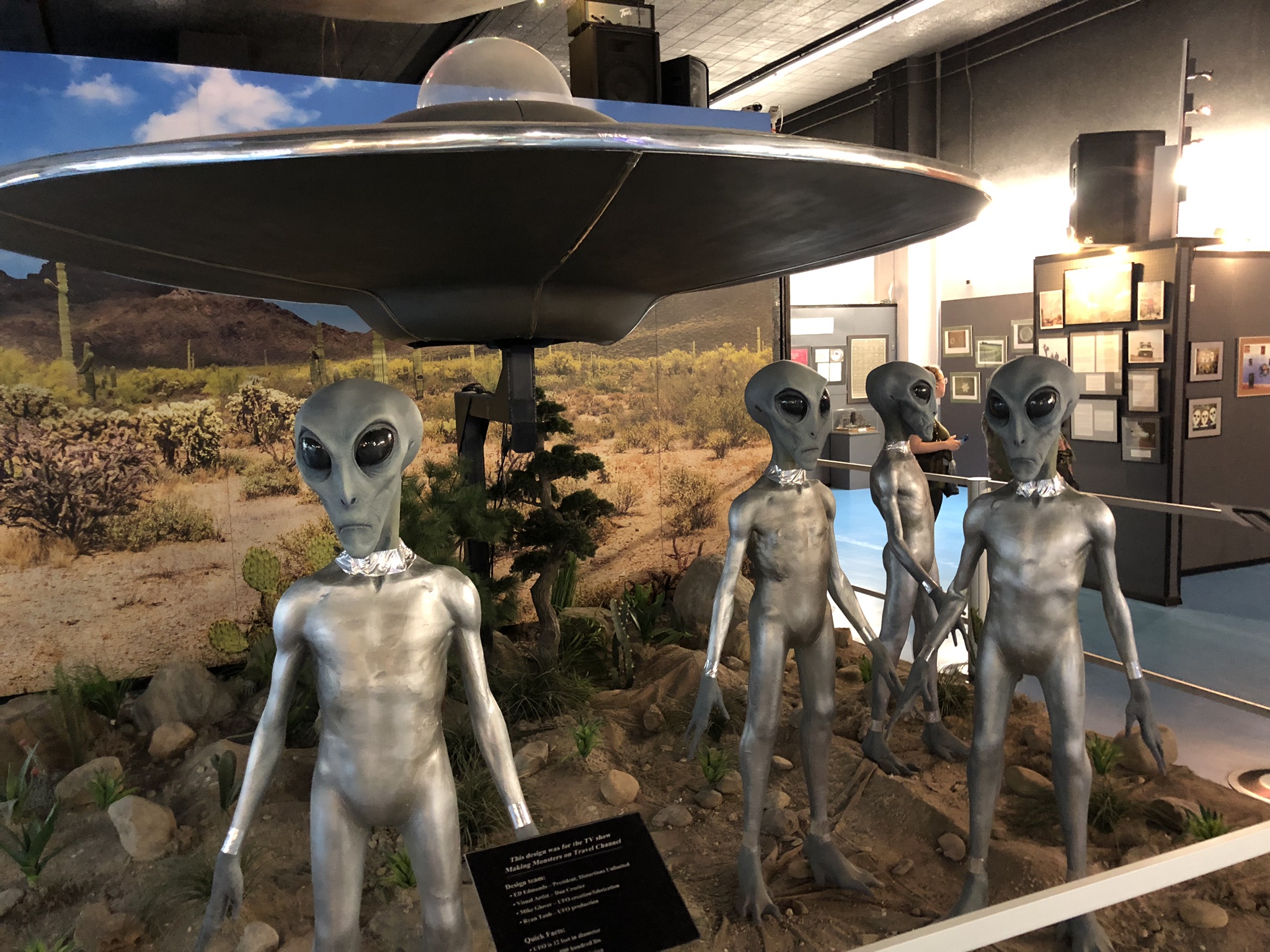
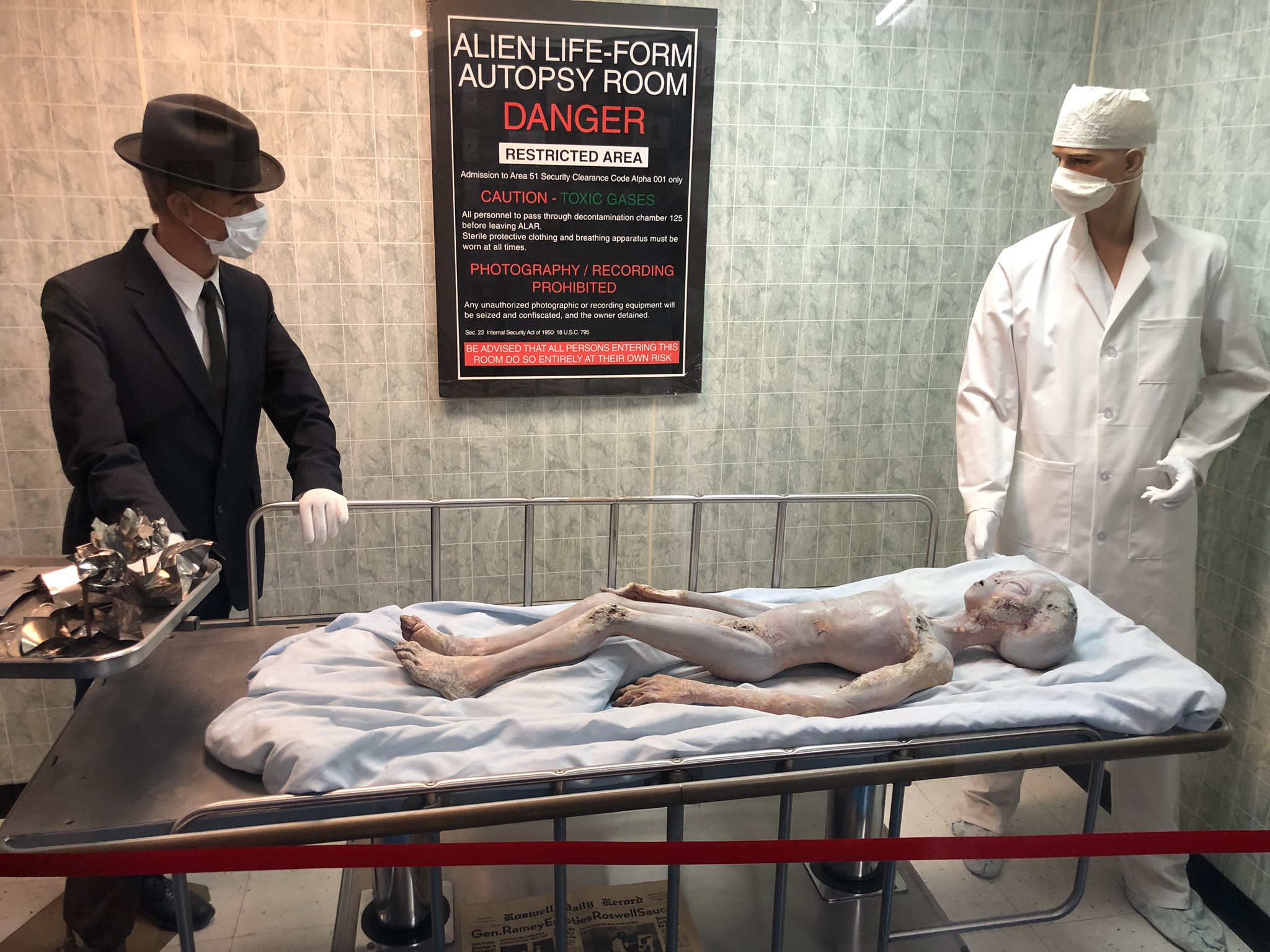
They had more signed sworn affidavits from witnesses than actual alien artifacts (again, Area 51 in Nevada). They had various recreations, including an alien autopsy. All in all, nobody in our group was convinced one way or the other, but it was a lot of fun to visit. Here is our evidence:

Research Center?
Nolan investigating the “evidence” of eyewitnesses
The real ones are at Area 51 in Nevada
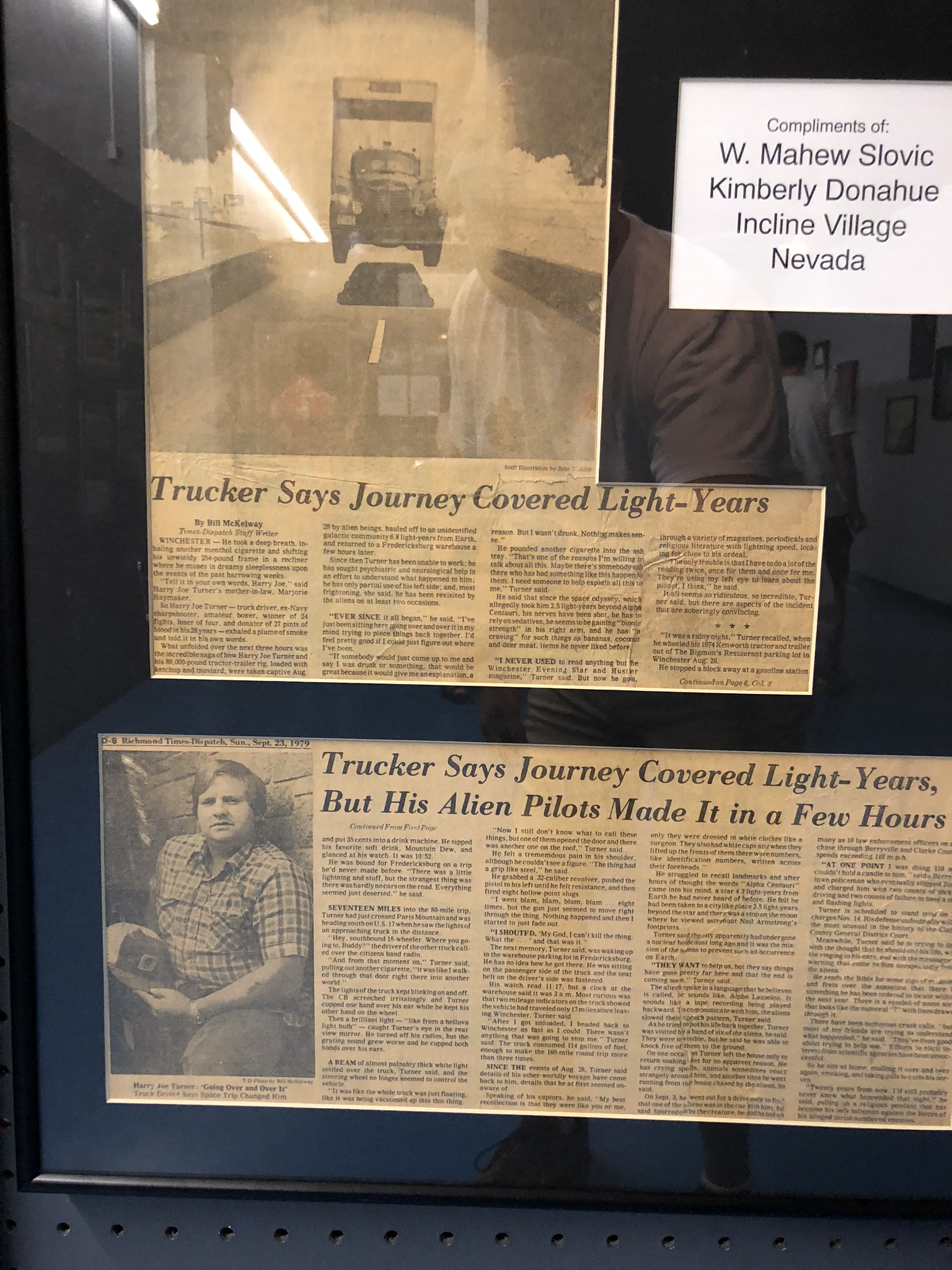
More “evidence”: Story about a trucker who claimed he was abducted by aliens
Recreation of an alien autopsy
Nathan: Why? Nolan: It’s’ for dad’s blog!

Some final thoughts about today:

  • As I said, the movie “Contact” is one of my favorites. It’s about what happens when we make contact with aliens. It starred Jodie Foster, and for you ladies (and guys – you know who you are) there is a younger, more virile Matthew McConaughey. My favorite line from the movie: “The universe is a pretty big place. If it’s just us, seems like an awful waste of space.” So Carl Sagan.
  • Driving some pretty desolate country, and I’ve hardly seen any wildlife. Saw some antelope today. Saw some baby birds. Saw a lizard. That’s about it. Now, dead animals? Seen plenty of those. I’ve seen a dead raccoon, lots of dead deer, a dead bird, a dead porcupine, a couple of dead coyotes, and a dead cow. Yup, you read that right. A big, dead, black and white cow – legs up in the air – dead. Not sure what happened, but I doubt it died of natural causes.
  • Oh yeah, almost forgot. On our way from the VLA to Roswell, we passed a couple of interesting places. We drove through the town of Capitan, where, according to Wikipedia: “In spring of 1950, a badly burned black bear cub was rescued from a large forest fire at Capitan Gap in the Capitan Mountains. First called Hotfoot Teddy, he was later renamed Smokey and became the real-life version of the United States Forest Service mascot Smokey Bear. Smokey was later sent to the National Zoo in Washington D.C., where he lived for 26 years. Upon his death on November 9, 1976,[6] Smokey’s remains were returned by the government to Capitan and buried at what is now the Smokey Bear Historical Park.” We didn’t stop, but Smokey Bear effigies were all over town.
  • Another interesting place we drove through (I wish I had more time – I would’ve stopped at this place) was the town of Lincoln. The so-called “most dangerous town” in the wild west days, Lincoln was the site of a famous incident involving Billy the Kid (William Bonney). Billy was arrested for murder, was tried, and convicted and sentenced to hang – all at the Lincoln Courthouse. But, in 1878, before he could be executed, Billy shot and killed a sheriff and his deputy, and escaped into the New Mexico desert. We stopped outside the courthouse but was told we could not park there, so we drove on.
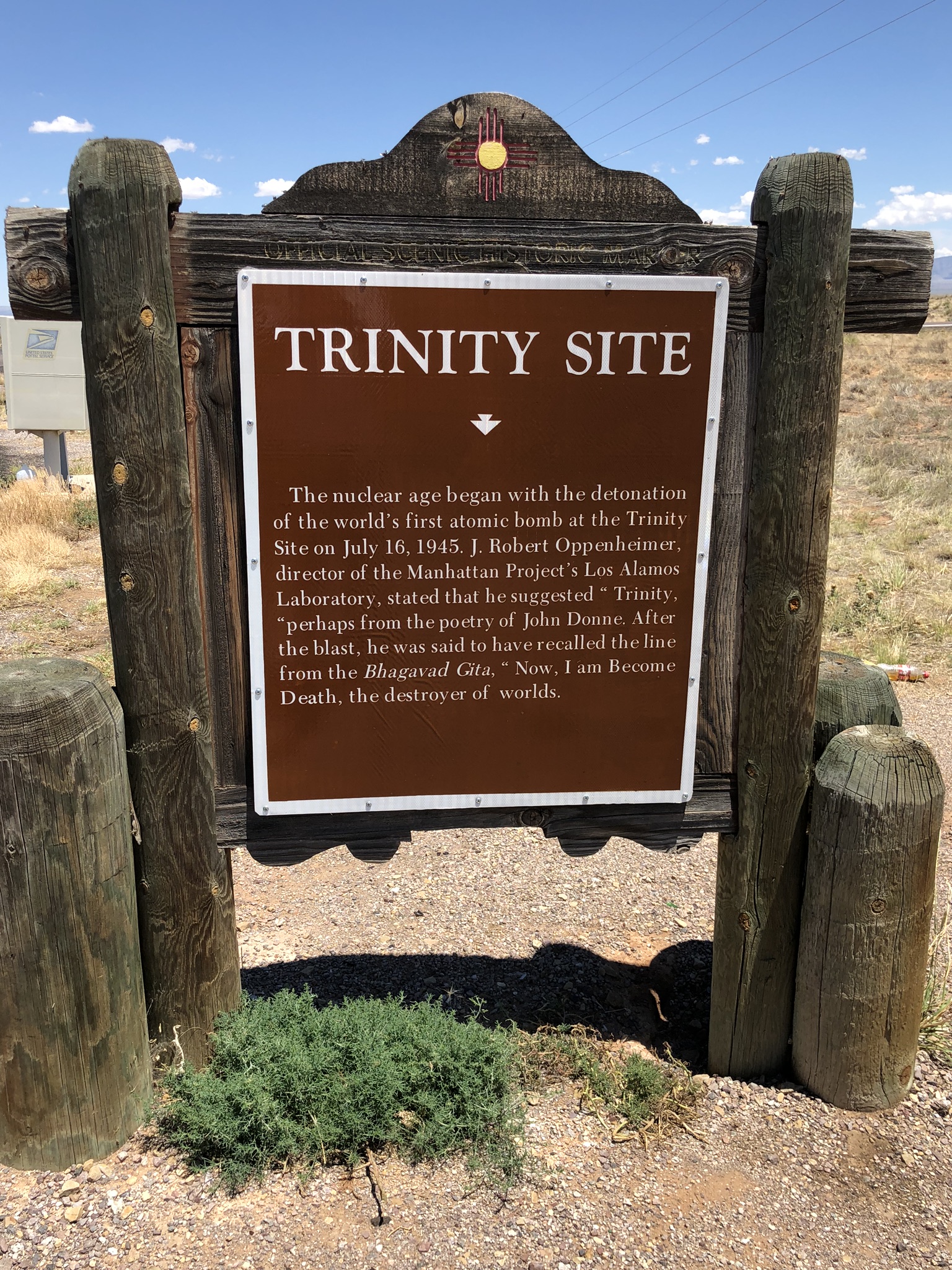
  • One last place we would’ve stopped at if we could was the Trinity Site. This was where the first atomic bomb was tested. It is a military installation now, and is only open to the public one day a year. Today was not the day. Supposedly, it’s only open one day because the place still has a reasonable amount of residual radiation, and so it is still not safe to linger. We did stop to take a picture of a sign just outside the facility:
“Now, I am Become Death, the destroyer of worlds”

Anyway, it’s late and we have a long day tomorrow. We’re driving through the panhandle of Texas (Amarillo), and ending up in Oklahoma City. Thanks for checking in with us. Wish you were here!

Day 3: Fort Bluff and Monument Valley

Today we traveled south from Moab, Utah to Gallup, New Mexico. We’ve been to Gallup before, but three years ago, we went to Mesa Verde National Park (one of my favorite National Parks!) and Four Corners (which is a tourist trap, but cool to say you’ve been). This time we wanted to try a different route, and I’ve always wanted to see Monument Valley. As a kid I loved watching westerns, and Monument Valley was the backdrop for many of those films. Then, of course, a famous scene from Forrest Gump was filmed there, so we had to go!

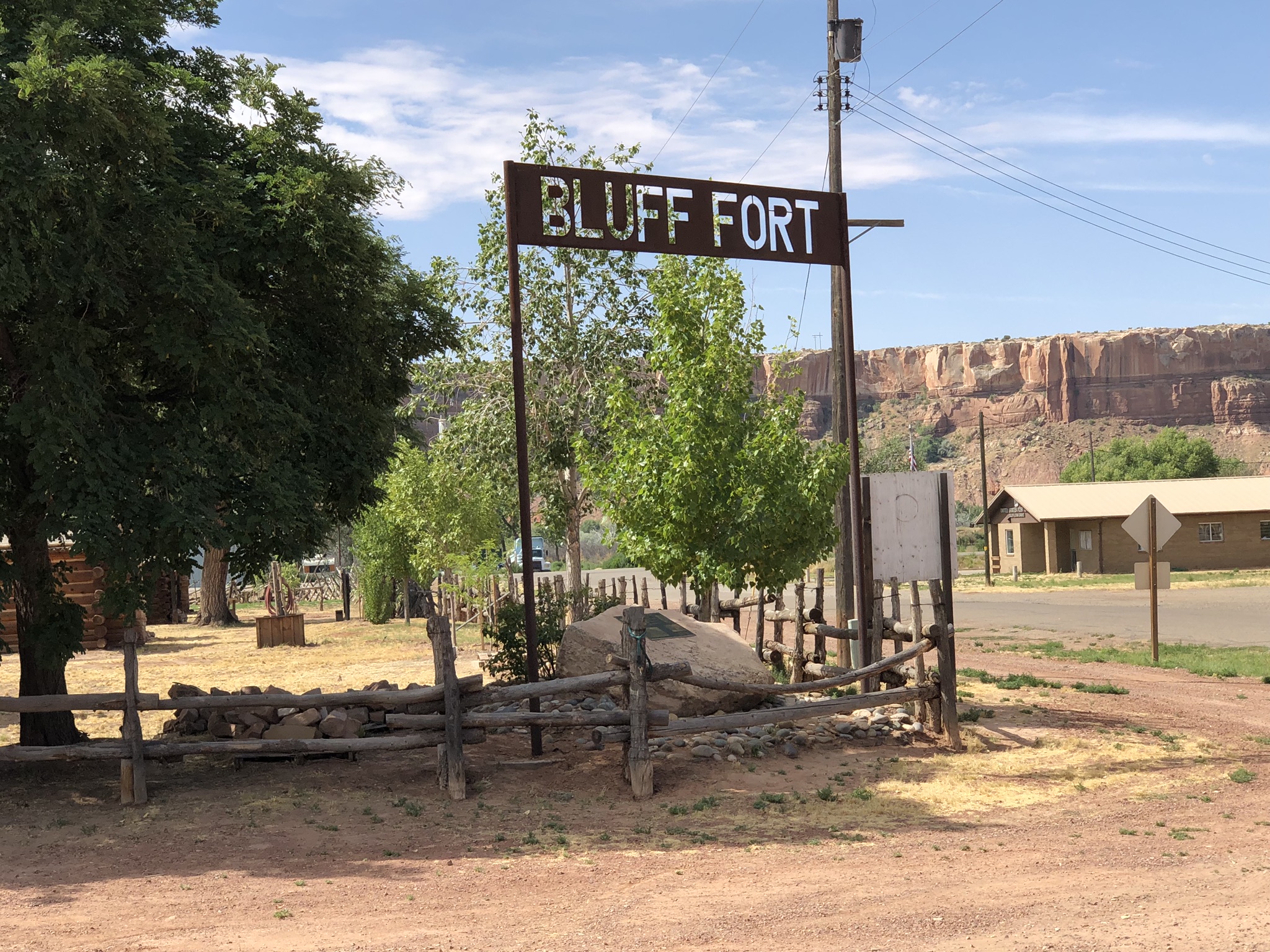
Bluff Fort, Bluff, Utah

On the way, we passed through a little town called Bluff. There we stopped to take in a place I had heard about called Fort Bluff. Actually, I guess they call it Bluff Fort, which sounds weird. That wasn’t the only thing I didn’t expect.

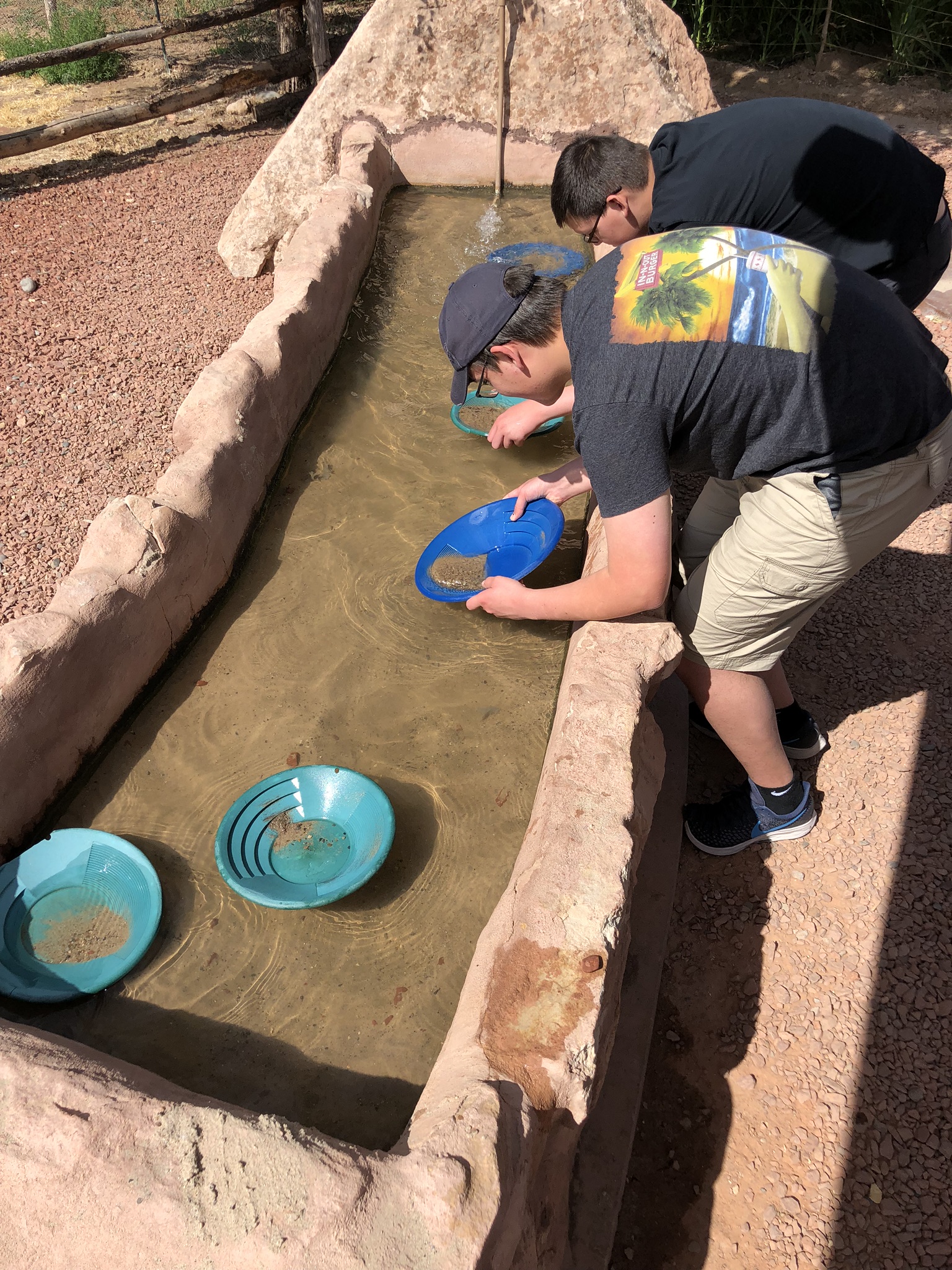
When you hear “Fort” you think military. Wrong! Bluff Fort was actually an early settlement by some Mormon pioneers. This was not nice country to plant yourselves, but they were some plucky people. Just getting there was treacherous. The rocky landscape, the incessant heat, and natives angry that the white man was once again infringing upon their lives (my words, not theirs) made this a rough place. We met a nice elderly couple who seemed to be running the place, but they were NOT tour guides! “This is a self-guided tour,” said the old man. “You go around and listen to all the stories.” Ok…so we walked down the path and…guess what! There were little buttons at each entry way, that when pressed, began a pre-recorded narrative about what we were seeing. There were actually several buttons. We pressed each one. Turns out they played the same narrative, but in different languages. The boys thought it would be great if we listened to each new exhibit in Italian, German, Japanese, and Dutch (?). The boys also panned for gold (no luck). It turned out to be a very interesting place, and both boys were glad we stopped.

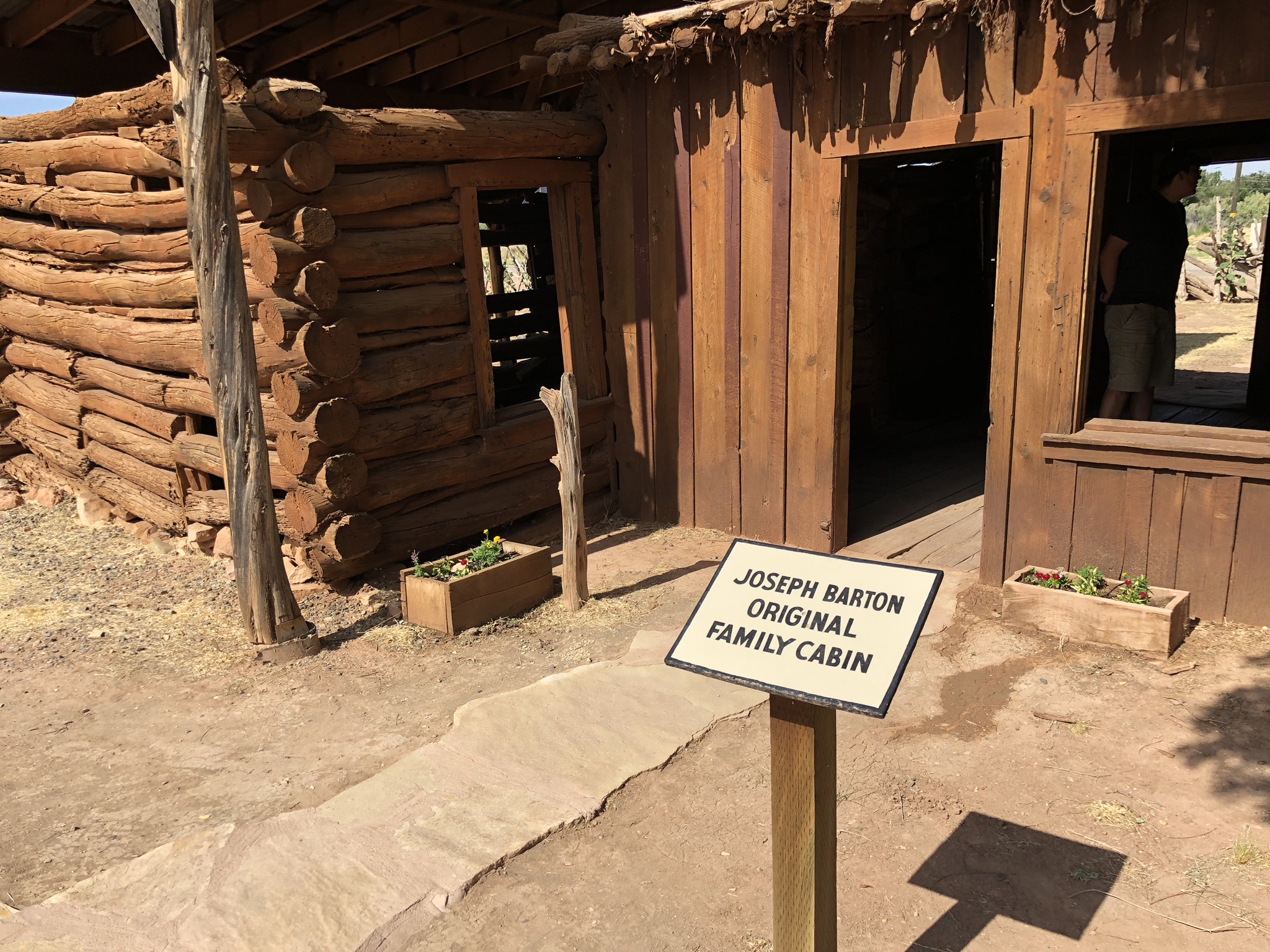
The Bartons were one of the original families. Amazingly, their ancestors still live in the area
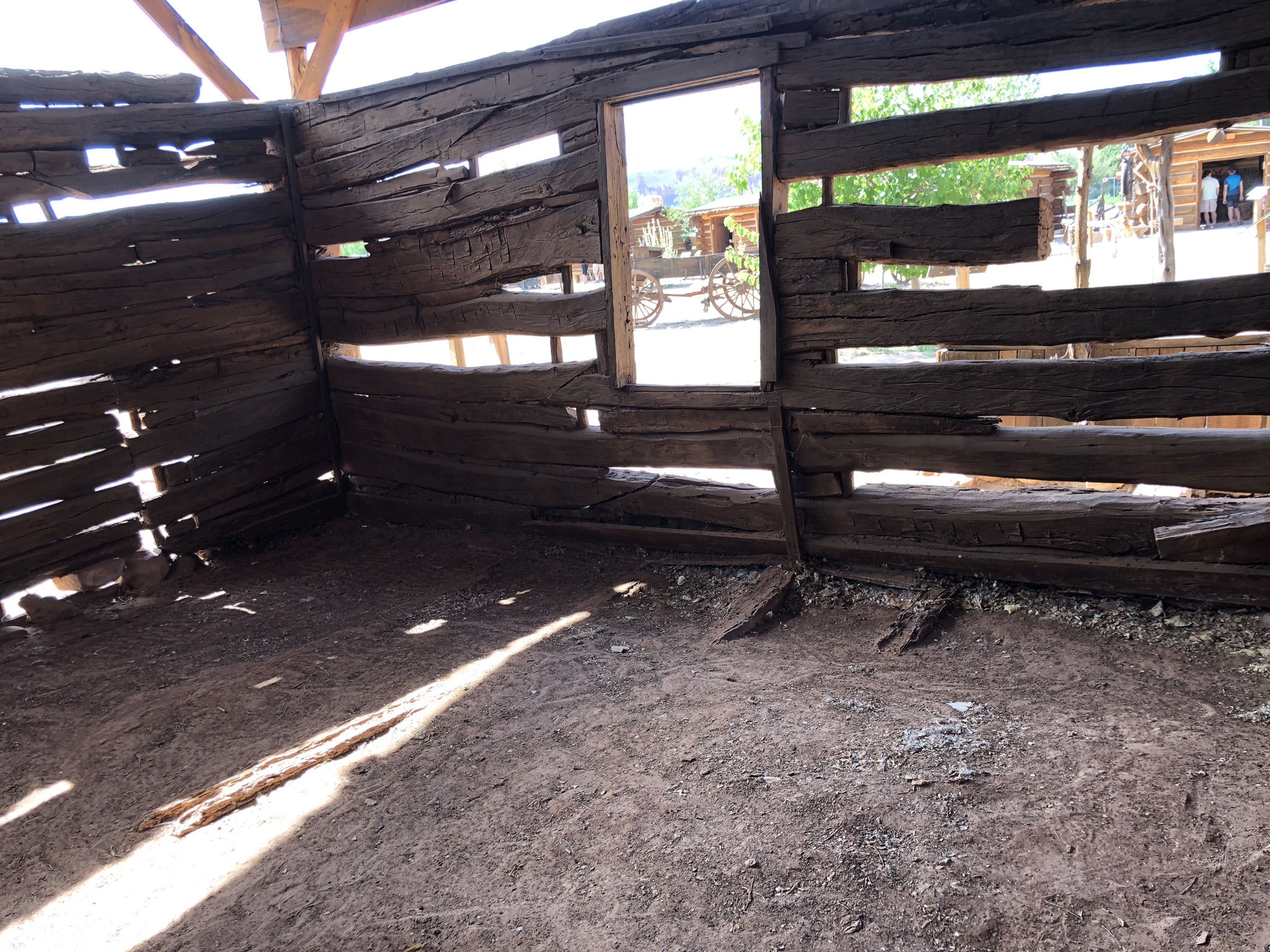
The inside of one of the original Barton rooms
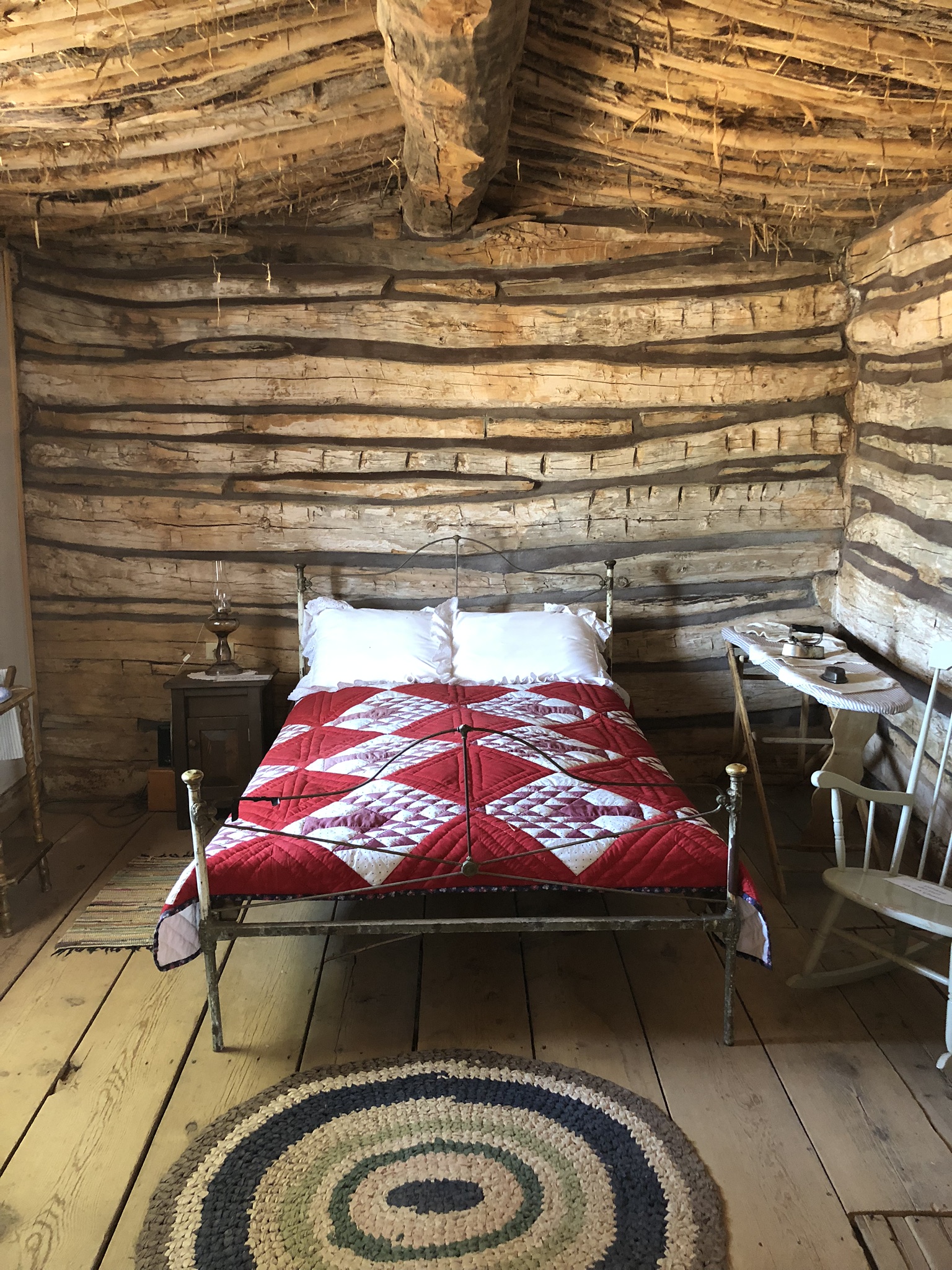
Some of the furniture in here is original!
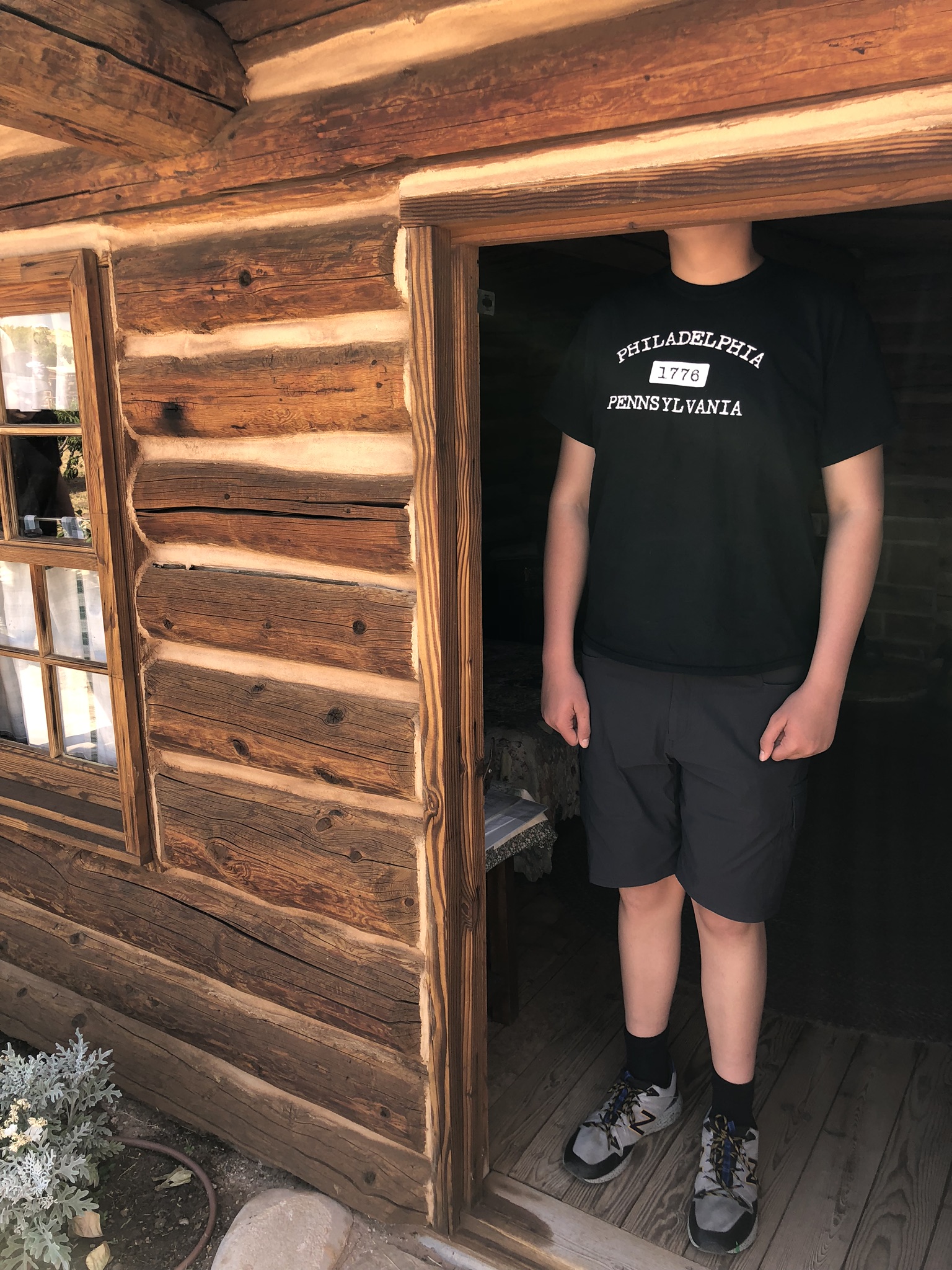
I guess the early pioneers weren’t 6′ 6″
The boys’ futile attempt at getting rich

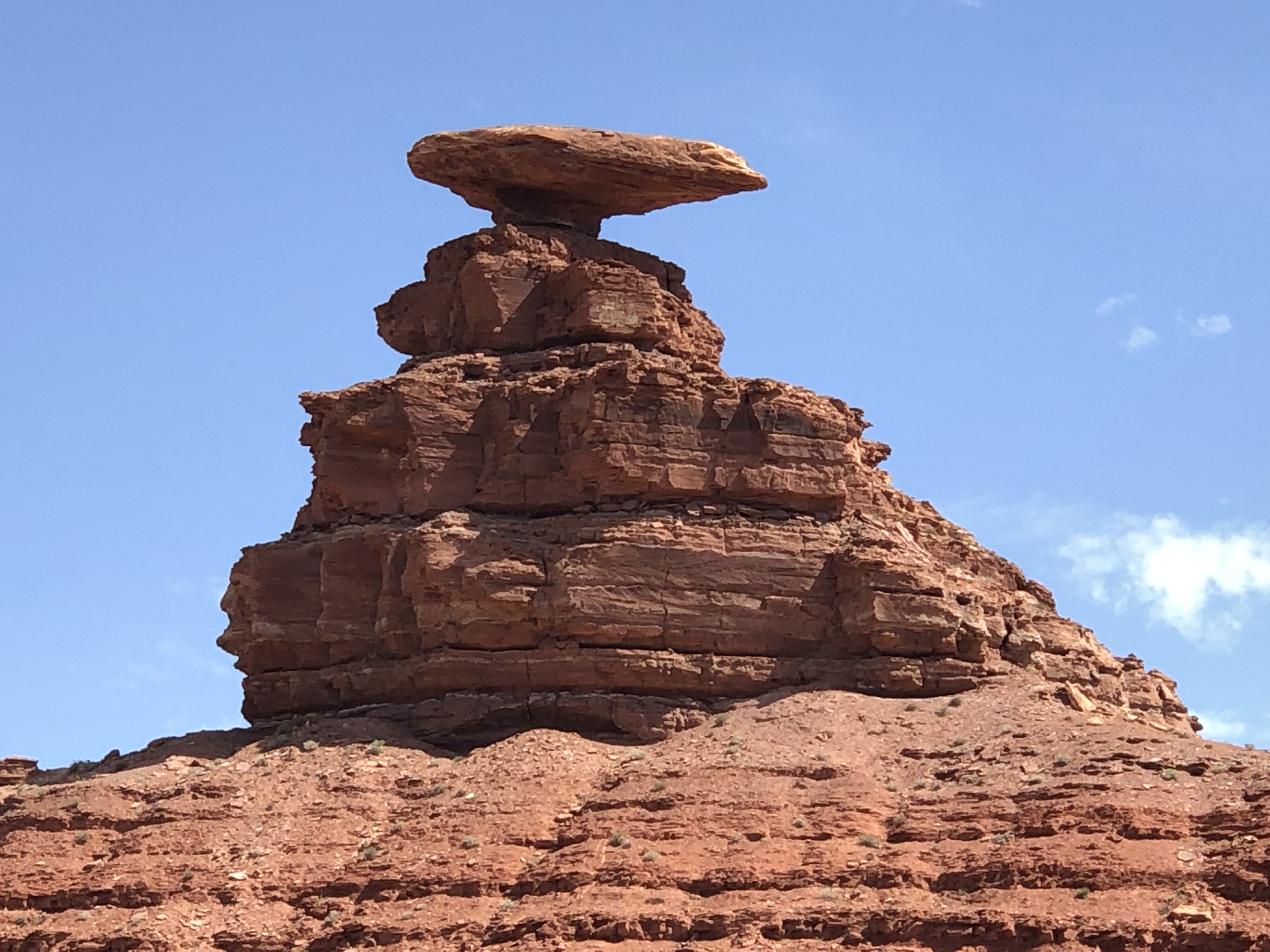
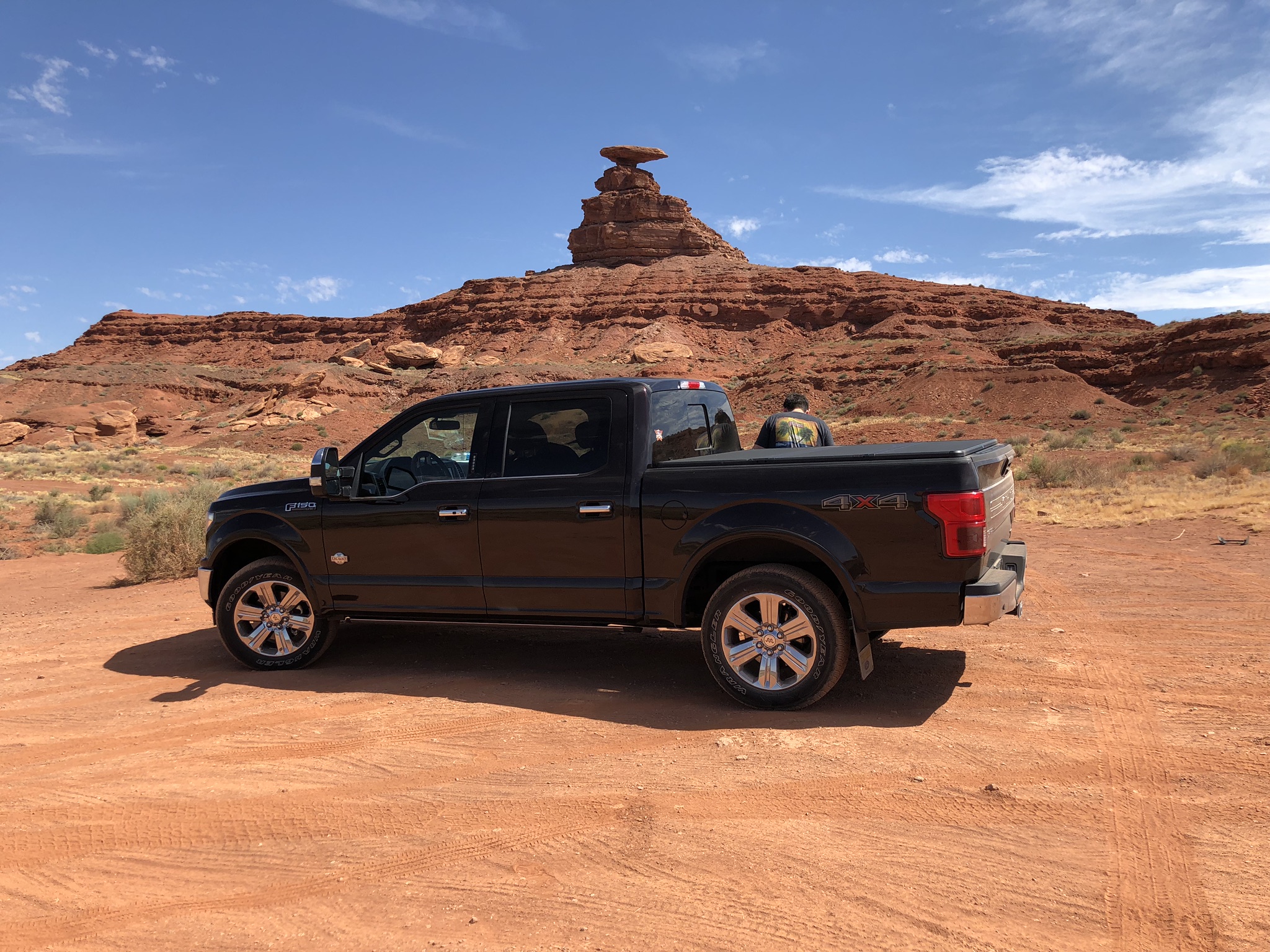
We continued down the road to Mexican Hat (actual town name). Named after a rather distinct rock formation, we had to go off-roading to get a good look at it.

Mexican Hat Rock, Utah
Close-up of Mexican Hat Rock, Utah

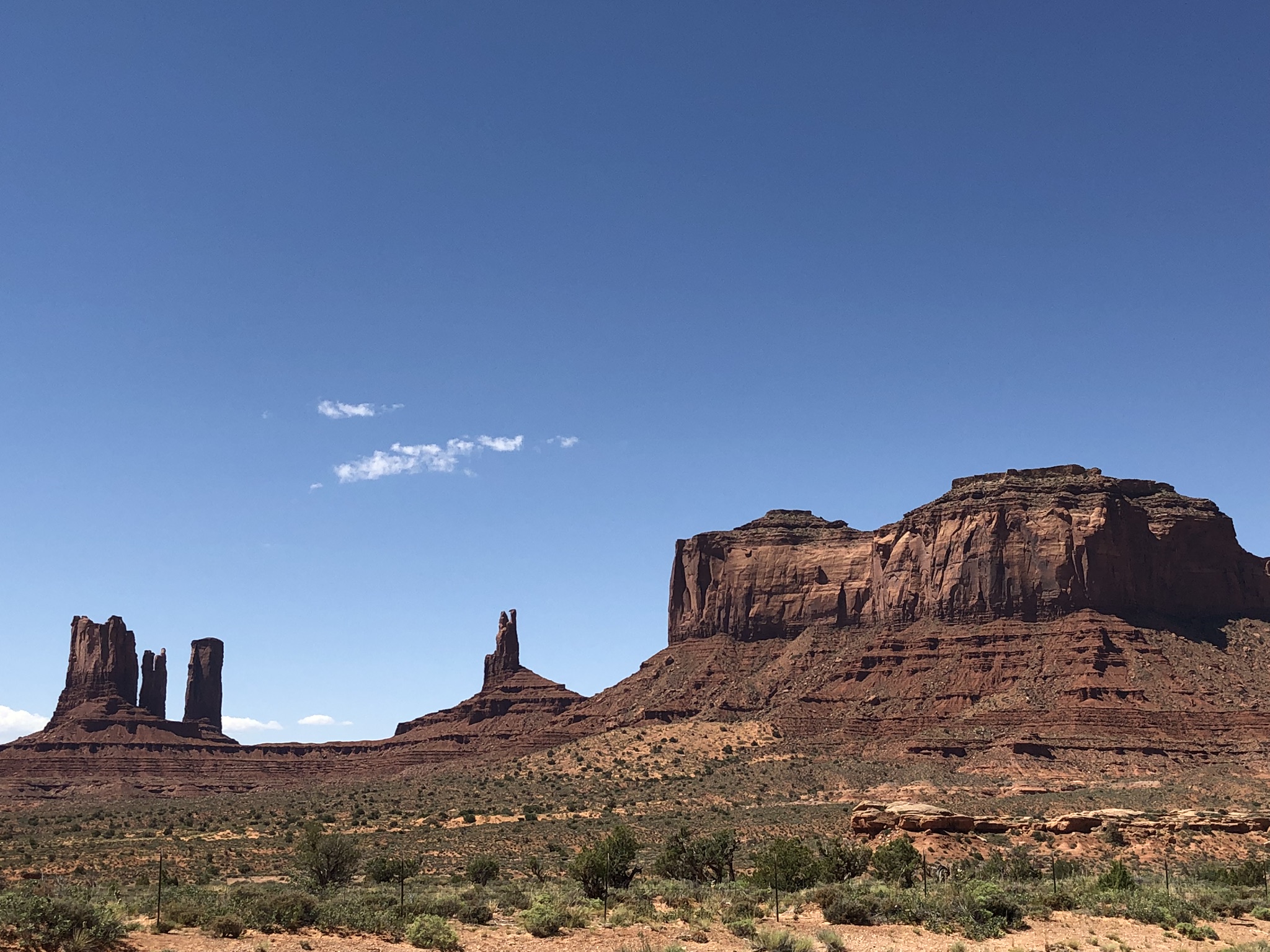
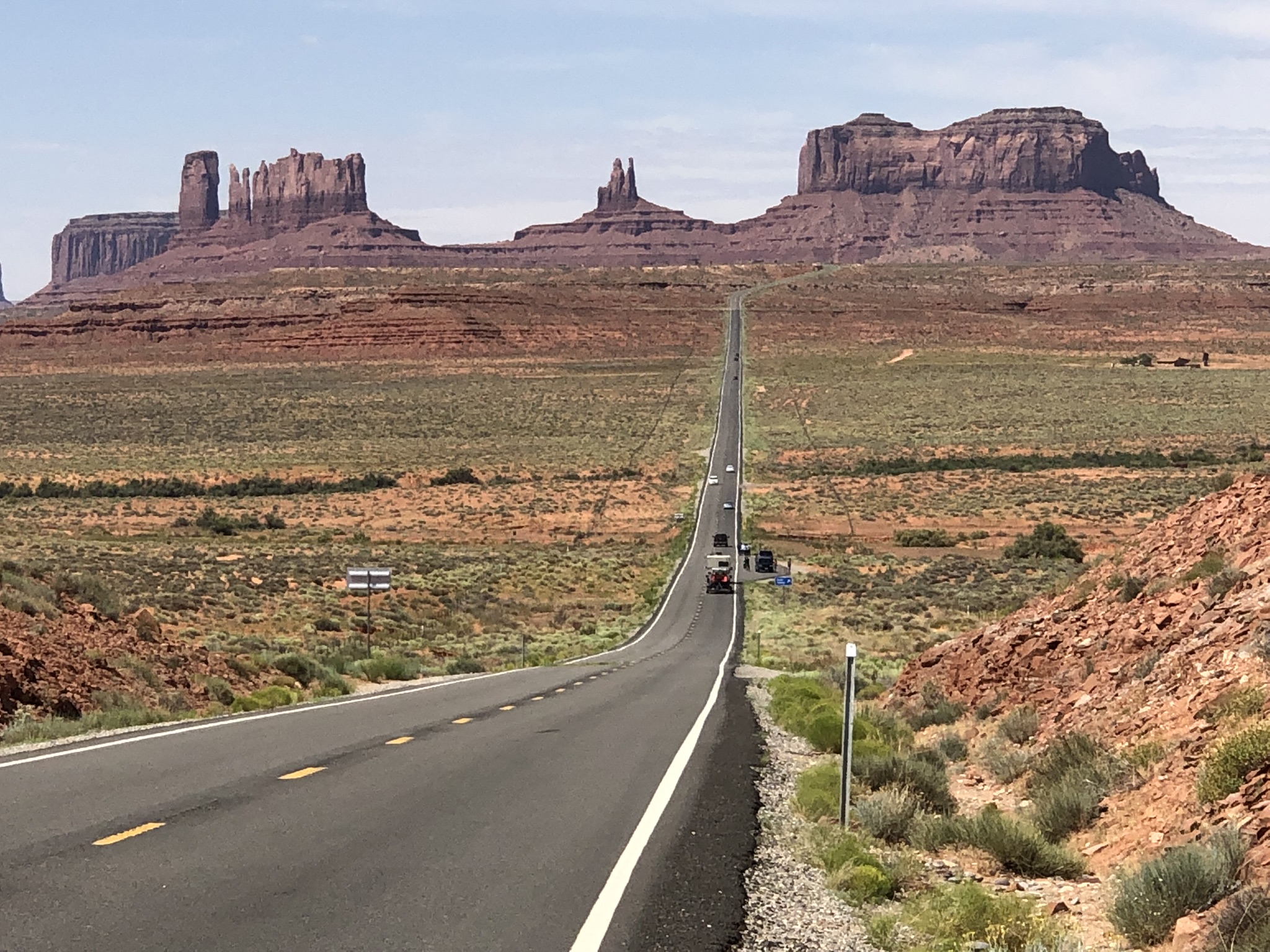
Finally, we made it to Monument Valley. It’s really hard to describe the landscape in this part of the country. I guess I could say that the mountains give a stark contrast to the surrounding scrub lands and open range. The pictures tell a better story…

Monument Valley, Utah
The site of the running scene in “Forrest Gump”, Monument Valley, Utah

Some random thoughts from today:

  • It is absolutely amazing seeing people stand on a highway to recreate a scene from a movie and take a picture. Mind you, the speed limit here is 65 mph! Cars, trucks, and RVs come hurtling down the highway, and tourists scramble off the road, only to race back to strike a pose. No tourists (including us) were killed while we were there, but a Japanese couple came really close…
  • The best time to fart in a car full of people is when driving through agricultural regions. Nobody ever says anything because they can’t tell if it was the “natural” fertilizer aroma, or you.
  • Nathan and I were treated to a complete dissertation on the geology of the Mexican Hat region by Nolan. Apparently, you take one undergrad course and suddenly you’re an expert!

Well that’s quite enough for now. Tomorrow we travel to Roswell, New Mexico with a stop in Socorro to see the VLA (Very Large Array) of Radio Telescopes. If you don’t know what that is, you’ll have to come back tomorrow! Adios!

Day Two: Moab, Utah

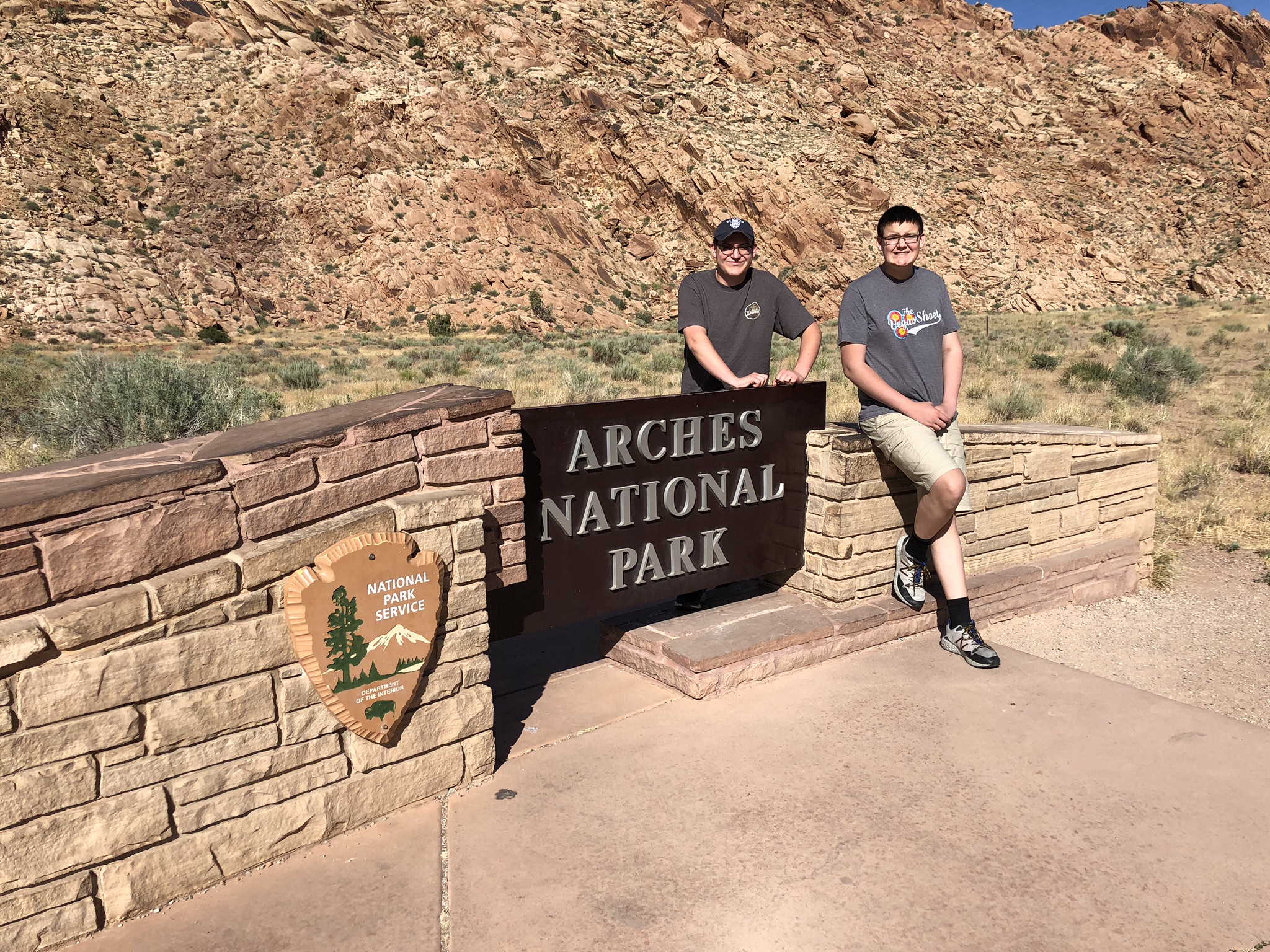
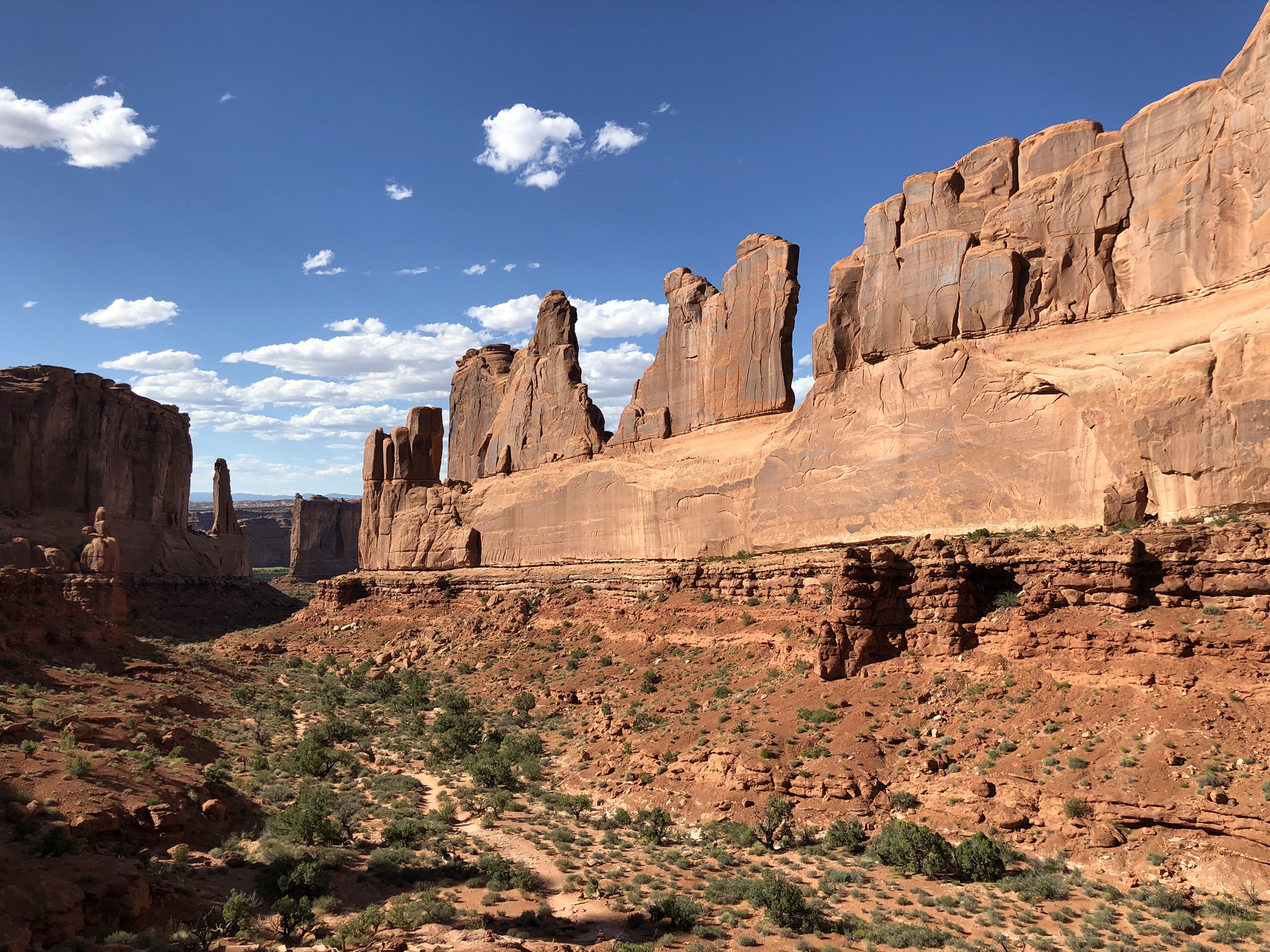
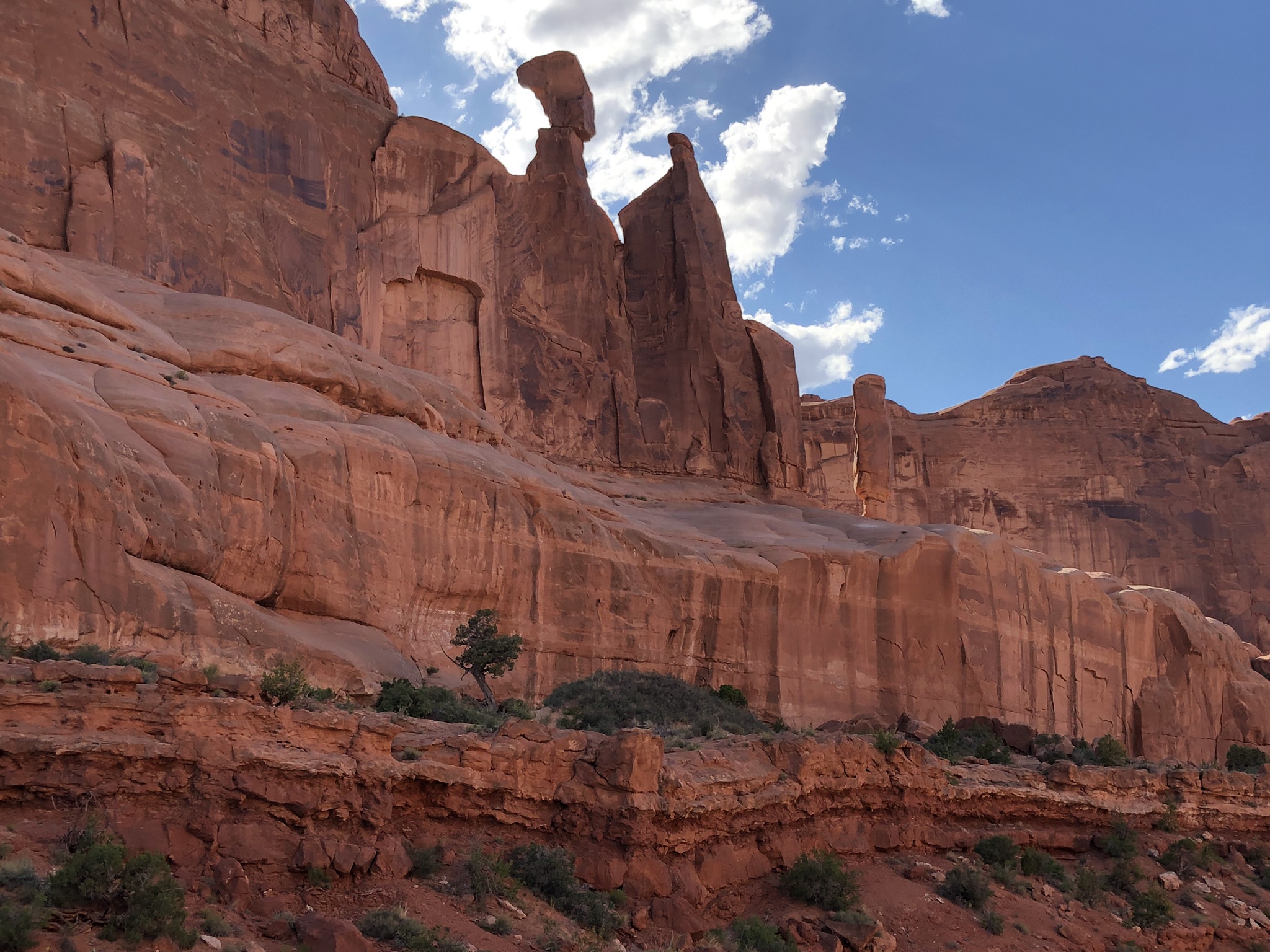
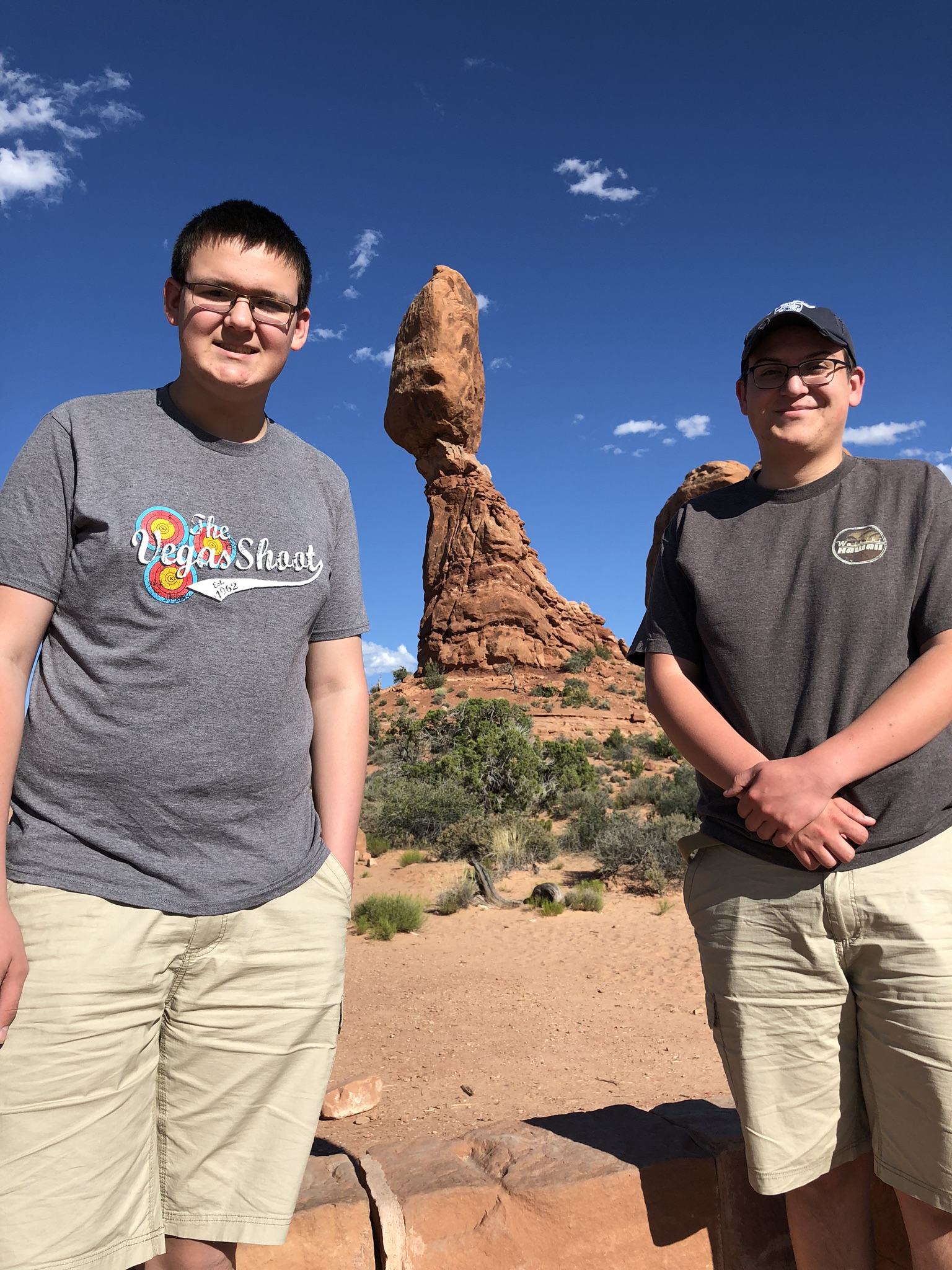
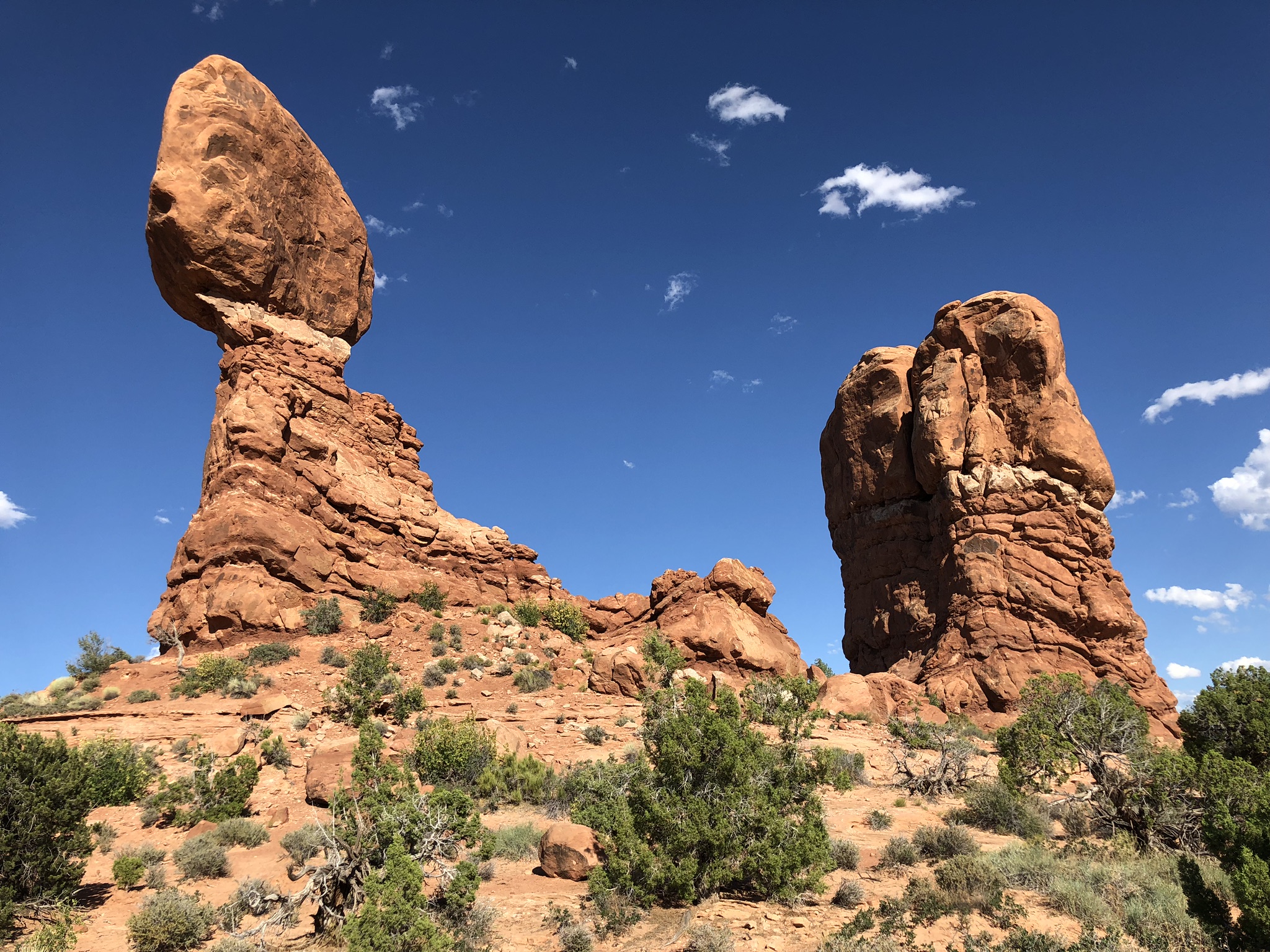
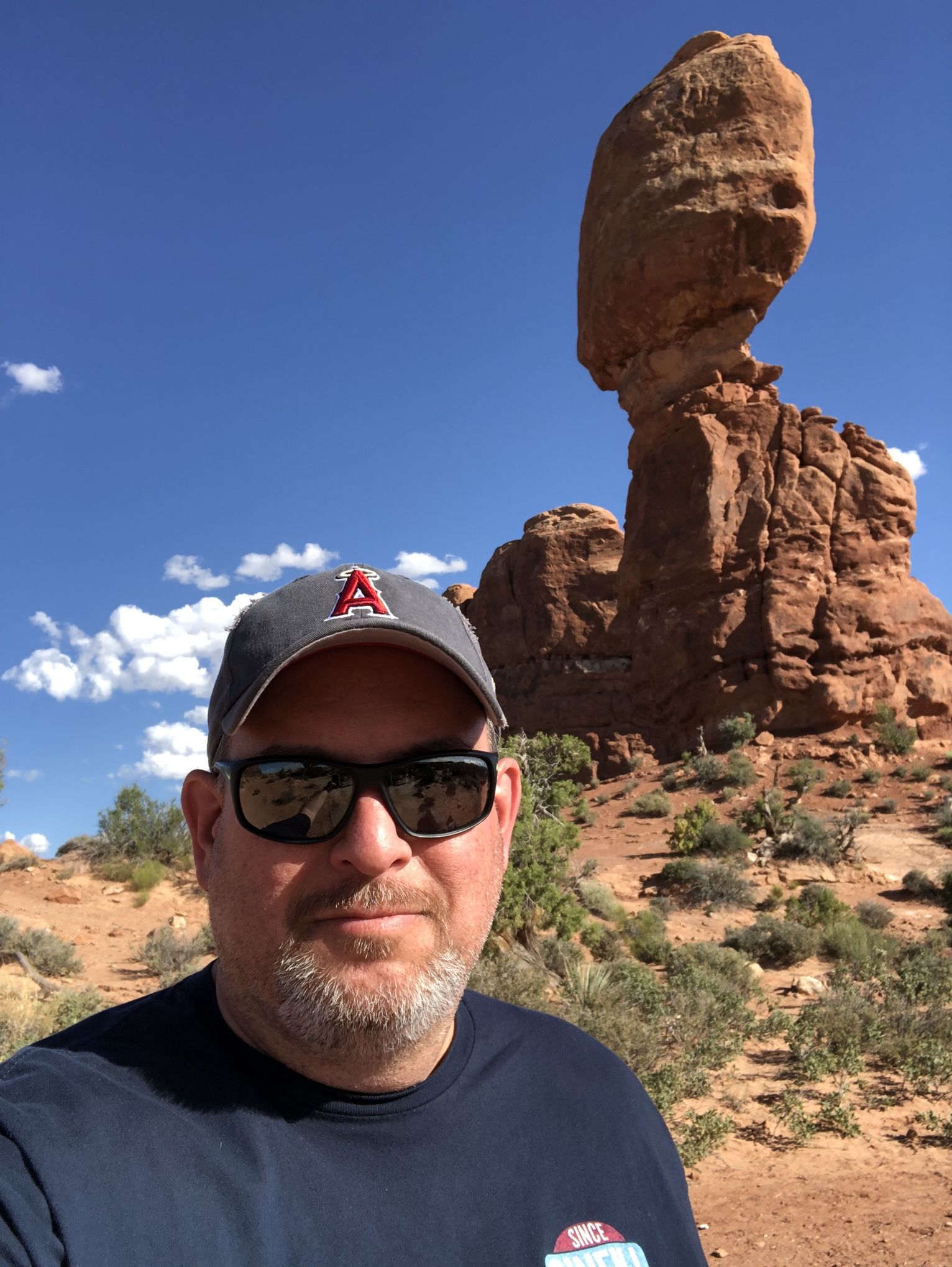
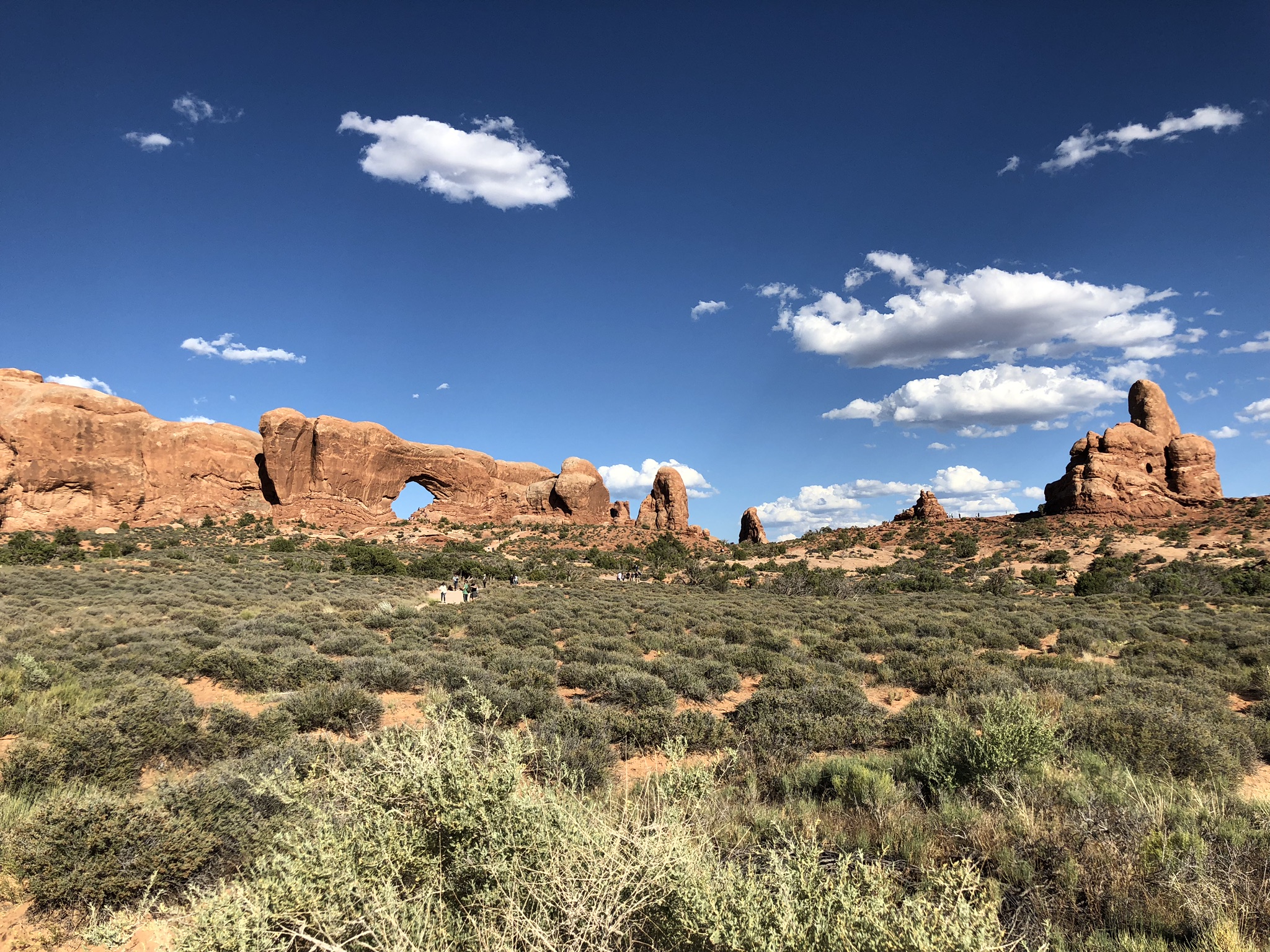
Another long day of driving! We have put on the miles, and finally, tomorrow, we will visit someplace new. Today, we made it to Moab, Utah. Arches National Park and Canyonlands National Park are just down the road. Three years ago, this was our destination for a summer trip. Today, just passing through! Couldn’t resist driving through Arches (my personal favorite of the two), and we even got out and walked around (it was 99 degrees)! Both boys mentioned how much they enjoyed the last time we were here. I have to say that the views are absolutely stunning:

Why can’t my boys smile like normal people?
Park Avenue, Arches National Park, Utah
The Boys at Balanced Rock, Arches National Park, Utah
I wouldn’t stand under that thing…Balanced Rock, Arches National Park, Utah
That dude better watch out for that rock…Balanced Rock, Arches National Park, Utah
Windows Arch, Arches National Park, Utah
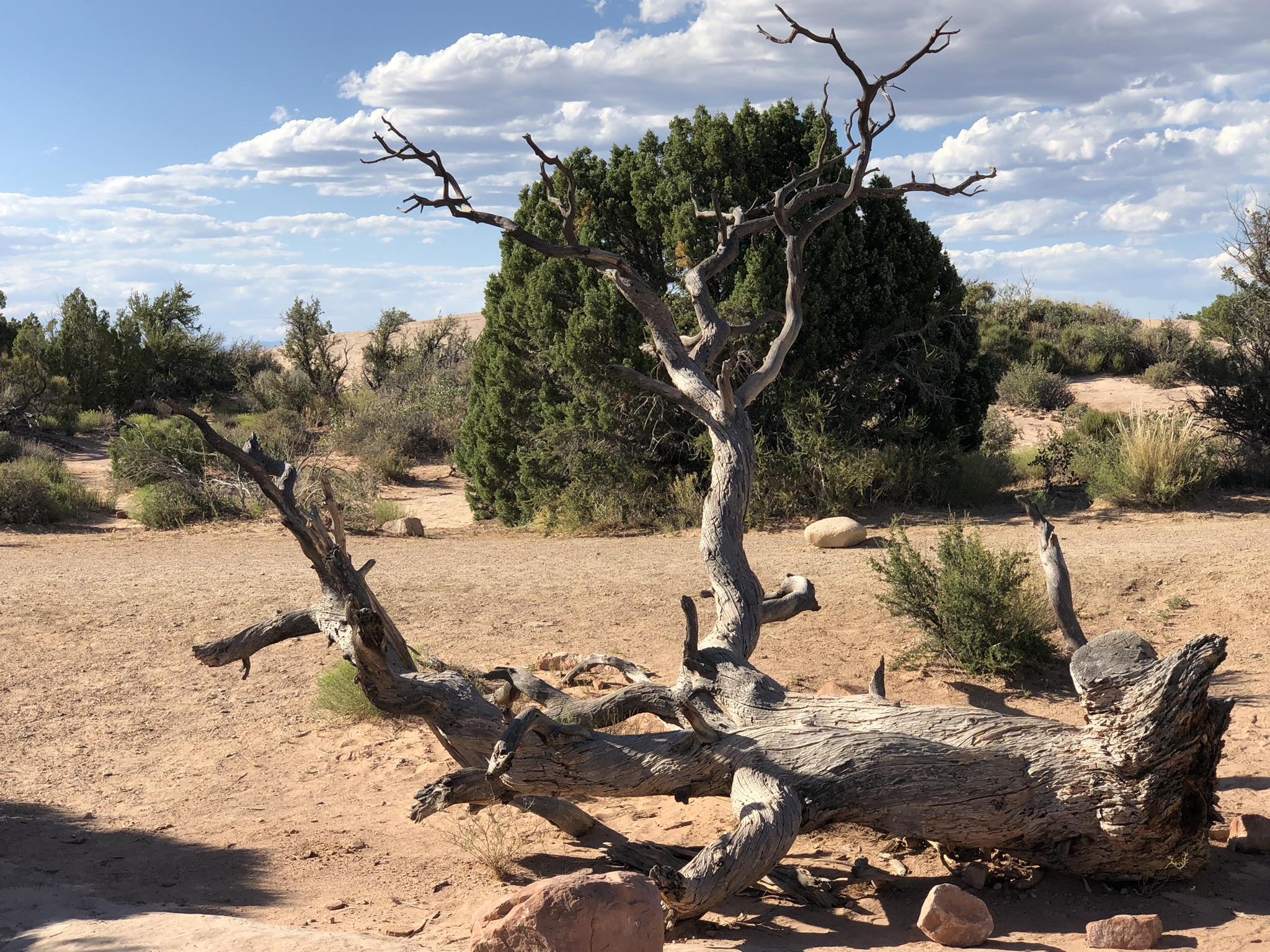
Cool dead tree, Arches National Park, Utah
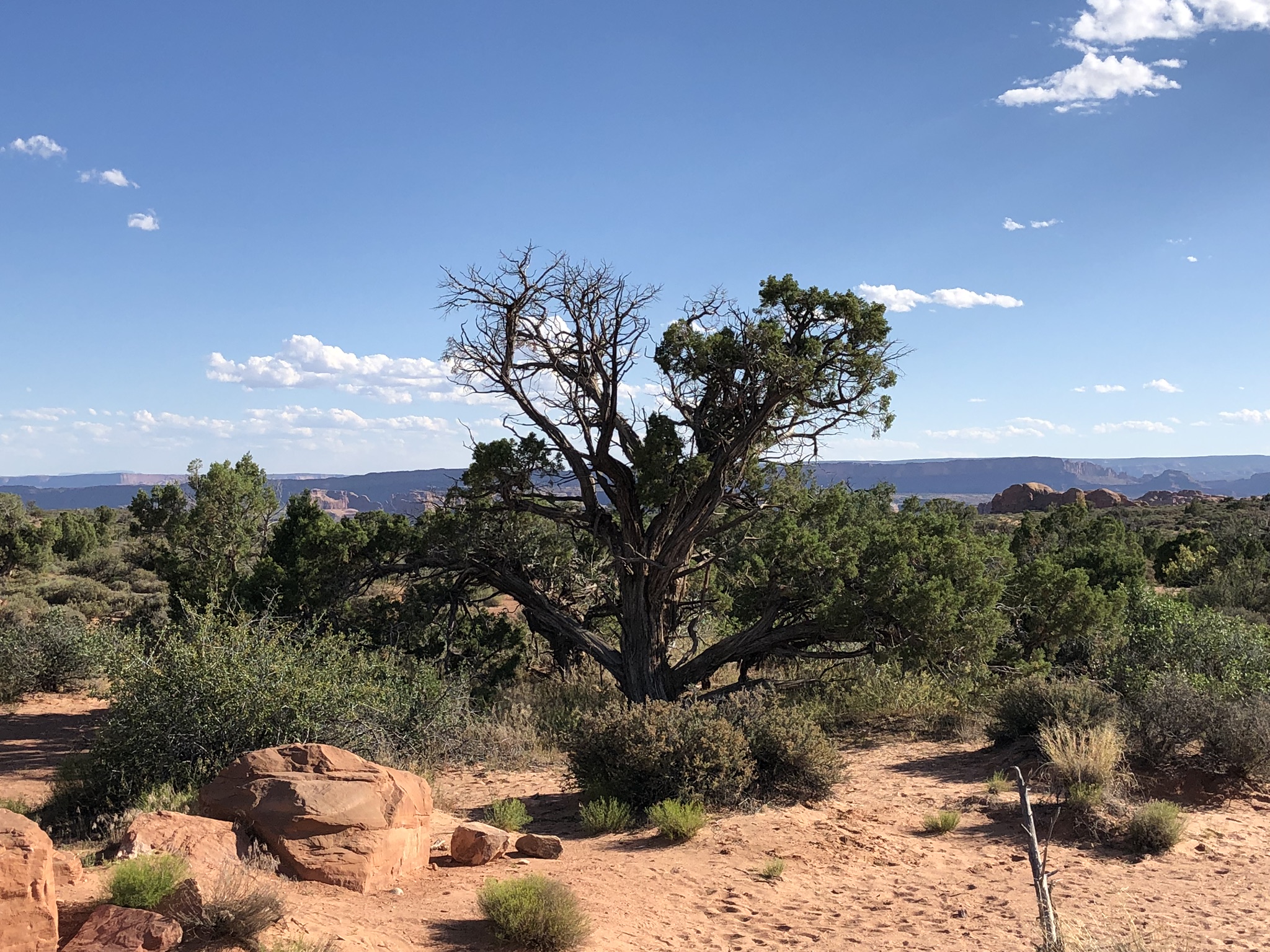
Cool live tree, Arches National Park, Utah
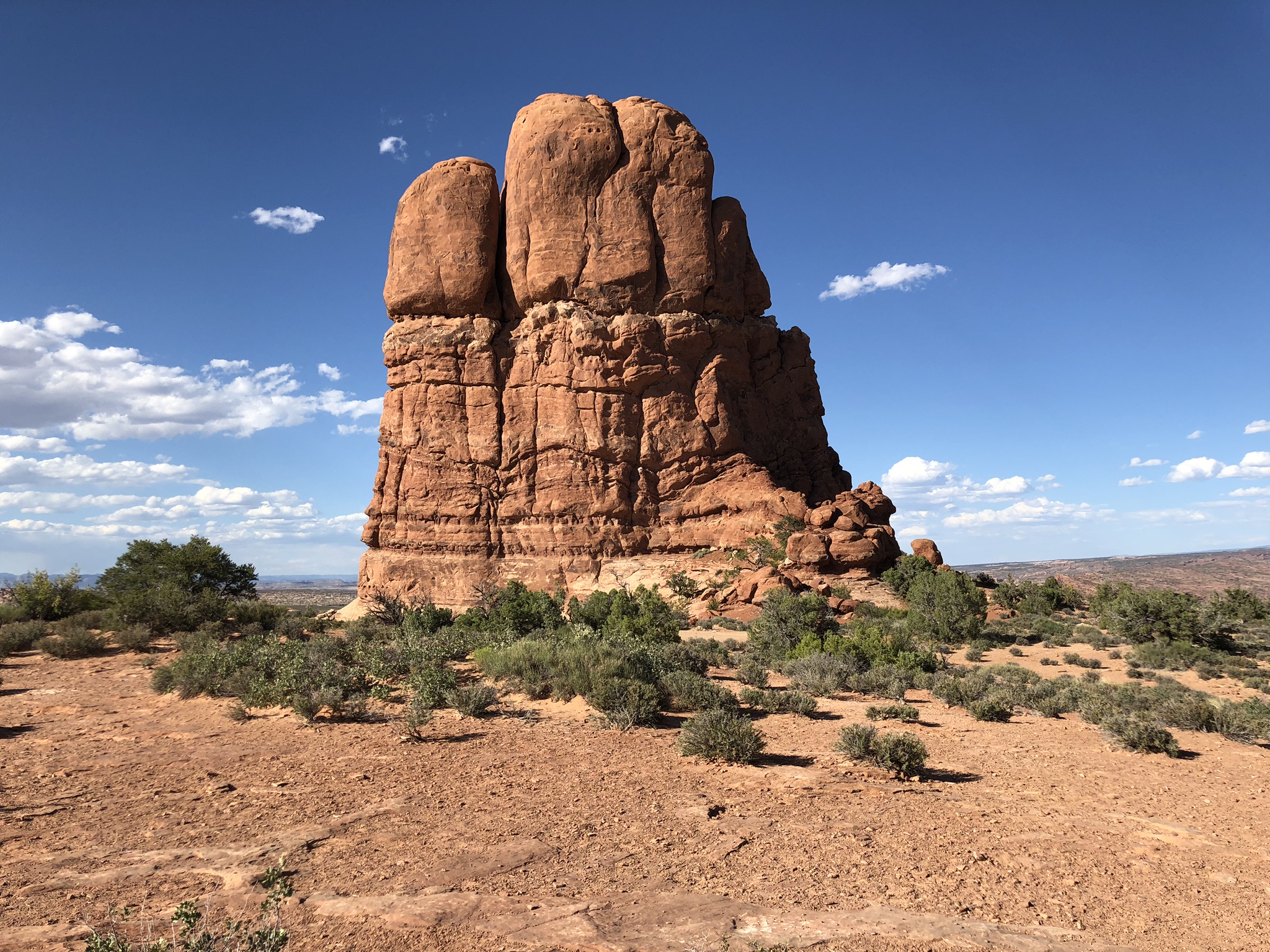
Cool rock formation, Arches National Park, Utah

So here are some day 2 thoughts:

  • The speed limit in Oregon was mostly 65 (thank GOD because it used to be 55). When we got to Idaho, it jumped to 80 mph! Utah has been anywhere in between (65 – 80). One observation that I’ve made is that no matter what the speed limit, people are going to go faster. I think if we made it 100 mph, people would go 110.
  • It’s cool seeing all of the different license plates from different states. Hands down, the most boring ones are from California and Texas. Go figure…
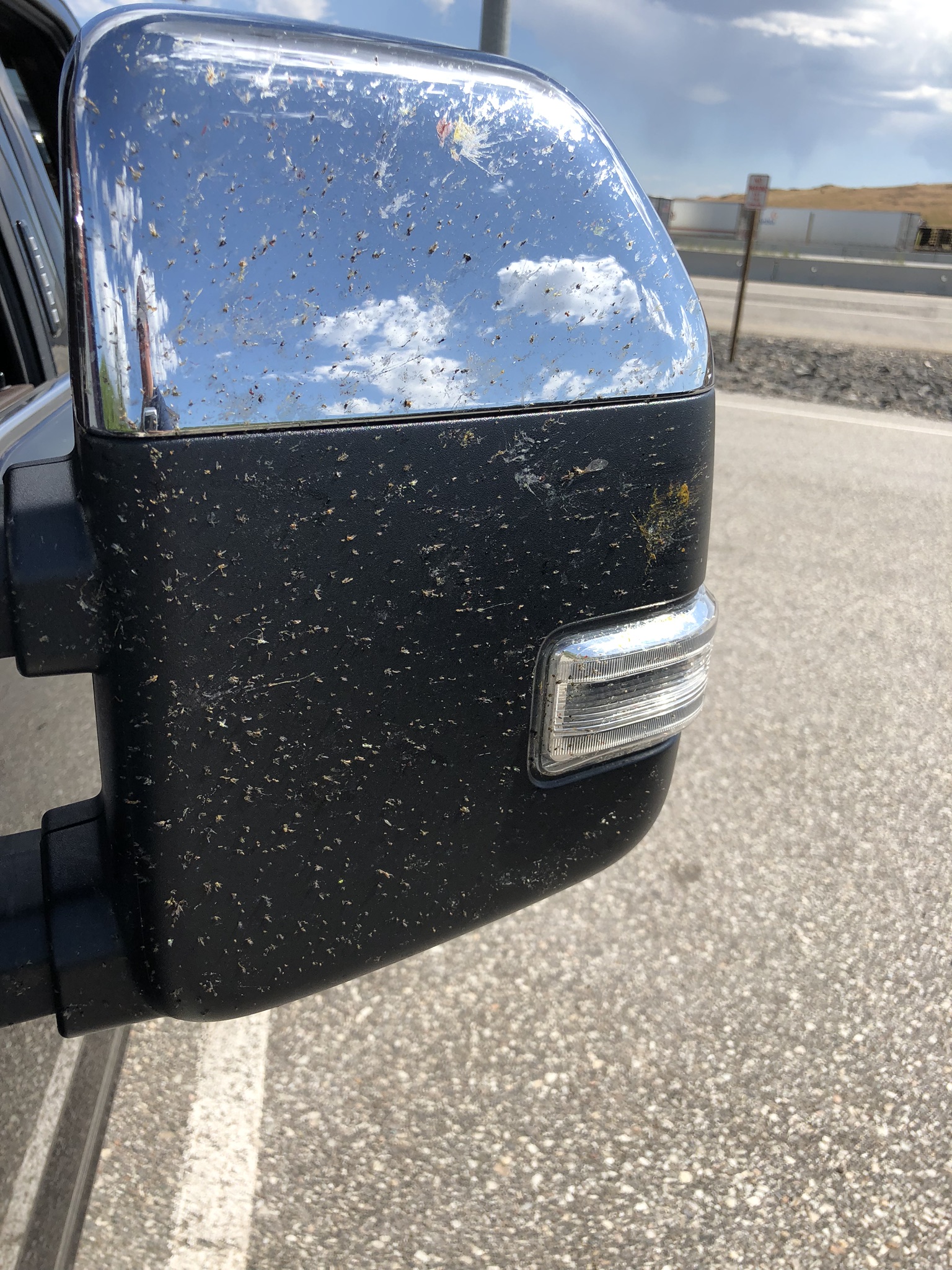
  • After stopping for gas, I attempted to wash the dead bugs off of my windshield. You would not believe how many bugs committed suicide by flying into my truck. Actually, here is one picture I could share (the others were just too hideous):
Bug Armageddon
  • Speaking of bugs, here is something you might not know (or want to know). The FDA has “allowable” limits of “defects” in your food. From the FDA Handbook (yes, there is such a thing): ” Title 21, Code of Federal Regulations, Part 110.110 allows the Food and Drug Administration (FDA) to establish maximum levels of natural or unavoidable defects in foods for human use that present no health hazard. These “Food Defect Action Levels” listed in this booklet are set on this premise–that they pose no inherent hazard to health.
  • One example of this: The FDA’s limit for “defects” or bugs in a bag of frozen broccoli is an average of 60 or more creatures per 100 grams—that translates to 204 pests in your 12-ounce bag of frozen broccoli. Now you know…

Tomorrow we head through Monument Valley. You’ve seen this place in a number of movies. I will leave you with a video clue below. Thank you for visiting and following along on our trip!

Day One: Boise, Idaho

Greetings from the Potato state (I don’t know if that is their nickname, but it sounded good to me)! Well, the first day went without a hitch, which is what was expected. It’s going to take a couple of days to get someplace which we haven’t seen before, so the first couple of days are going to be boring compared with the rest of the trip.

We had planned to make it to Twin Falls last night, but the hotel we were planning on staying at was booked (what the heck is going on in Twin Falls, Idaho?), so we decided to stay in Boise.

The day’s drive left me with a few observations:

  • Oregon is a large state. It took us 5 hours just to drive from Eugene to Ontario, Oregon. On the East coast, we can drive through 5 states in that much time
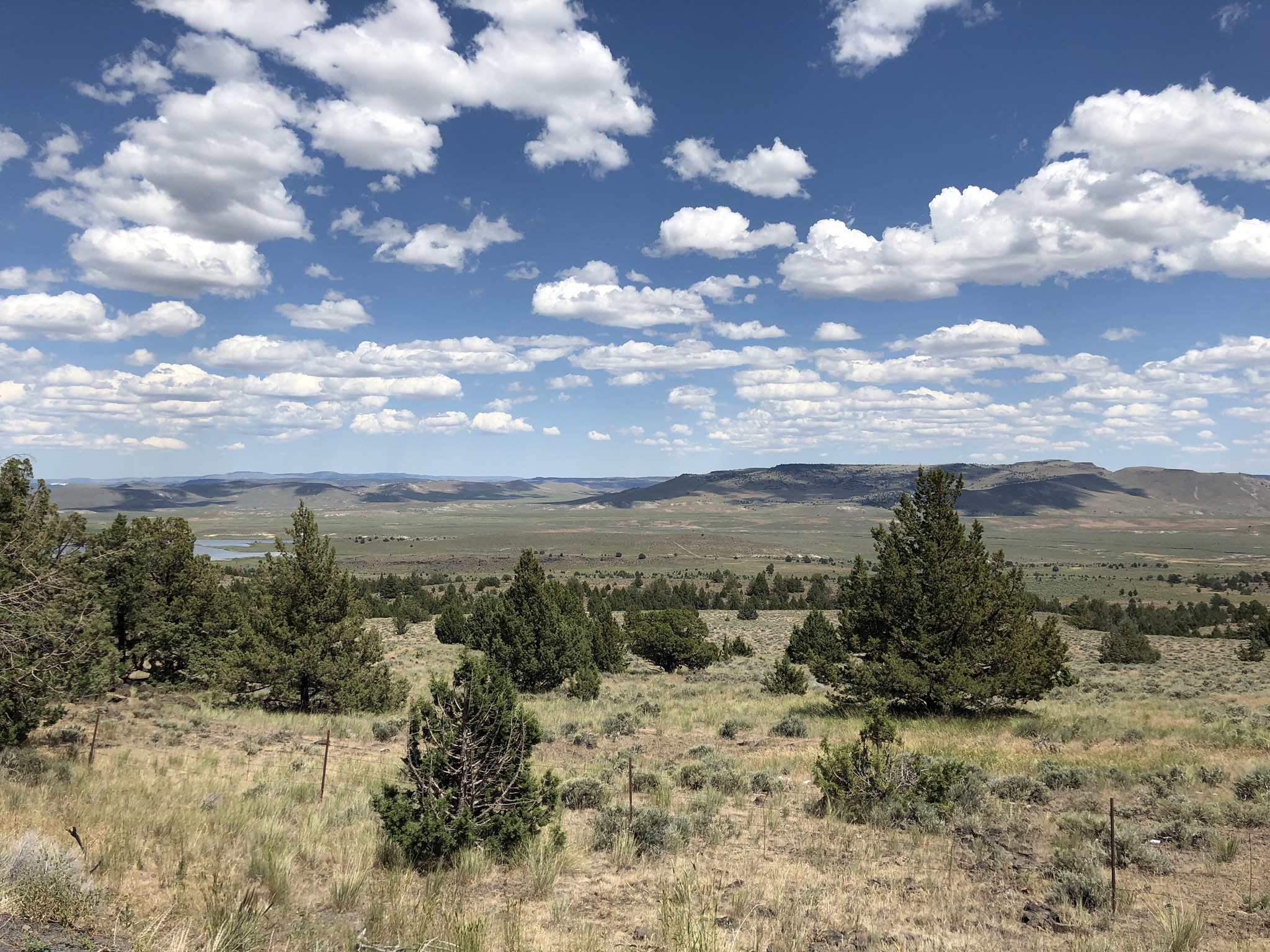
  • I would say roughly 1/2 of Oregon is a lot like this:
Eastern Oregon

Seriously, people think of Oregon as tall firs and waterfalls and fish-laden streams, but this is what it looks like for about 3 hours of our drive.

  • Ontario, Oregon calls itself the Onion Capitol of the United States. Why just the United States? Is there somewhere that grows onions in such vast quantities that they can outrank Ontario, Oregon? These are the kind of questions you ask yourself after 3 hours of driving through the aforementioned scenery (see above)

Today, we plan to reach Moab, Utah. Maybe swing through Arches National Park. Thanks for checking in with us. Since you don’t take up much room in the truck, you can stay with us. Have a good day!